Neurologopedia
Articles on speech and function disorders of neurological origin.

Selective eating and feeding difficulties in children
Refusing new food does not always mean a feeding disorder. Learn when a narrow diet and difficult meals are worth discussing with a specialist.
Author: mgr Edyta Bykowska

Dementia and Alzheimer disease: communicating with a relative
Dementia changes conversation gradually: a relative loses words, repeats questions and struggles to follow the thread. We explain what depends on the carer and how speech therapy can support it.
Author: mgr Edyta Bykowska

Hoarseness and voice disorders in children and adults
Hoarseness can be temporary, but a persistent or recurring voice change needs a cause to be established. We explain what to check in children and adults and when voice therapy may help.
Author: mgr Edyta Bykowska

Childhood apraxia of speech: recognition, diagnosis and therapy
The child knows what they want to say, but speech does not settle into stable sequences. We explain what childhood apraxia of speech (CAS) is, why waiting alone is not enough, and how assessment and therapy work.
Author: mgr Edyta Bykowska

Parkinson disease: how does it affect speech, voice and swallowing?
Parkinson disease can gradually affect voice, speech rate, facial expression and swallowing. Learn which changes merit assessment and how speech therapy may support daily communication.
Author: mgr Edyta Bykowska

Speech Therapist, Neurologopedist, and Pedagogue in Primary School: How to Combine Speech Therapy and Learning Support?
Difficulties with speech, reading, and writing can be related. We explain what each specialist does and how to build a coherent support plan for a pupil at school, in the clinic, and at home.
Author: mgr Edyta Bykowska

Dysphagia in children: swallowing difficulties and when speech therapy can help
Dysphagia means difficulty swallowing safely and efficiently. It can appear from infancy onward. We explain when long meals, texture avoidance, coughing, or choking are worth discussing with a speech therapist or neurologopedic specialist.
Author: mgr Edyta Bykowska
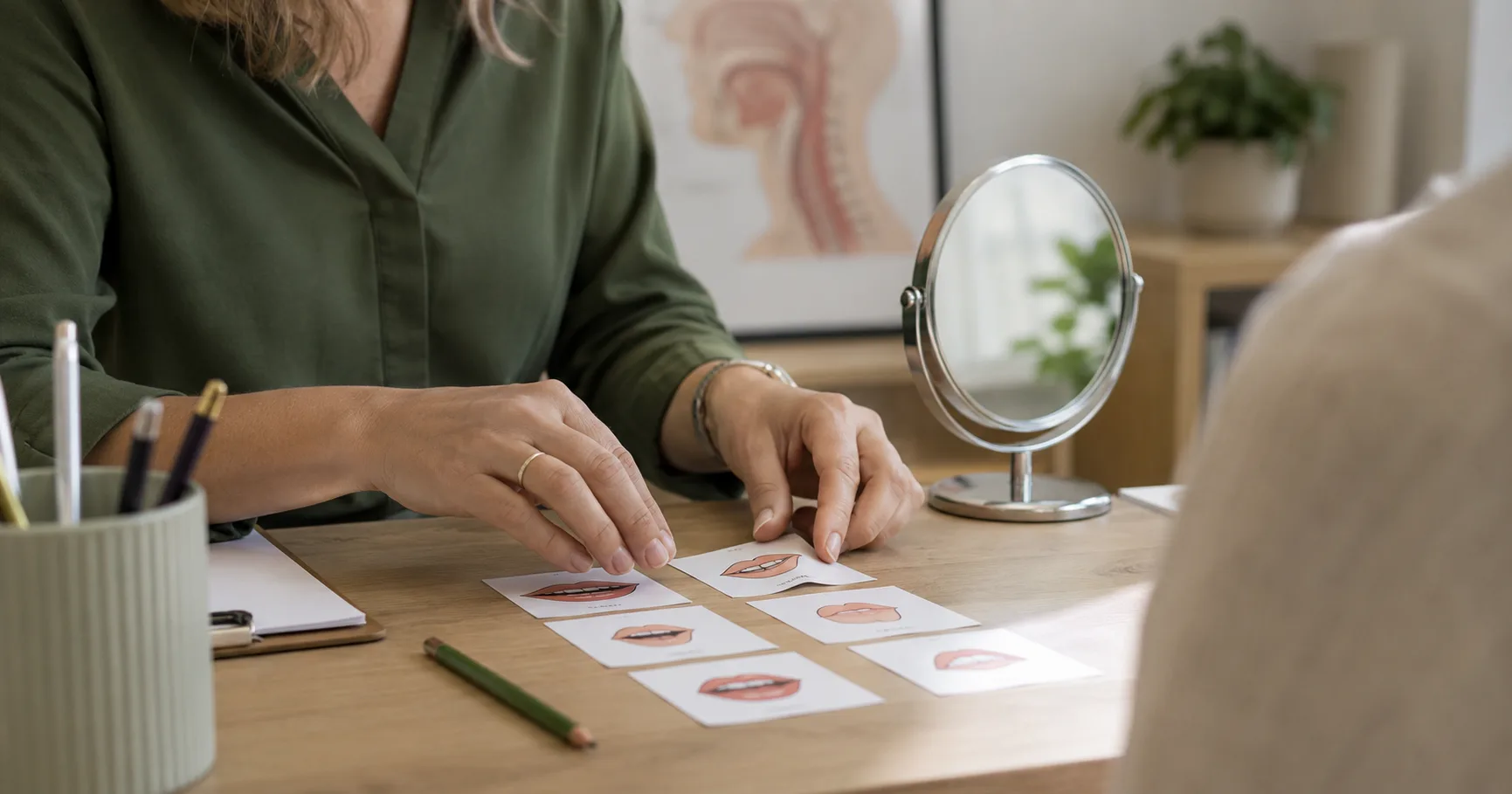
Dysarthria: what it is and how neurologopedic therapy can help
Dysarthria is a neurological motor speech disorder that may appear after stroke, traumatic brain injury, Parkinson disease, or other nervous system conditions. Learn how assessment and therapy are planned.
Author: mgr Edyta Bykowska

Sensory integration in children: when is an SI assessment worth considering?
Sensory integration is the way the nervous system organizes information from the body and the environment. When this process is difficult, everyday activities may become unnecessarily demanding for a child.
Author: mgr Edyta Bykowska