Neurological speech therapy
Neurological speech support for children, autistic people and AAC users, and adults after stroke, with orientation around swallowing difficulties.
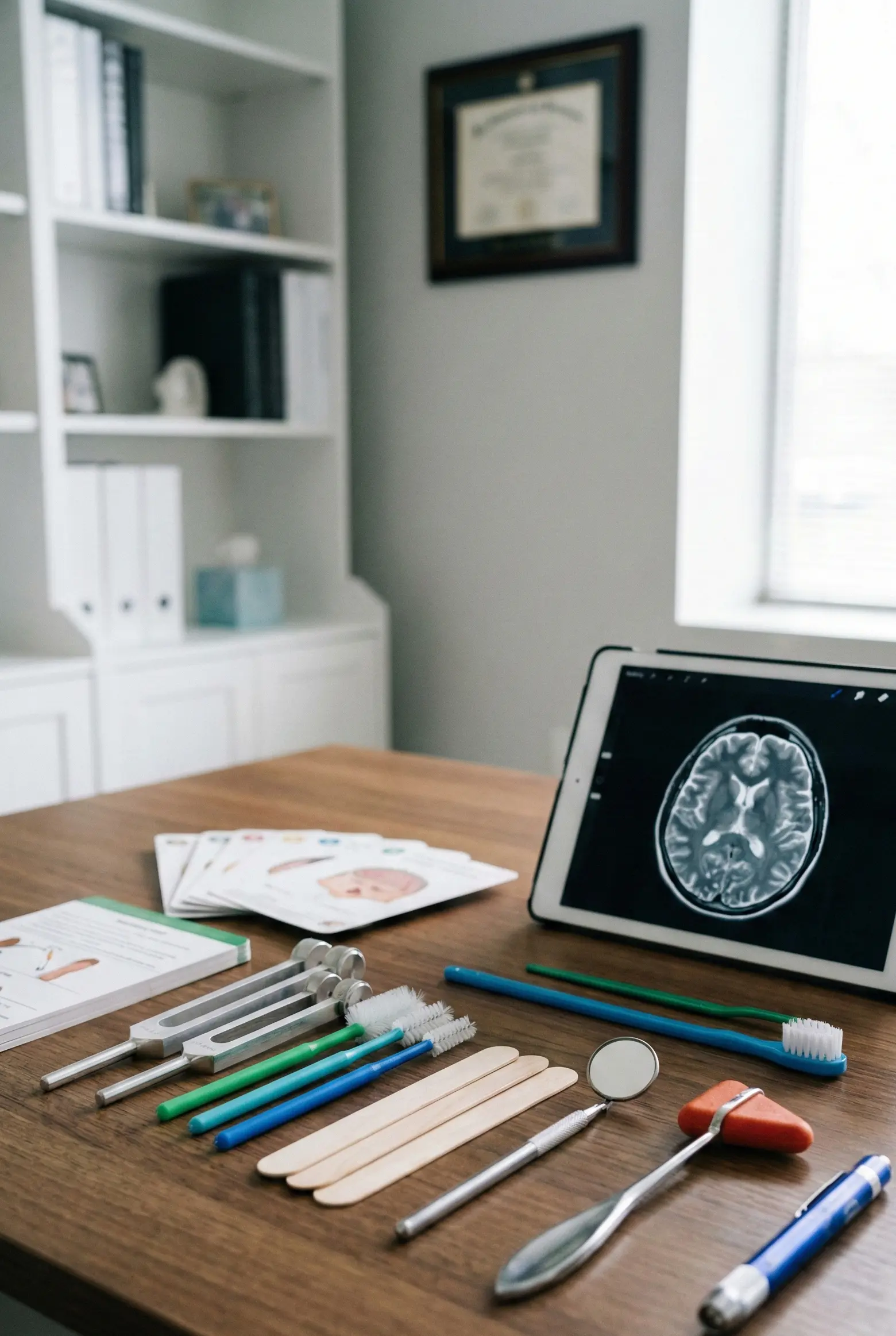
We start with a diagnosis of speech, communication and oral functions. We agree goals that make progress visible, we give the family guidance for practice at home, and when it is needed we bring in a doctor or another specialist.
Scope of Neurological Speech Support
Assessment and therapy for communication, speech, and oral functions in children and adults.
Children's Neurological Speech Therapy
We work on delayed speech development, articulation difficulties, communication and oral functions in children. We observe the child, match exercises to age and ability, and coach the caregiver on practice at home between visits. Delayed speech can have different causes, so when something is unclear, for example hearing, we refer for further medical diagnostics.
Neurological Speech Assessment
Assessment covers speech, communication and oral functions before deciding whether therapy is needed and what shape it should take. The visit includes an interview with the caregiver or patient, observation and functional checks, then we discuss the result and possible next steps. Assessment does not replace medical diagnostics - when a neurological or ENT cause is suspected, we refer to the right specialist.
Autism and AAC
We support communication for autistic people, including checking whether augmentative and alternative communication (AAC) would help. We match a way of communicating - gestures, symbols, a device with voice output - to the person's abilities and teach its use in everyday situations together with the family. Choosing an AAC method is individual and does not close the door to further speech development.
Adults After Stroke
We support adults with speech and communication difficulties, such as aphasia or dysarthria, after a stroke or another neurological event. We assess current understanding and expression, match exercises to the patient, and show family how to make everyday conversation easier. Therapy runs alongside neurological treatment, not instead of it, and progress depends on health status and the doctor's recommendations.
Swallowing and Dysphagia
We talk through eating and swallowing difficulties in children and adults - choking, coughing during meals, or avoiding certain textures. We discuss symptoms, observe how the person eats, and point out what to watch for day to day. This is an initial orientation, not an instrumental exam - when a swallowing disorder is suspected, we refer for medical diagnostics such as VFSS or FEES.
Neurological Speech Consultations and Therapy
The visit scope is matched to the patient's age, symptoms, and current abilities.
Neurological Speech Therapy for Children
Support for children with difficulties in speech development, articulation, communication, and oral functions.
- Assessment of the child's current needs
- Goals matched to daily functioning
- Guidance for parents
Neurological Speech Assessment
A consultation covering history, observation of communication and oral functions, and discussion of the next plan.
- Identification of main difficulties
- Initial support plan
- Discussion of therapy indications
Autism and AAC Support
Support for communication development in autistic children and adults, including AAC when needed.
- Review of communication methods
- Goals that support interaction
- Collaboration with family
Adults After Stroke and Neurological Disease
Support for adults with speech, communication, or oral-function difficulties after neurological events.
- Review of current communication
- Exercises matched to ability
- Support for close relatives in communication
Orientation Around Swallowing Difficulties
An initial consultation for eating and swallowing concerns, with discussion of observations and possible next steps.
- History of eating and swallowing
- Review of signals needing attention
- Referral toward further diagnostics when needed
Frequently Asked Questions
Find answers to the most frequently asked questions
Worth reading
Short articles from our therapists that go deeper

Aphasia after stroke: symptoms, types, and speech therapy
Aphasia is an acquired language disorder that can follow a stroke. It may affect speaking, understanding, reading, or writing. We explain common signs, main types, and how therapy is planned.
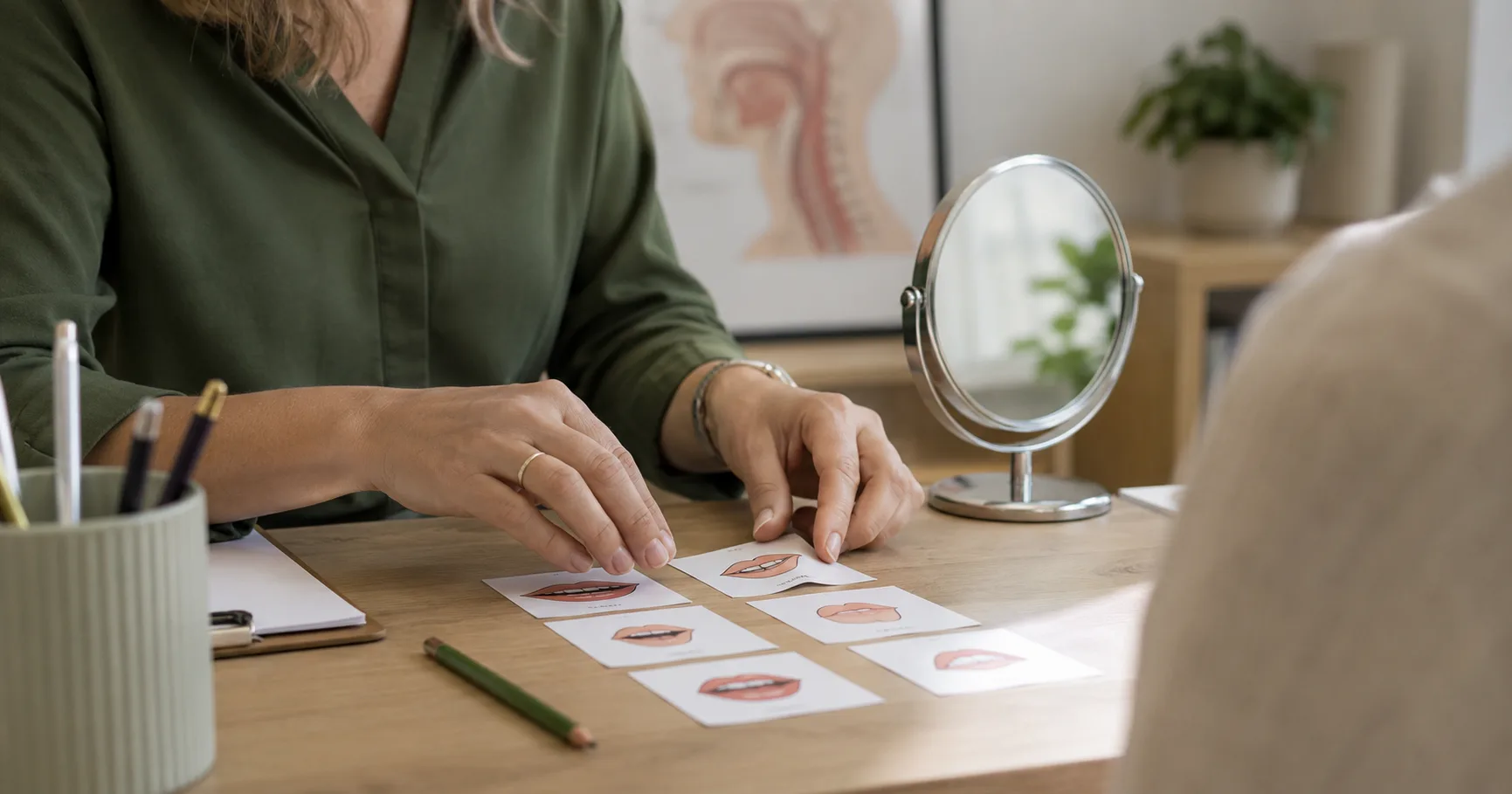
Dysarthria: what it is and how neurologopedic therapy can help
Dysarthria is a neurological motor speech disorder that may appear after stroke, traumatic brain injury, Parkinson disease, or other nervous system conditions. Learn how assessment and therapy are planned.

Childhood apraxia of speech: recognition, diagnosis and therapy
The child knows what they want to say, but speech does not settle into stable sequences. We explain what childhood apraxia of speech (CAS) is, why waiting alone is not enough, and how assessment and therapy work.
See other services
More therapies we offer
Speech therapy
Communication, articulation and speech fluency.
- Goals after assessment
- Age-matched exercises
- Home practice guidance
Infant neurological speech therapy
Oral functions, communication and infant feeding.
- Conversation about daily difficulties
- Observation of communication and function
- Discussion of a further plan
ENMOT electrostimulation
Stimulation of orofacial nerves and muscles.
- Support for speech progress
- Work on muscle strength
- Support for facial symmetry
Augmentative communication (AAC)
Communication support for people with limited speech.
- Individual communication passport
- Learning to use AAC tools
- Social competence development
Delayed speech: assessment and therapy
Assessment and therapy when a child speaks later than peers.
- Assessment of the child's speech and communication
- Therapy plan after assessment
- Home practice guidance
Book a Neurological Speech Consultation
Let's discuss the difficulties and choose safe next steps.