Delayed speech: assessment and therapy in children
Who will see your child, what the first visit includes, and what the next step is.

We start with a talk with the caregiver. We watch speech and communication. We discuss the result and next steps. We see you at two practices in Gdańsk: Ujeścisko and Morena.
Scope of the delayed speech assessment
Assessment brings order to questions about speech, understanding, and communication.
Who this assessment is for
We see children who speak less or later than peers, including those using first words or short phrases. A delay may come from hearing loss, or from a speech or language disorder. The visit looks at speech, understanding, and how the child communicates at home.
Who runs the assessment
Assessments are run by MSc Edyta Bykowska and MSc Julia Danilkiewicz. Edyta Bykowska is a neurological speech practitioner and completed Childhood apraxia of speech therapy, ORM, motor and developmental aphasia according to motor learning principles. Julia Danilkiewicz is a speech practitioner and completed Delayed speech development - diagnosis and therapy strategy. Both profiles are on the about page.
What the first visit includes
The visit opens with a talk with the caregiver about how the child speaks, understands, and communicates day to day. We then watch speech, communication, and how the lips, tongue, and palate work. We close by explaining the result and agreeing whether therapy or watching comes next. A hearing test is not part of this visit.
When we refer onward
When the talk leaves doubt about hearing, we refer the family for a hearing test. When health questions remain, we point to a doctor or laryngologist. This path does not replace medical care, and it is not part of the assessment visit itself.
Delayed speech: assessment and therapy
First we learn how your child speaks, then we suggest a work plan.
Delayed speech development assessment
A caregiver interview, observation of speech and communication, and a plan discussion.
- Talk about speech at home
- Observation of speech and communication
- Next steps discussed
Delayed speech development therapy
Later visits after assessment, with goals set for the child and guidance for home.
- Goals set after assessment
- Speech work in the office
- Guidance for home
Frequently Asked Questions
Find answers to the most frequently asked questions
Worth reading
Short articles from our therapists that go deeper

Delayed speech development: when should you see a pediatric speech therapist in Gdańsk?
Delayed speech development is an early signal to assess communication profile and plan support. See when consultation helps families move forward with clarity.
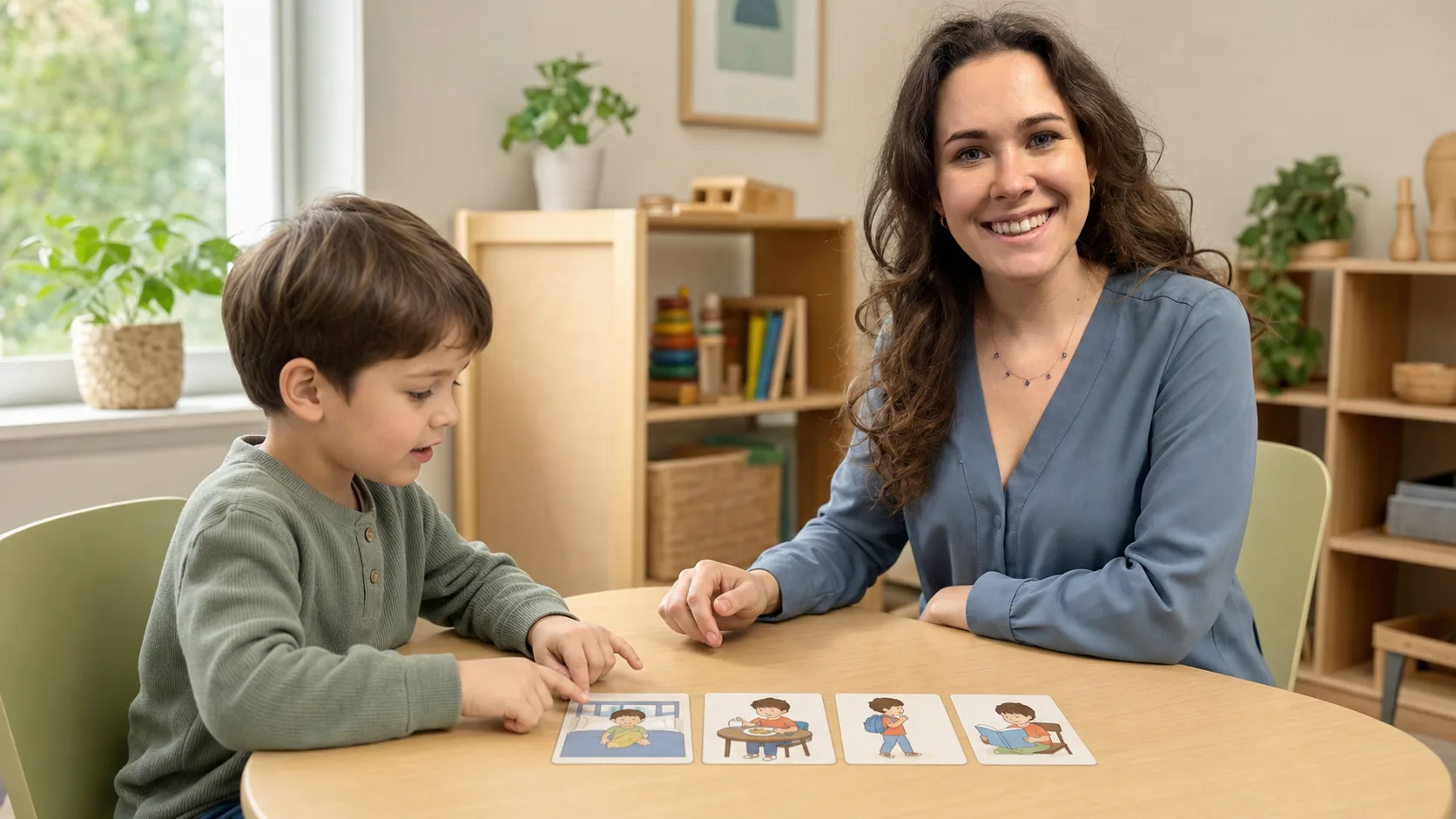
Delayed Speech or DLD? Telling a Delay Apart from a Language Disorder
Some children who start speaking late catch up with their peers, and some do not. We explain how delayed speech development differs from developmental language disorder (DLD), where the term came from, and what actually changes in planning support when the difficulty turns out to be lasting.

Delayed speech development and sensory processing: when sensory difficulties affect communication
In some children, delayed speech appears together with sensory-processing difficulties. We explain how this can affect communication and when a broader assessment may be helpful.
See other services
More therapies we offer
Speech therapy
Communication, articulation and speech fluency.
- Goals after assessment
- Age-matched exercises
- Home practice guidance
Neurological speech therapy
Therapy for neurologically based speech disorders.
- Assessment of the child's current needs
- Goals matched to daily functioning
- Guidance for parents
Augmentative communication (AAC)
Communication support for people with limited speech.
- Individual communication passport
- Learning to use AAC tools
- Social competence development
Book a delayed speech assessment
Let us talk about your child's speech and agree the next step.