Childhood apraxia of speech (CAS; in Polish, apraksja mowy u dzieci) is a disorder of planning and programming the movements needed for speech. The child often knows what they want to say, but the brain does not reliably sequence the movements of the lips, tongue and jaw. It is not a simple speech delay and not muscle weakness - which is why “wait, they will catch up” is often the wrong advice here.
What is childhood apraxia of speech?
In CAS, the difficulty lies in planning and programming speech movements: the precision, order, timing and force of the movements needed for speech sounds and prosody. Reflexes and muscle tone are often typical - this is not “weak muscles” in the sense of dysarthria. A child may understand language and have a clear communicative intent, yet still struggle to produce what they mean reliably. That is how clinical guidance such as the ASHA Practice Portal on childhood apraxia of speech describes the mechanism.
You may also hear older labels such as developmental apraxia of speech or developmental verbal dyspraxia. The label matters less than the core idea: this is a neurological difficulty of speech motor planning, not laziness or lack of motivation. Communication can improve with appropriate therapy, but CAS does not simply resolve on the timetable of ordinary late talking.
Apraxia versus late talking and other speech difficulties
Parents and professionals most often confuse apraxia with delayed speech development or with articulation and phonological difficulties. With a delay, the child often follows a familiar developmental path, only more slowly. With phonological or articulation disorders, errors tend to be more predictable and stem from the sound rules of the language, not from motor planning. Dysarthria, by contrast, is a problem of motor execution linked among other things to weakness or muscle tone - a different mechanism from apraxia.
In practice these pictures can overlap, and severity alone is not enough to diagnose CAS. You cannot fairly decide from an internet list whether a child “has apraxia.” A motor speech assessment is needed. If you are worried about the pace of speech development, start with a solid context for delay - we describe it in our article on delayed speech development and when to see a paediatric speech therapist.
The key difference for parents
What a parent may notice - without a diagnostic checklist
Some children with speech motor planning difficulties produce the same word differently on successive attempts in a short span of time. That can be confusing: a parent hears that the child “sometimes can” and assumes the problem is motivation. Variability alone does not equal apraxia - similar patterns appear in other speech disorders. Only an assessment under motor speech tasks can show whether the pattern fits a planning difficulty.
Another signal can be transitions between sounds and syllables that sound choppy or pieced together, or longer and more complex words that fall apart even when short fragments are clearer. Prosody - rhythm, stress and melody of speech - may sound atypical for the child’s language. Again: these features are often described in CAS, but they are not a home test. What matters is the whole picture, age, developmental context and how the child responds to cues in assessment.
Sometimes you also see searching movements of the lips and tongue before a sound, greater difficulty with longer sequences, or vowel errors. Each of these needs interpretation in an in-person motor speech assessment - none of them alone settles whether this is apraxia. This article is meant to help you notice that “something is not adding up” despite time and effort - not to diagnose from the sofa.
Why diagnosis is not finished in a single visit
There is no single quick screening test that settles CAS on its own. A comprehensive assessment is needed: case history, hearing screening (or referral), oral structure and function, speech in different contexts and - critically - a motor speech assessment. The clinician compares repeated productions of the same words, longer and shorter sequences, spontaneous and imitated speech, and how the child responds to cues.
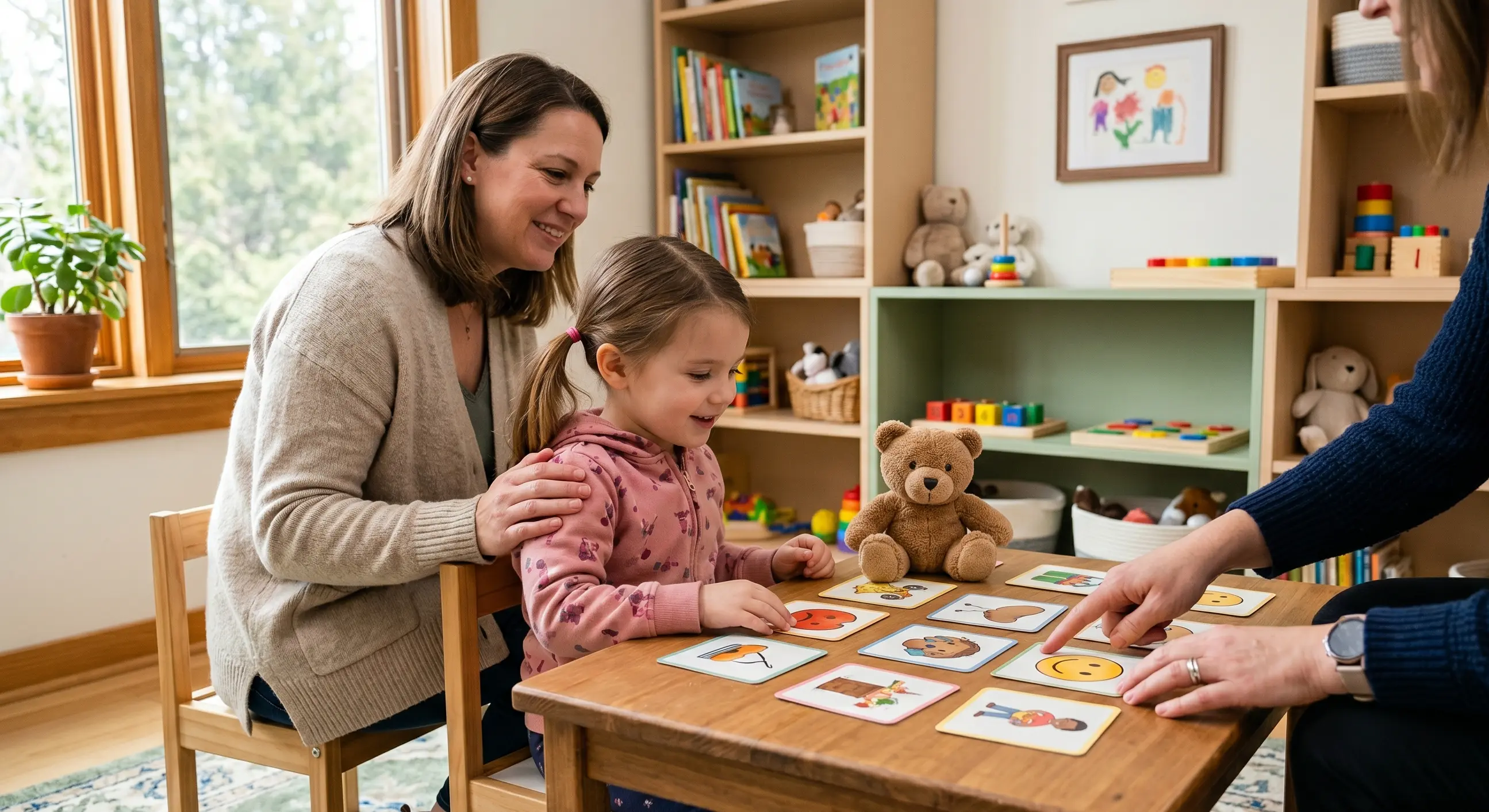
Dynamic assessment is often used: the therapist offers visual, auditory or tactile cues and watches what actually helps. That is not “forcing answers,” but a way to separate planning difficulties from other patterns and to plan therapy. In very young children, especially under three years of age, the picture can be incomplete when verbal output is limited - cautious, provisional wording and “treat as if CAS may be present” work, with review over time, are then common.
Parents prepare well for such an assessment: notes with speech examples, short videos of everyday situations if requested, words the child sometimes can and sometimes cannot produce, and developmental history. A practical guide to the visit itself is in our article on preparing for a speech and language assessment.
It helps to bring, for example:
- short notes with examples of harder and easier words,
- information on speech, feeding and motor development if relevant,
- earlier reports or opinions, if you already have them,
- a list of questions you want to ask the therapist.
What therapy looks like in practice
Therapy for childhood apraxia of speech focuses on speech movement and sequencing, not only on “setting single sounds” as in classic articulation work. Motor-learning approaches assume many repetitions, precise movement goals, and deliberate control of cues and feedback. Parents often expect a once-weekly model as for simple pronunciation errors - with CAS, intensity and practice density are often clearly higher, because that is how motor learning works.
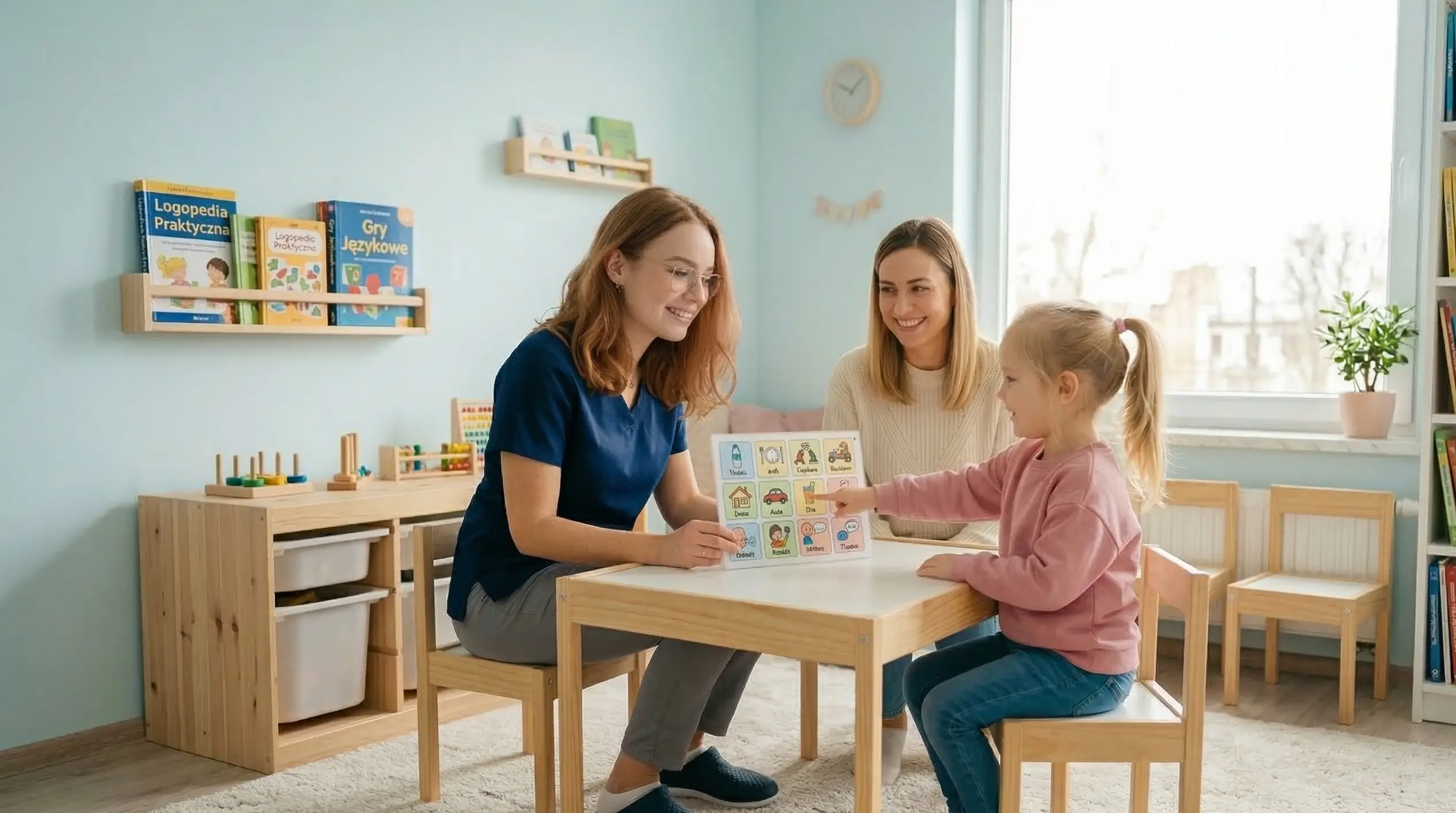
In a session the child practises specific functional words or phrases, moves from stronger support (simultaneous production, imitation) toward more independence, and the therapist adjusts visual, auditory or tactile cues. We do not promise a pace or a full resolution of the difficulty - the plan and goals depend on age, severity, co-occurring language needs, and how the child learns in the clinic and at home.
Home practice does not replace therapy. If the therapist suggests short, well-chosen attempts at home, they should come from the session plan - without pressure and without improvised “internet exercises.” The specialist should say clearly what to repeat and how, and what not to practise alone.
Realistic expectations
Communication when speech has not yet caught up
When speech is hard to understand or still developing, the child needs a way to express needs and take part in family life. Augmentative and alternative communication (AAC) - gestures, boards, communication books, speech-generating devices - can support communication and language alongside motor speech therapy when oral speech alone is not enough. We write more about starting AAC when a child is not yet talking much in When a child is not yet talking: AAC.
Childhood apraxia and speech therapy support in Gdańsk
At StacjaMowa we work with children whose speech difficulties may stem from motor planning, not only from classic articulation. Assessment and therapy draw on motor-learning principles: intensive, repeated practice of speech movement, functional goals, and communication support when needed. We do not diagnose from an article and we do not promise a specific result in a fixed time.
We describe the scope of neurologopedic work on our neurologopedist in Gdańsk page. If after reading you see a picture that does not fit “let’s wait a bit longer,” a calm specialist assessment is a sensible next step - not to create fear, but to know what is worth working on.
Key takeaways
- Childhood apraxia of speech is a difficulty planning speech movements, not typical muscle weakness.
- It is not settled with an internet symptom list - a motor speech assessment is needed.
- Features such as inconsistent repetitions or hard transitions need a specialist’s interpretation.
- Therapy is motor-based and often more intensive than the weekly model for simple articulation errors.
- AAC can support communication while speech is still developing.
- Persistent lack of progress is a reason for assessment, not longer waiting without a plan.
Sources and further reading
The materials below are educational. They do not replace a speech and language diagnosis or recommendations from the specialist working with your child.
- ASHA Practice Portal: Childhood Apraxia of Speech
- Apraxia Kids: What is Childhood Apraxia of Speech?
- Apraxia Kids: How is CAS diagnosed?
- Mayo Clinic: Childhood apraxia of speech - symptoms and causes
- Mayo Clinic: Childhood apraxia of speech - diagnosis and treatment
- Child Apraxia Treatment (Once Upon a Time Foundation)
Want to learn more about therapy options?
Learn more about this therapyFrequently asked questions
- How does childhood apraxia of speech differ from delayed speech development?
- With a developmental delay, speech often follows a familiar path, only more slowly. With apraxia, the difficulty is planning and programming the movements needed to speak, with typical muscle tone. Distinguishing them requires a motor speech assessment - you cannot fairly settle it alone from a symptom list.
- Will a child “grow out of” apraxia of speech without therapy?
- According to ASHA’s clinical description, children do not simply “grow out of” CAS the way ordinary late talking may resolve, but they can improve communication with appropriate speech and language therapy. This article does not replace an individual prognosis.
- How is childhood apraxia of speech diagnosed?
- There is no single screening test. A comprehensive assessment is needed, including a motor speech assessment: repetitions, longer sequences, speech in different contexts, and dynamic assessment with cues. More than one visit may be needed, especially for young children with few words.
- Can a parent diagnose from symptoms at home?
- No. Features described in CAS (for example inconsistent repetitions, hard transitions between sounds, atypical prosody) also appear in other disorders and depend on the task and age. A specialist forms a diagnosis or working hypothesis after assessment, not a home checklist.
- What does therapy for childhood apraxia of speech look like?
- Therapy focuses on accurate speech movements and sequences, with many repetitions and principles of motor learning. It is often more intensive than the weekly model for simple articulation errors. We do not give timelines for improvement - pace and goals are individual.
- Can AAC be used alongside speech therapy for childhood apraxia?
- Yes - when oral speech alone is not enough, augmentative and alternative communication can support expressing needs and language alongside speech therapy. AAC does not replace work on speech when that work is possible and indicated.