Dysarthria is a motor speech disorder caused by nervous system damage or dysfunction. It affects control of the muscles used for breathing, voice, articulation, resonance, and prosody. Neurologopedic therapy can support speech intelligibility and everyday communication, but the plan must match the cause and severity of symptoms.
What is dysarthria?
Dysarthria appears when the nervous system cannot precisely coordinate the muscles used for speech. The problem is not primarily language understanding or word choice, but the execution of speech: movements of the lips, tongue, jaw, soft palate, larynx, and breathing system.
It is important to distinguish dysarthria from aphasia. Aphasia affects understanding or formulating language. Dysarthria is a motor speech disorder: the person usually knows what they want to say, but speech production is unclear, weak, slow, or poorly coordinated.
Important
Clinical types include flaccid, spastic, ataxic, hypokinetic, hyperkinetic, and mixed dysarthria. Each type can look different and requires individualized assessment.
Where can dysarthria come from?
Dysarthria may be acquired after a neurological event or present from childhood, for example in cerebral palsy. Common adult causes include:
- ischemic or hemorrhagic stroke,
- traumatic brain injury,
- Parkinson disease, multiple sclerosis, ALS, and ataxia,
- brain or brainstem tumors,
- neurological surgery affecting motor speech systems,
- central nervous system infections.
In children, dysarthria is most often discussed in the context of cerebral palsy or congenital nervous system conditions. Therapy aims to support the speech functions and communication strategies that can be trained in a given case.
After stroke, dysarthria may co-occur with dysphagia. We explain this overlap in our article about dysphagia after stroke and neurologopedic support.
What does neurological unclear speech sound like?
Symptoms differ by type and severity. Families often notice that speech becomes harder to understand, slower, irregular, too quiet, nasal, hoarse, monotonous, or more difficult when the person is tired.
- imprecise articulation, especially in longer words or phrases,
- slow, rushed, or irregular speech rate,
- reduced intonation or monotonous voice,
- weak voice or short breath groups,
- nasal resonance,
- reduced speech clarity with fatigue,
- drooling or difficulty managing saliva.
How is dysarthria assessed?
Assessment starts with history: when the difficulty appeared, what the neurological background is, what medication is used, how communication works at home, and whether swallowing or breathing is also affected.
A neurologopedic assessment describes the functional speech profile: voice, articulation, resonance, breathing, prosody, oral-motor movement, and intelligibility in everyday communication. It does not replace neurological diagnosis, but it helps plan therapy goals and home strategies. You can read more about post-stroke support in our guide to speech rehabilitation after stroke.
What can therapy include?
Dysarthria therapy is not one automatic exercise set. The plan depends on the underlying neurological mechanism, health condition, symptom severity, and the communication situations that matter most to the person and family.
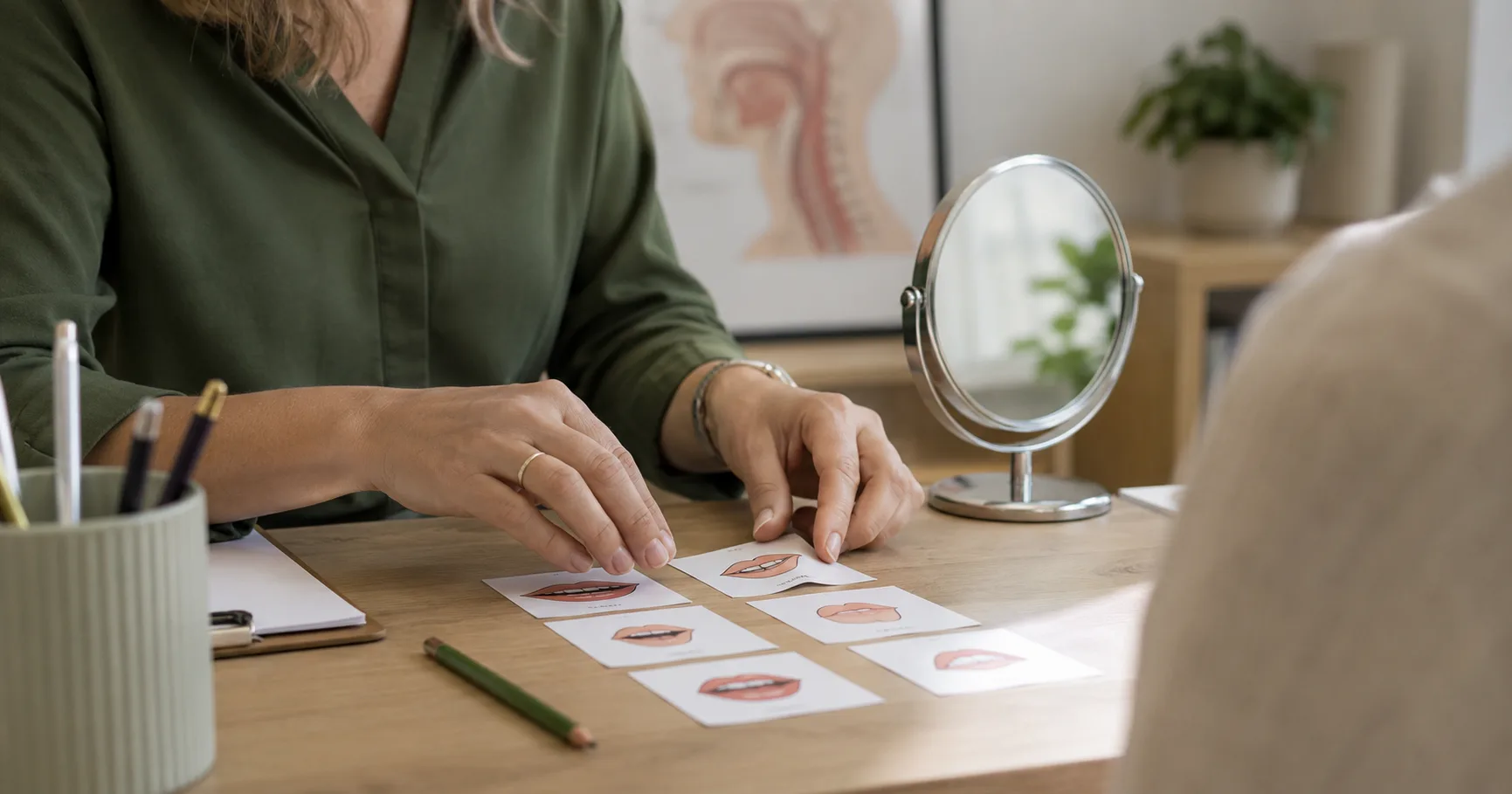
- oral-motor work for the tongue, lips, jaw, and soft palate,
- breathing and voice coordination,
- work on loudness, intonation, rate, and rhythm,
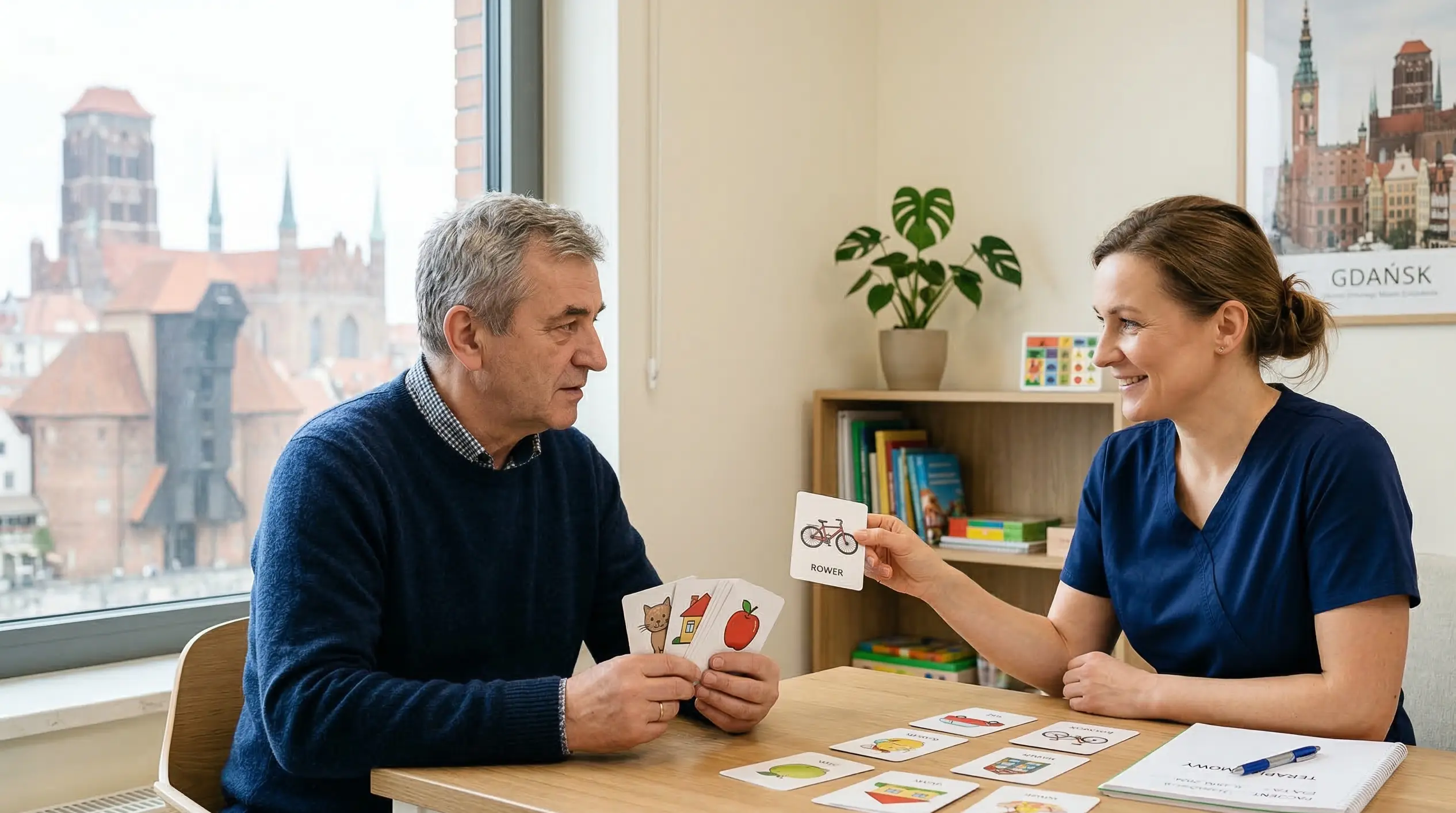
- communication strategies such as slower speech and key-word repair,
- intelligibility practice with different listeners,
- family education for everyday communication.
In selected cases, adjunctive methods such as speech-therapy taping or electrostimulation may be considered as part of a wider plan. They are not suitable for every type of dysarthria. We discuss safety and qualification in our article on electrostimulation and taping in speech therapy.
Is AAC needed in dysarthria?
Not every person with dysarthria needs AAC. Many people with milder symptoms communicate effectively with strategies that improve speech intelligibility. When speech remains difficult to understand despite effort, AAC can become a valuable addition or temporary support.
AAC may mean a letter or word board, a tablet app, or a speech-generating device. It does not mean giving up speech therapy; it helps communication continue when speech alone is not enough.
Family communication tip
How can family support communication?
Family and caregivers strongly influence everyday communication. Helpful support is practical, calm, and respectful:
- Give the person time to speak.
- Reduce background noise during conversation.
- Look at the speaker and use facial expression and gesture cues.
- Do not pretend to understand if you do not.
- Do not speak louder or slower as if the person had a hearing problem.
- Use short questions and pause for answers.
When a relative's difficulty is not motor but builds gradually with memory - lost words, repeated questions, a fading thread - read our article on communicating in dementia and Alzheimer disease. There the carer's approach is the intervention, not speech muscle training.
Dysarthria and neurologopedic therapy in Gdansk
At StacjaMowa, we treat dysarthria as a communication difficulty with a neurological basis and a real impact on daily life. The first step is assessment: what mechanism drives the symptoms, what can be trained, and what support the person and family need now.
Therapy does not promise a full return to previous speech or a fixed timeline. The goal is better communication in situations that matter: family conversations, medical visits, phone calls, shops, and everyday decisions.
You can read more about our work on the neurologopedic therapy page.
Key takeaways
- Dysarthria is a motor speech disorder, not primarily a language comprehension disorder.
- Common causes include stroke, traumatic brain injury, Parkinson disease, MS, ALS, and cerebral palsy.
- It may co-occur with dysphagia and aphasia, so assessment should look at speech, swallowing, and communication together.
- Therapy is individualized and may include speech-motor, breathing, voice, strategy, AAC, and family education work.
Sources and further reading
The materials below are educational references. They do not replace neurologopedic assessment or medical recommendations.
- ASHA: Dysarthria in Adults - Clinical Practice Portal
- ASHA: Dysarthria - patient and family information
- Hertfordshire Community NHS Trust: Dysarthria (difficulty speaking)
- Mirecka: Suprasegmentals in dysarthric speech in cerebral palsy
- Logopedia Silesiana: Dysarthria in speech-language therapy
Want to learn more about therapy options?
Learn more about this therapyFrequently asked questions
- How is dysarthria different from aphasia?
- Dysarthria is a motor speech disorder: the person usually knows what they want to say, but the muscles used for speech do not work precisely enough. Aphasia affects understanding or formulating language. They can co-occur, so specialist assessment matters.
- Can dysarthria improve on its own?
- It depends on the cause. Some spontaneous improvement may occur after stroke, especially early on, but the amount is not predictable. Therapy can support intelligibility, communication strategies, and family communication.
- When should someone see a speech therapist after stroke?
- As soon as speech, understanding, voice, or swallowing difficulties are noticed, and after hospital discharge when ongoing support is needed. Early neurologopedic assessment helps set priorities instead of waiting for problems to settle on their own.
- Does dysarthria affect only adults?
- No. In children, dysarthria is often discussed in cerebral palsy or congenital nervous system conditions. The therapy plan is different from adult rehabilitation, but the goal is similar: supporting the best possible communication.
- How long does dysarthria therapy take?
- There is no single timeline. Duration depends on the cause, severity, health status, fatigue, and regularity of home practice. Goals are usually reviewed over months rather than days.
- Can exercises be done at home?
- Yes, home practice is important, but exercises should be selected by a neurologopedic specialist. Exercises that are too difficult or poorly matched may increase tension or frustration. The plan should be reviewed regularly.
- Can AAC help with dysarthria?
- In mild dysarthria, AAC is often unnecessary. When speech remains hard to understand despite effort, AAC can support communication in selected situations or become a parallel communication method.