Feeding therapy - assessment and therapy
Support for infants and children with difficulties eating, accepting foods, managing textures, or using functions involved in feeding.
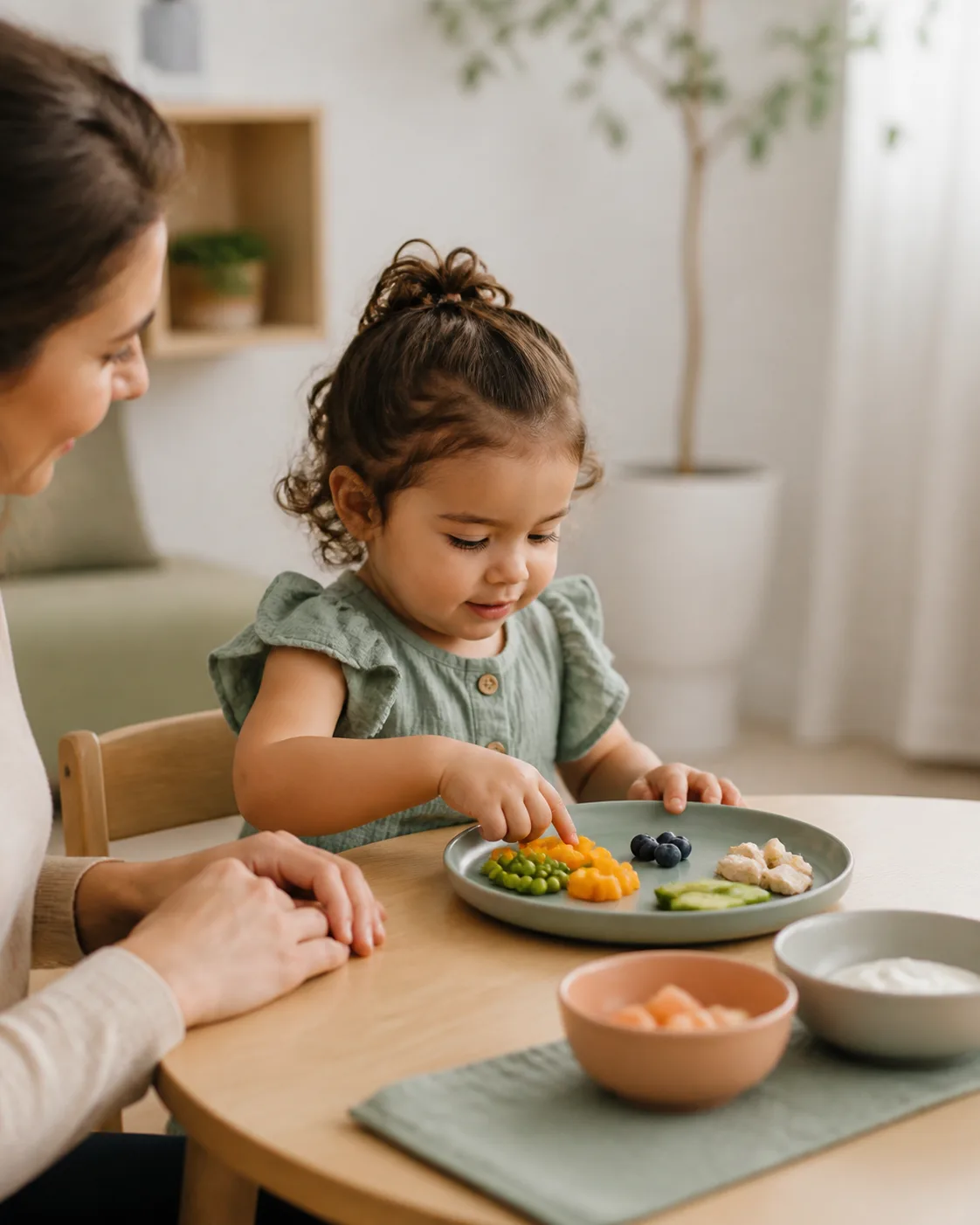
We start with an interview and by watching a mealtime. We build the plan around the family and the everyday rhythm of meals. We work without pressure and without force feeding. We see you at two practices in Gdańsk: Ujeścisko and Morena.
Feeding therapy scope
We start with the child's needs and the full picture of the difficulty, not only its name.
Feeding assessment
We talk with the caregiver about what actually happens at the table - what the child eats, what they avoid, and how a meal usually goes. We observe a real feed, checking pace, reactions to different textures, and how the child holds or moves food in the mouth. Choking, coughing during meals, or weight loss are signs needing medical review first, so we refer to a paediatrician or ENT specialist before continuing.
Food selectivity and textures
We work with children who eat a narrow range of foods or refuse whole texture groups - purees, lumps, or firmer foods. We introduce new tastes and textures in small steps, and caregivers learn to offer food at home without turning meals into a fight. Ordinary picky eating usually fades with time, but a very narrow diet, weight loss, or strong mealtime distress means we work alongside a paediatrician and dietitian.
Functions involved in eating
We check the oral functions a child needs to feed - sucking, biting, chewing, and swallowing - and how the child physically manages different foods. We work on lip, tongue, and jaw strength and coordination, matching food texture and offering to what the child can currently do. Therapy does not replace swallowing imaging - if aspiration is suspected, we refer for instrumental assessment and work alongside a doctor.
Ujeścisko and Morena
Feeding therapy is available at both StacjaMowa locations in Gdańsk, so the caregiver can pick whichever is easier to reach. The first visit is a diagnostic consultation at the chosen location, and later sessions are booked at the same place whenever possible. The exact date and details of each visit are set in conversation with the caregiver, because they depend on what the consultation shows.
Feeding assessment and therapy
A first diagnostic consultation precedes therapy and helps set its scope.
First diagnostic consultation
A caregiver conversation, observation, and discussion of possible next steps before therapy begins.
- Discussion of everyday meals
- Observation of the child's needs
- Setting a possible plan
Ongoing feeding therapy
Individual work set after the diagnostic consultation and matched to the identified needs.
- Goals matched to the child
- Collaboration with the caregiver
- Next steps discussed after assessment
Frequently Asked Questions
Find answers to the most frequently asked questions
Worth reading
Short articles from our therapists that go deeper
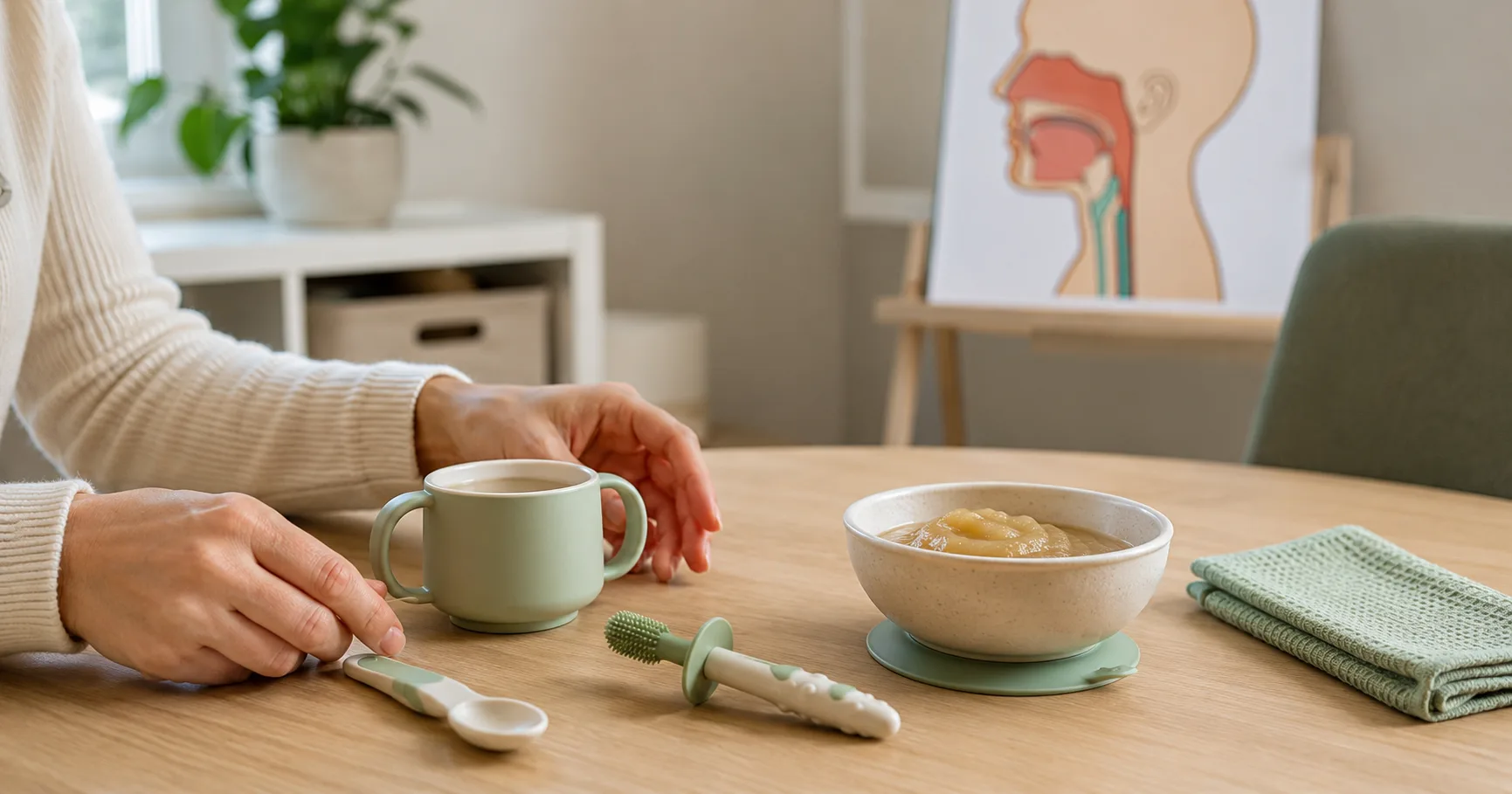
See other services
More therapies we offer
Infant neurological speech therapy
Oral functions, communication and infant feeding.
- Conversation about daily difficulties
- Observation of communication and function
- Discussion of a further plan
Myofunctional therapy
Chewing, swallowing and breathing functions.
- MFT assessment
- Exercise plan
- Orthodontist collaboration
GOPEX therapy
Resting oral posture and craniofacial functions.
- Diagnosis included
- 30 days counselor support
- Orthodontic collaboration
Book a feeding therapy consultation
Let's discuss your everyday observations and possible next steps.