Dysphagia after stroke is a difficulty swallowing saliva, liquids, medication, or food safely. It can show up as choking, coughing after meals, a wet-sounding voice, longer eating times, or avoiding certain textures. It calls for a calm, specialist assessment, because the goal is not only comfort but also lowering the risk of aspiration, malnutrition and dehydration.
What is dysphagia after stroke?
Dysphagia means a swallowing disorder. After a stroke, it can affect the stage of preparing a bite in the mouth, moving it towards the throat, protecting the airway, or coordinating swallowing with breathing. For the patient and family, this can be surprising, because the problem does not always look dramatic. Sometimes a person simply eats more slowly, sips more often, clears their throat after every swallow, or gives up foods they used to eat without difficulty.
In the broader rehabilitation picture, dysphagia often co-occurs with aphasia, dysarthria, facial muscle weakness, or reduced respiratory capacity. It is best read as part of the neurological picture after stroke, not as a separate, purely domestic eating problem. We describe this wider approach in our article on speech rehabilitation after stroke and the neurologopedist's work.
Symptoms worth watching for during eating and drinking
The most visible signal is choking, coughing, or gagging during a meal. However, this is not the only symptom. Swallowing disorders can also show up as a wet, gurgling voice after eating, food pocketing in the cheek, liquid leaking from the mouth, difficulty swallowing a tablet, prolonged chewing, or a need for very frequent rest breaks during a meal.
In some people the signals are less obvious. The family notices that their loved one is eating less and less, losing weight, drinking very little, or avoiding shared meals. Recurrent respiratory infections, unexplained fever, or fatigue after eating can also appear. The possibility of so-called silent aspiration is especially important - when material enters the airway without obvious coughing. This is why the absence of choking does not automatically mean swallowing is safe.
It is worth noting down for observation:
- with which texture coughing or throat-clearing appears,
- whether the difficulty is worse with liquids, solid food, or tablets,
- whether the voice changes after a meal,
- how long a meal takes and whether the patient tires quickly,
- whether infections, weight loss, or dehydration have appeared.
When is an urgent medical assessment needed?
After a stroke, swallowing difficulties should be assessed by the medical team before the patient starts eating and drinking independently. If the problem appears after returning home or gets worse during rehabilitation, it is not worth waiting for the next routine appointment. Swallowing symptoms can affect hydration, taking medication, nutrition, and respiratory safety.
Important
A neurologopedic consultation does not replace hospital treatment, neurological follow-up, or a doctor's decisions about diet, medication, or nutrition. It can, however, help organise swallowing function, choose safe strategies for everyday eating, and teach the family what to watch for between medical appointments.
What does a step-by-step swallowing assessment look like?
The assessment starts with a case history: when the stroke happened, what the hospital recommendations were, whether the patient has already had a swallowing assessment, how they take medication, and whether infections have occurred. The specialist also asks about fatigue, eating position, dentures, the condition of the mouth, level of alertness, and communication abilities. This information matters, because swallowing depends on several systems working together.
The neurologopedist then assesses the mobility of the lips, tongue, cheeks and jaw, voice quality, cough, breathing, and saliva control. If the situation requires it, the specialist refers the patient for further medical assessment or instrumental tests, such as videofluoroscopy or an endoscopic swallowing evaluation. These tests allow the swallowing process to be seen directly and are especially important when symptoms are unclear or aspiration is suspected.
For the family, it matters that the diagnosis does not end with the label "dysphagia". A good assessment should answer practical questions: which situations are risky, which strategies make sense, whether a dietitian consultation is needed, when to come back for review, and what not to do independently.
What can swallowing therapy after stroke include?
Swallowing therapy is not one universal list of exercises. The plan depends on the mechanism of the difficulty, the patient's health status, medical recommendations, and what matters most in daily life. For one person the goal will be better control of saliva and the bite; for another, safer intake of liquids; and for another, learning strategies that reduce the risk of aspiration during a meal.
In practice, therapy may include:
- exercises for the tongue, lips, cheeks and jaw,
- work on breathing, coughing, and breath-swallow coordination,
- compensatory strategies chosen for the specific patient,
- education about position, eating pace, and meal organisation,
- cooperation with the doctor, dietitian, physiotherapist, or carer.
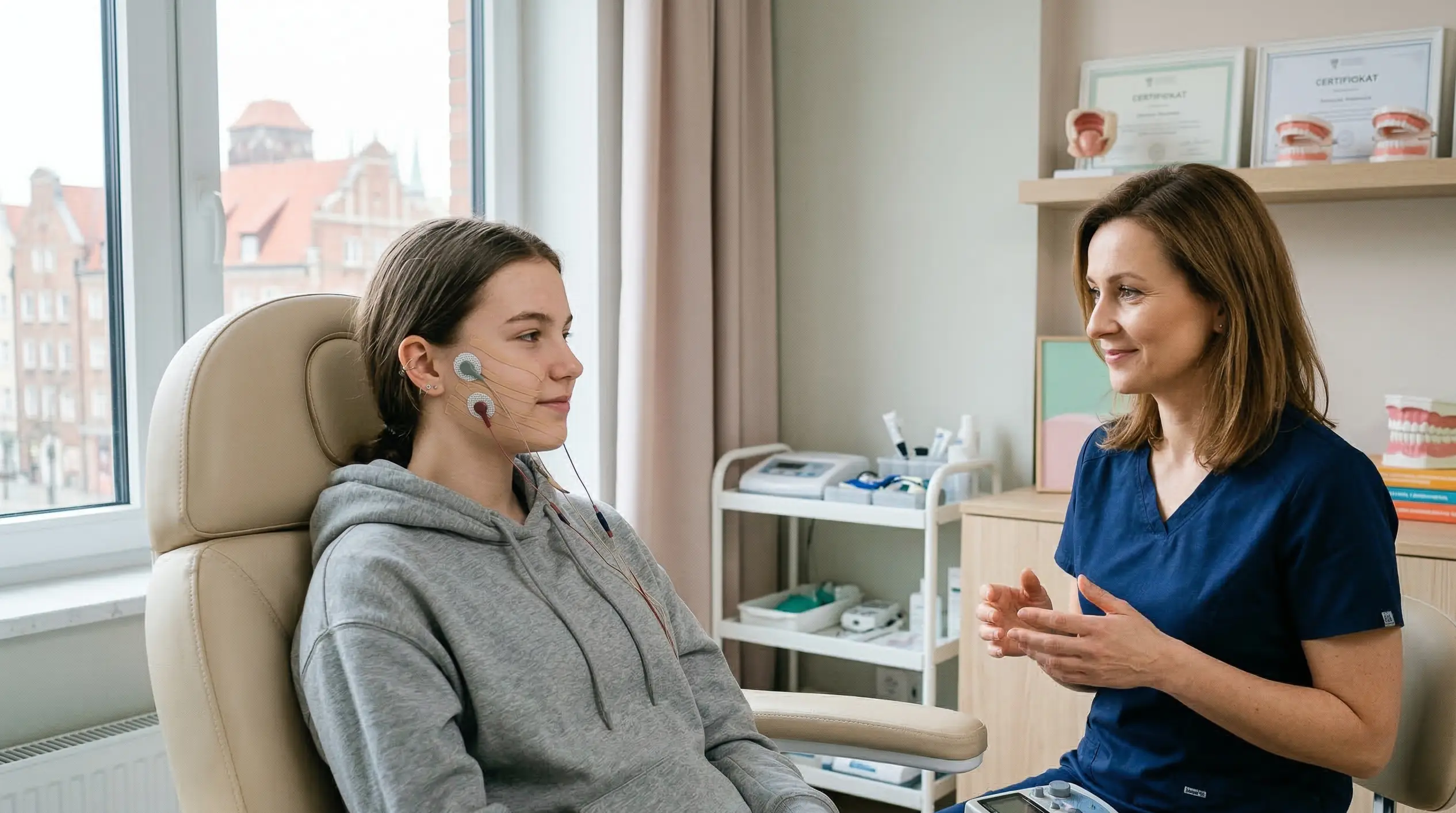
Some people also use supportive methods, for example electrical stimulation as part of a broader therapy plan. This is not a method suitable "for every dysphagia" and always requires assessment and checking medical contraindications. We write more about this approach in our article on electrical stimulation and taping in speech therapy.
What not to do without a specialist's recommendation
With dysphagia after stroke, a family's good intentions sometimes lead to risky attempts. The most common mistake is independently "testing" whether the patient can manage water, soup, a tablet, or firmer food. If the swallowing mechanism is impaired, such an attempt can end in choking, aspiration, or considerable anxiety about the next meal.
A second mistake is automatically thickening everything or blending food without a plan. A modified texture is sometimes needed, but it has to match the specific mechanism of difficulty, hydration status, chewing ability, and dietary recommendations. Excessive restrictions can lower appetite, make taking liquids harder, and worsen quality of life.
It is also not worth treating exercises found online as a ready-made rehabilitation programme. An exercise that helps one person may be too difficult, unnecessary, or insufficiently safe for another. First an assessment is needed, then a plan, and only at the end a home routine tailored to the patient.
How can the family support safety without adding pressure?
The family is an important part of therapy, but should not independently diagnose or experiment with textures. The safest kind of help consists of observation, good meal organisation, and consistently following the recommendations received from specialists. It is worth ensuring a calm pace, a stable sitting position, no rushing, and the option of a break when the patient gets tired.
Keeping simple notes can help: what the patient ate, whether coughing appeared, whether the voice changed, how long the meal took, and whether tiredness followed. Such observations make the next consultation easier, because the therapist then sees not just a single moment in the clinic room, but the real situation at home.
Everyday support also depends on oral hygiene and managing fatigue. Food residue left in the cheek, a dry mouth, poorly fitting dentures, or a meal offered at a moment of heavy drowsiness can all increase the difficulty. So a carer does not need to "run the therapy" themselves, but can take care of the conditions: a calm place, the right position, breaks, access to recommended aids, and contact with the specialist when something changes.
Tip for carers
Dysphagia and the neurologopedist in Gdańsk: how we work at StacjaMowa
At StacjaMowa we look at dysphagia after stroke in the context of the patient's whole functioning: speech, breathing, muscle tension, saliva control, fatigue, and family support. A neurologopedic consultation helps sort out which symptoms need further medical investigation, and what can be worked on therapeutically in the clinic room and at home.
We describe the scope of support on our neurologopedist in Gdańsk page. If, besides swallowing, unclear speech, difficulty finding words, or trouble understanding speech also appears, the starting point will be a broader neurologopedic assessment. When the difficulties mainly concern orofacial functions, it is also worth knowing the context of work on breathing, chewing and the tongue, which is described in our article on GOPEX therapy and breathing and swallowing.
Setting a realistic goal matters most. We do not promise a fast or complete reversal of symptoms. We work to help the patient and family better understand the difficulty, know when to react, and have a support plan matched to their current health status.
Key takeaways
- Dysphagia after stroke can affect eating, drinking, saliva and medication.
- Coughing is not the only signal; a wet voice, fatigue and infections also need attention.
- Meal textures should not be changed independently without a specialist's assessment and recommendations.
- A neurologopedist helps plan swallowing therapy, safety strategies, and family education.
- Urgent respiratory symptoms or a sudden decline after a meal require contacting a doctor.
Sources and further reading
The materials below are educational in nature. They do not replace a swallowing diagnosis or the recommendations of a doctor, neurologopedist, or the team caring for a patient after stroke.
- ASHA: Adult Dysphagia
- NICE: Stroke rehabilitation in adults - swallowing recommendations
- National Clinical Guideline for Stroke 2023
- American Stroke Association: Trouble Swallowing After Stroke
- ASHA: Diet Texture Modifications for Dysphagia
Want to learn more about therapy options?
Learn more about this therapyFrequently asked questions
- Does choking after a stroke always mean dysphagia?
- Not always, but after a stroke this symptom is worth taking seriously. Choking, a wet voice after eating, or a long swallowing time are all indications for a swallowing assessment by a suitably qualified specialist and the medical team.
- When should a swallowing problem after stroke be reported to a doctor?
- Urgent contact is needed for breathlessness, blue-tinged skin, intense choking, fever, recurrent respiratory infections, or a clear decline in general condition after eating. This article does not replace a medical assessment, especially in the first period after stroke.
- Can the family change meal textures on their own?
- They should not do this independently. Changing the texture of food or liquids should follow from a swallowing assessment, medical recommendations, and, where needed, a dietitian consultation. A texture that is too thin or too thick may be unsuitable for a specific person.
- How does a neurologopedist work with dysphagia after stroke?
- A neurologopedist analyses the symptoms and the patient's motor and respiratory abilities, then selects exercises, compensatory strategies, and recommendations for carers. In more complex cases, they work together with the doctor, dietitian and other specialists.
- Can swallowing therapy completely resolve the problem?
- This cannot be promised without an individual diagnosis. In some people swallowing function improves; for others the goal is safer eating, better risk control, and greater comfort during everyday meals.
- Does dysphagia after stroke only affect eating?
- No. The difficulty can also affect drinking, swallowing saliva, taking medication, and coordinating breathing with swallowing. This is why therapy needs to consider the whole meal situation, not just a single exercise.