A neurologopedic speech therapist supports patients whose speech, communication, or swallowing changed after stroke or other neurological conditions. Therapy focuses on practical communication, safe swallowing, and day-to-day participation. The goal is not a perfect voice, but the most functional communication possible in the current medical context.
Who a neurologopedic speech therapist is
This specialist combines core speech-therapy skills with training in neurological communication disorders. Typical areas include aphasia, dysarthria, dysphagia, and communication decline in neurodegenerative diseases.
In practice, therapy is coordinated with neurology, ENT, rehabilitation, and often family caregivers. The aim is to rebuild or compensate communication abilities in realistic, medically safe steps.
Stroke, aphasia, dysarthria, and dysphagia
After stroke, patients may experience aphasia (language formulation or comprehension difficulty), dysarthria (speech motor control difficulty), and dysphagia (swallowing problems). These areas often overlap and should be addressed as one coordinated functional plan.
A therapy plan may include:
- assessment of current communication abilities and fatigue,
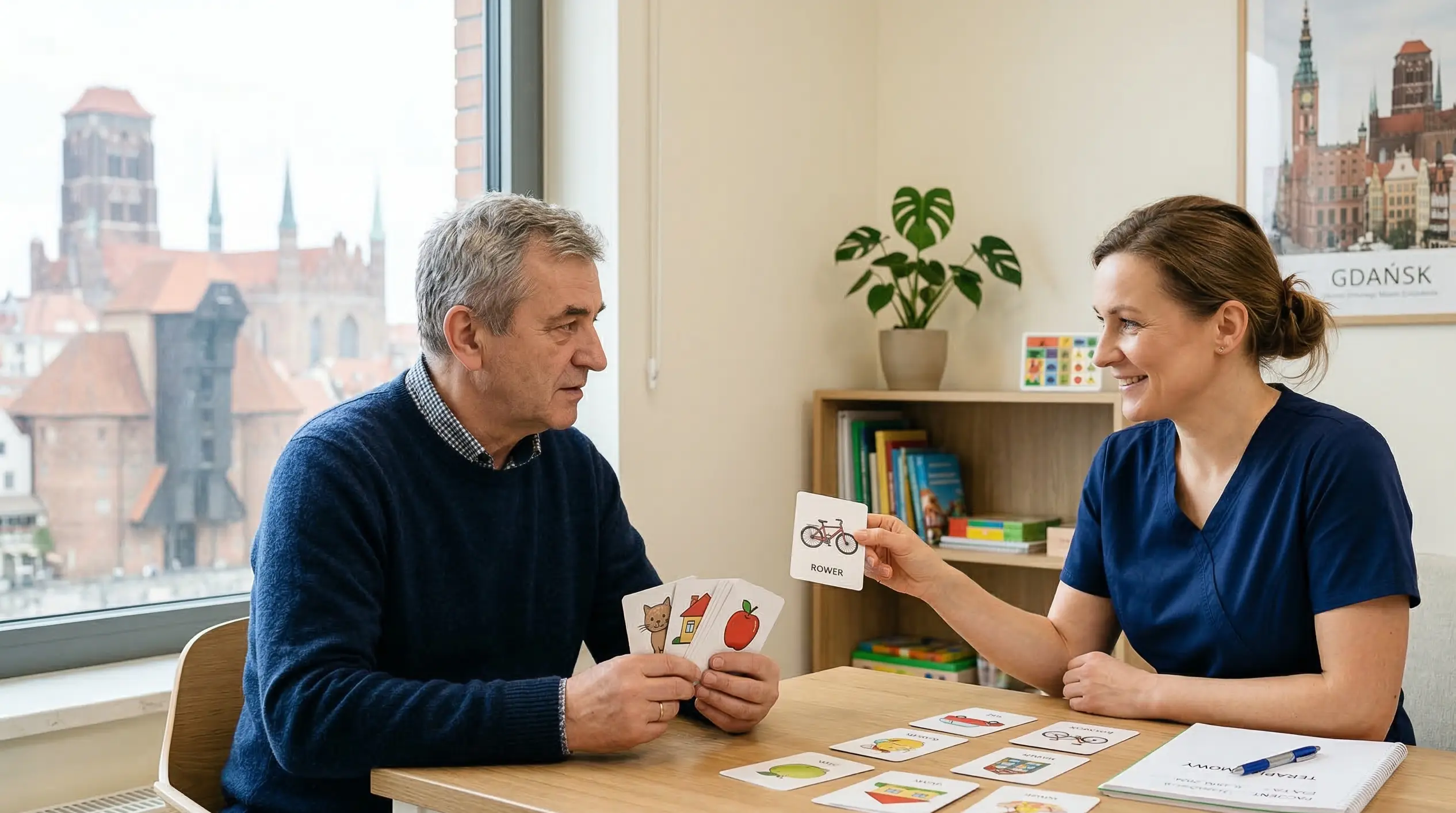
- targeted language exercises for understanding and expression,
- speech clarity and breath-voice coordination training,
- safe-swallowing strategies aligned with medical recommendations,
- alternative communication (AAC) tools when verbal output is limited.
Earlier start usually helps
When to book a neurologopedic consultation
Consultation is recommended not only after stroke, but also in Parkinson's disease, multiple sclerosis, traumatic brain injury, and other neurological conditions that affect speech, language, or swallowing.
Common indications include:
- difficulty understanding spoken messages,
- word-finding problems and disorganized speech,
- unclear, quiet, or quickly fatiguing speech,
- frequent coughing or choking during meals and drinks,
- clear communication changes noticed by family.
If communication concerns also involve children with broader language delays, see our guide on delayed speech development and when to seek support.
What the first visit looks like at StacjaMowa
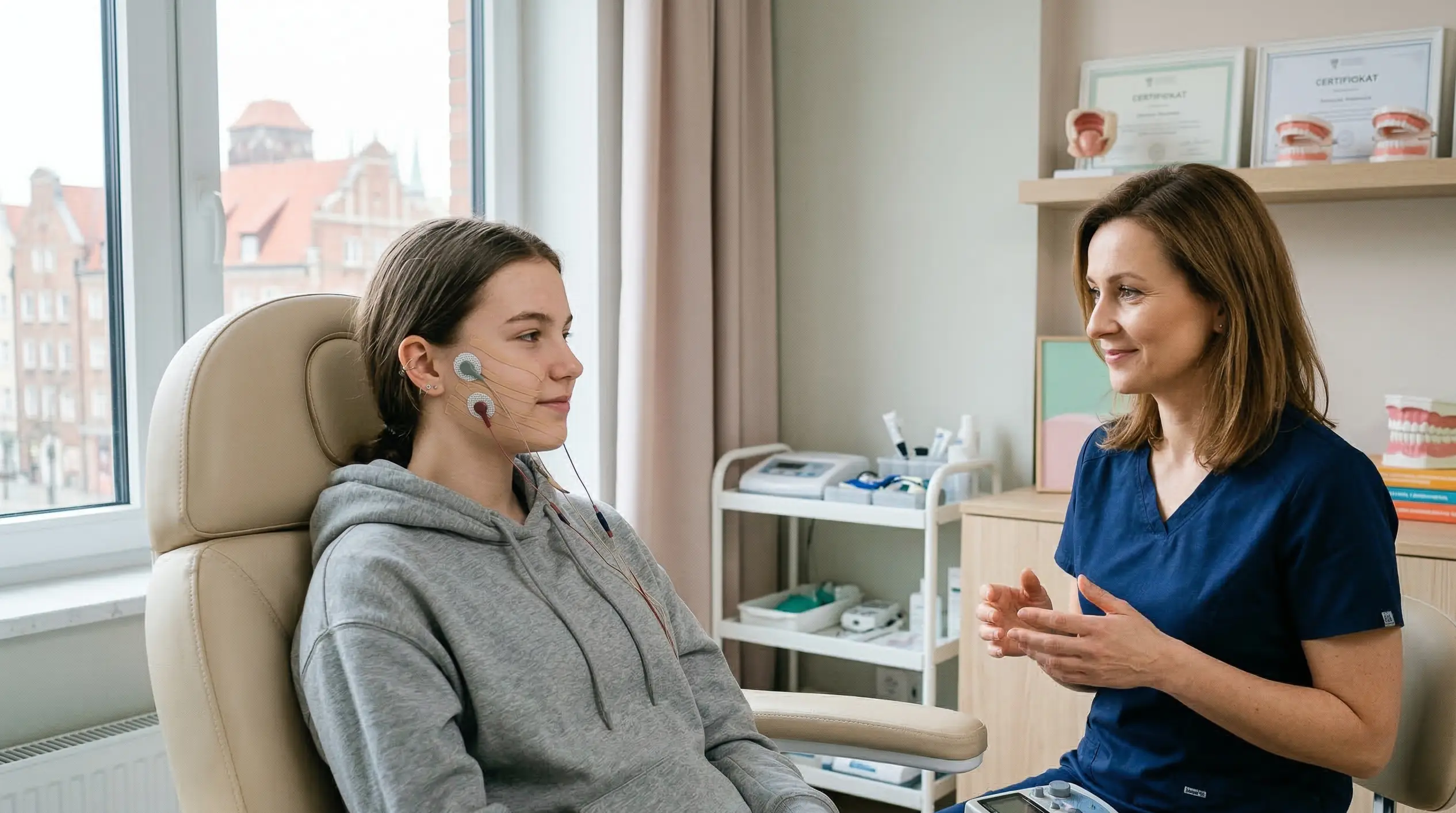
The first session is diagnostic and planning-focused. We review medical history, hospital treatment, current communication limitations, and patient stamina.
Depending on condition, the consultation may include:
- language comprehension and expression screening,
- speech intelligibility and voice-breath analysis,
- initial swallowing safety check,
- caregiver communication guidance for home routines.
How therapy is structured over time
Therapy is individualized. Some patients focus on rebuilding basic verbal communication, others on speech intelligibility or safer swallowing. In many cases, practical communication strategies are as important as direct language drills.
Progress is monitored through functional goals, for example clearer requests, better conversation endurance, or safer mealtime behavior.
Family communication changes outcomes
How to communicate with a loved one after stroke
Where to start if you need support now
Service details are available on our neurologopedic therapy page. We also offer ENMOT electrostimulation. If oral-function work is also relevant, read our article on myofunctional therapy and MFS stimulators. For adjunctive methods, see electrostimulation and taping in speech therapy.
Key takeaways
- A neurologopedic speech therapist specializes in neurological communication disorders - not only post-stroke.
- The earlier therapy begins after stroke, the better the chances of recovering communication ability.
- Family members are active rehabilitation partners - simple home strategies accelerate progress.
- Therapy combines methods: classical speech therapy, ENMOT electrostimulation, and AAC support.
External educational sources
- Adam Mickiewicz University (UAM): What is aphasia - overview
- Seniów J., Litwin M.: Post-stroke aphasia. Neurologia po Dyplomie 2013/02 (podyplomie.pl)
- Medycyna Praktyczna: Aphasia - symptoms and types (patient education)
- NIDCD: Aphasia
- NHS: Aphasia
Want to learn more about therapy options?
Learn more about this therapyFrequently asked questions
- How soon after stroke should neurologopedic therapy begin?
- Usually as soon as medical condition is stable and the physician allows rehabilitation. Earlier intervention often improves communication outcomes and helps prevent maladaptive patterns.
- Can aphasia and dysarthria occur at the same time?
- Yes, this is common after stroke. Aphasia mainly affects language processing, while dysarthria affects speech motor execution. Therapy often addresses both domains in parallel.
- Is neurologopedic therapy only for stroke patients?
- No. It may also be recommended in Parkinson's disease, multiple sclerosis, traumatic brain injury, and other neurological conditions affecting communication or swallowing.
- What if the patient gets tired quickly while speaking?
- Fatigue is clinically important. The therapist adjusts session intensity, pacing, and strategy selection to improve communication efficiency without overload.
- Should family members be involved in therapy?
- Yes. Caregivers shape everyday communication conditions. Practical home communication strategies often improve both interaction quality and emotional comfort.
- Does therapy still help if the stroke happened long ago?
- In many cases, yes. Even in later stages, therapy can improve functional communication and swallowing safety, although goals and progress rates are always individualized.