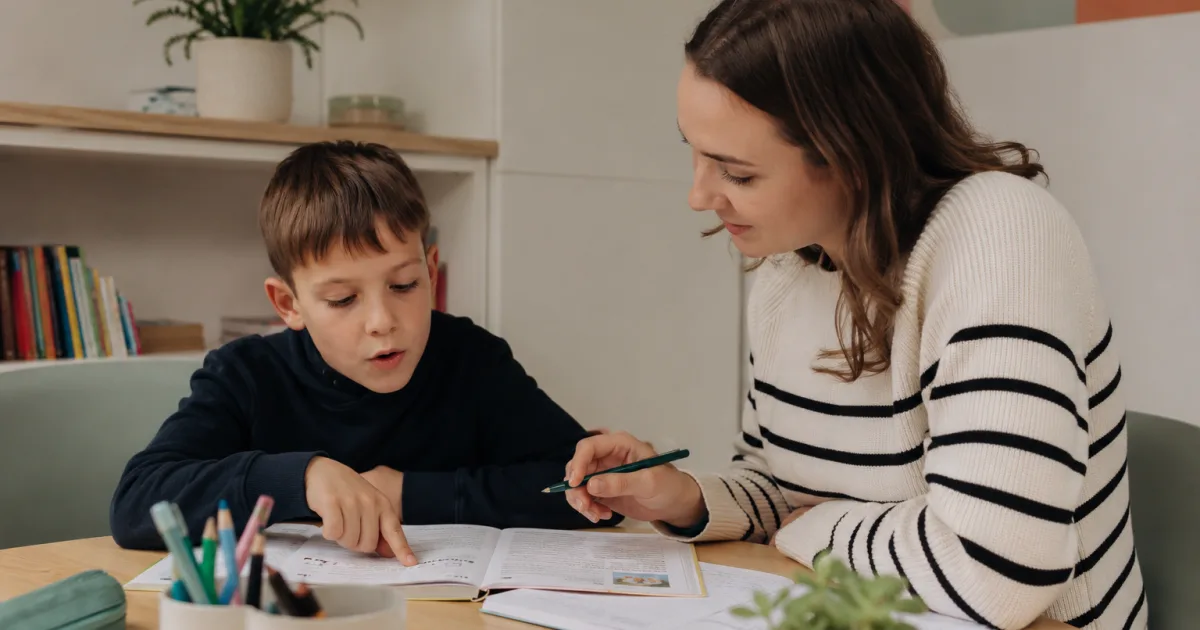
Delayed speech and language development means a child communicates later or with less complexity than expected for their age. In many families, the first sign is that the child understands a lot but struggles to express needs and emotions with words. In that situation, an early assessment with a pediatric speech therapist helps you decide what to do now instead of waiting in uncertainty.
What delayed speech development means in practice
Delayed speech development can show up as a smaller vocabulary, shorter utterances, and slower progress in combining words into meaningful messages. It does not automatically mean a severe disorder, but it does mean the communication profile should be evaluated carefully.
At home, this often looks like frequent pointing, pulling an adult by the hand, or frustration when others do not understand the child. These are important signals to assess communication broadly, not only by counting spoken words.
Warning signs by age: when to book an assessment
The checklist below is not a diagnosis, but it helps parents decide when a consultation should happen sooner.
Around 12 months:
- no babbling or very limited vocal play,
- no clear response to name or environmental sounds,
- limited social gestures such as waving or clapping.
Around 18 months:
- very few functional words,
- little or no imitation of new words,
- mostly nonverbal communication without attempts to speak.
Around 24 months:
- fewer than about 50 words,
- no two-word combinations,
- difficulty naming familiar people and objects.
Around 3 years and later:
- speech is hard to understand outside the immediate family,
- the child avoids speaking in new situations,
- communication level is clearly below peer level.
Early support matters
Common myths that delay help
"Boys always talk later, so we should wait." Natural variation exists, but waiting too long may reinforce communication barriers.
"Everyone in our family spoke late, so it will pass." Family history is relevant, but it does not replace an individual assessment.
"If the child understands, there is no issue." Comprehension is a strength, but expressive language may still require targeted support.
If your child speaks but mispronounces sounds, read our article on lisping in children.
What the first visit at StacjaMowa looks like
During the first appointment, the therapist collects developmental history, observes spontaneous play, and evaluates communication patterns such as understanding, imitation, gestures, and early sentence building.
We also review factors that can affect speech development, including oral habits, breathing pattern, feeding difficulties, and hearing history. If needed, we recommend further consultation with ENT, audiology, psychology, or physiotherapy.
If you also want to understand oral-function support in practice, see our article on MFS stimulators and myofunctional therapy.
What a therapy plan may include
The plan depends on age, communication profile, and the child's current readiness to participate. Most often it includes:
- building motivation to communicate through play and routines,
- expanding receptive and expressive vocabulary,
- supporting functional two-word and multi-word combinations,
- working on oral functions linked to speech clarity,
- introducing AAC elements when needed to reduce frustration early.
In our practice, family-friendly consistency matters more than long, irregular exercises. Short daily tasks usually work better in real life.
If the difficulty persists despite therapy and you are wondering whether this is still a delay or already a lasting language disorder, we explain the difference in our article on telling a speech delay apart from DLD.
How to support speech at home without pressure
- use clear, simple language and describe what happens now,
- pause and give enough time for response,
- read short books and label pictures together every day,
- reduce screen time in favor of face-to-face interaction,
- reinforce every communication attempt, even imperfect ones.
Tip for parents
When to see a pediatric speech therapist
If you are unsure whether your child's speech is on track, it is safer to ask early than to wait several more months. Sometimes parents only need practical guidance; in other cases, regular therapy is the right next step.
You can also review our service pages for speech therapy in Gdansk and pediatric neurologopedic support.
On a separate page we describe assessment and therapy for delayed speech development.
Key takeaways
- Delayed speech does not mean the child will simply "grow out of it" - early intervention is key.
- Developmental milestones (12, 18, 24, 36 months) help identify warning signs.
- A speech assessment is not a label - it is an action plan for the family.
- AAC elements can support communication before verbal speech emerges.
Sources and reference milestones
Developmental milestones should always be interpreted individually, but these resources are useful educational references:
- Michalczyk A. (2016). Delayed speech development and its impact on child development. Logopedia Silesiana, 5 - University of Silesia (OA)
- Skalny M. (2023). Effective stimulation of linguistic development in children up to age 2. Logopedia Silesiana, 12(1) - University of Silesia (OA)
- NIDCD: Speech and Language Developmental Milestones
- NHS: Help your baby learn to talk
Want to learn more about therapy options?
Learn more about this therapyFrequently asked questions
- Does delayed speech always mean a serious disorder?
- No. Delayed speech can have different causes and severity levels. The purpose of an assessment is to identify the communication profile and choose support appropriate to the child's current needs.
- Should we see a therapist if our child understands but speaks very little?
- Yes. That is a common profile in delayed speech development. Good understanding is a strength, but expressive language can still require structured intervention.
- How many words should a child use around age two?
- A common warning signal is fewer than about 50 words and no two-word combinations. This is only a reference point, so final interpretation should always be clinical and individualized.
- Can we support speech development at home without pressure?
- Yes. Short, regular routines work best: shared play, naming everyday actions, reading together, and allowing response time. Progress is built through consistency rather than intensity.
- When should we add ENT or audiology consultation to speech therapy?
- Especially when the child responds weakly to sounds or name, has recurrent ear infections, or there are concerns about hearing history. Hearing assessment is a key part of speech-delay diagnostics.
- How soon can we expect therapy effects?
- Progress rate is individual and depends on causes, age, and home consistency. Instead of fixed timelines, we track practical communication goals during follow-up visits.