A pediatric speech therapy assessment is not an exam your child has to pass. It is a calm meeting where the therapist learns how your family communicates, how your child behaves, and what you need. Solid preparation-gathering information and documents, and supporting your child emotionally-helps you get the most from the visit without added stress. Below is a step-by-step guide to preparing for a first speech therapy appointment at StacjaMowa.
What is a pediatric speech therapy assessment, and why is it done?
A speech therapy assessment is a process in which the specialist checks how your child's speech and language are developing, how the speech organs work, how well your child understands instructions, and how they communicate in daily life. It covers what you hear in their utterances (vocabulary, sentence structure, clarity) and related factors-breathing, swallowing, eating patterns, and muscle tone around the face. The therapist uses play observation, conversation, simple tasks, and, when needed, age-appropriate tests or questionnaires.
The goal is not to pin a label on the child, but to build a practical plan for the family: what to practice at home, whether regular therapy is needed, and if so, in what format and how often. At StacjaMowa, the first visit is diagnostic and planning: the therapist takes a case history, observes your child at play, and proposes next steps. Sometimes that means a few sessions and clear guidance for parents; sometimes it leads to a broader plan with speech therapy, neurologopedic therapy, or sensory integration.
When is it a good idea to book a speech therapy assessment?
Parents often wonder whether it is "too early" or better to wait. In practice, it is usually safer to consult earlier than too late-early assessment can ease difficulties and reduce mounting frustration at home and in preschool. In our article on delayed speech development in children, you will find age-based warning signs such as limited babbling, very few words around 18 months, or missing two-word combinations in the second year of life.
It is also worth booking a visit when a teacher or pediatrician repeatedly flags speech concerns, or when you feel worried even if you cannot name the issue in one sentence. Feeding difficulties, drooling, mouth breathing, or very selective eating may point to orofacial function issues-not only food selectivity. At StacjaMowa, the first visit reviews these areas too, so further referrals (ENT, audiology, SI) can be planned when needed.
How can parents prepare for the visit?
A good assessment starts with a conversation with the parent, so it helps to jot down key facts and questions beforehand: pregnancy and birth history, early milestones, illnesses, how your child functions at preschool or school, and when speech difficulties show up most. Write down real-life examples of what your child says rather than vague phrases like "they mumble"-that makes the clinical picture clearer.
Our FAQ page explains that you should bring prior medical records plus your observations and questions-our team will also remind you when scheduling. Bring hearing test results, psychological reports, hospital discharge summaries, preschool notes, or special education documentation when you have them, to avoid repeating the same tests. Before the visit, consider what matters most right now: do you mainly want to understand what is going on, or do you need concrete tools for home practice?
Tip
Helping your child prepare: conversation, emotions, practical tips
How you describe the visit has a big impact on your child's mindset. Avoid framing it as "the lady will check whether you speak nicely" or "you must try hard"-that increases pressure and may make speech sound less natural. Instead, you might say you are visiting someone who has interesting toys and books and wants to get to know your child-what they like, how they play, and how they talk about their world.
Leave room for questions: who will be there, will it hurt, what will we do? You can answer simply: you will talk and play together, nothing should hurt, and the therapist will listen to how your child speaks and help them communicate more easily with others. If your child has a favorite toy, book, or drawing, inviting them to bring it can bridge home and the new place.
On the day of the visit, aim for a calmer morning where possible: less rushing, fewer extra stressors, and limited screen time right before the session, because an overstimulated child may find it harder to connect. At StacjaMowa, appointments can be scheduled within family-friendly hours (see our FAQ for opening hours and logistics). Pick a time slot when your child is usually rested and regulated-this can be arranged when you book.
What to bring to the first speech therapy visit
The list does not need to be long, but a few items make the visit smoother. It helps to bring:
- the child's health booklet and any hospital letters, summary sheets, or test results (e.g., hearing, neurology, ENT),
- preschool or school notes, certificates, and documents about development, functioning, or special educational needs,
- bullet-point observations about speech, eating, behavior, sleep, and reactions to sensory input,
- a list of current medications and information about relevant chronic conditions.
If your child has had speech therapy, neurologopedic therapy, SI, psychology, or other support, bring previous reports and therapy plans so the therapist can see what was already tried, what worked, and what may need updating. Water and a small snack can help if your child tires easily; a comfort toy may support younger children.
What the first visit at StacjaMowa looks like, step by step
The first visit is usually a diagnostic consultation and lasts up to 60 minutes. It begins with the parent interview: the therapist asks about your concerns, developmental history, illnesses, pregnancy and birth, and functioning at home, preschool, or school. This is where you share worries and goals-some families need clarity and a sense of direction first, not an immediate intensive therapy schedule.
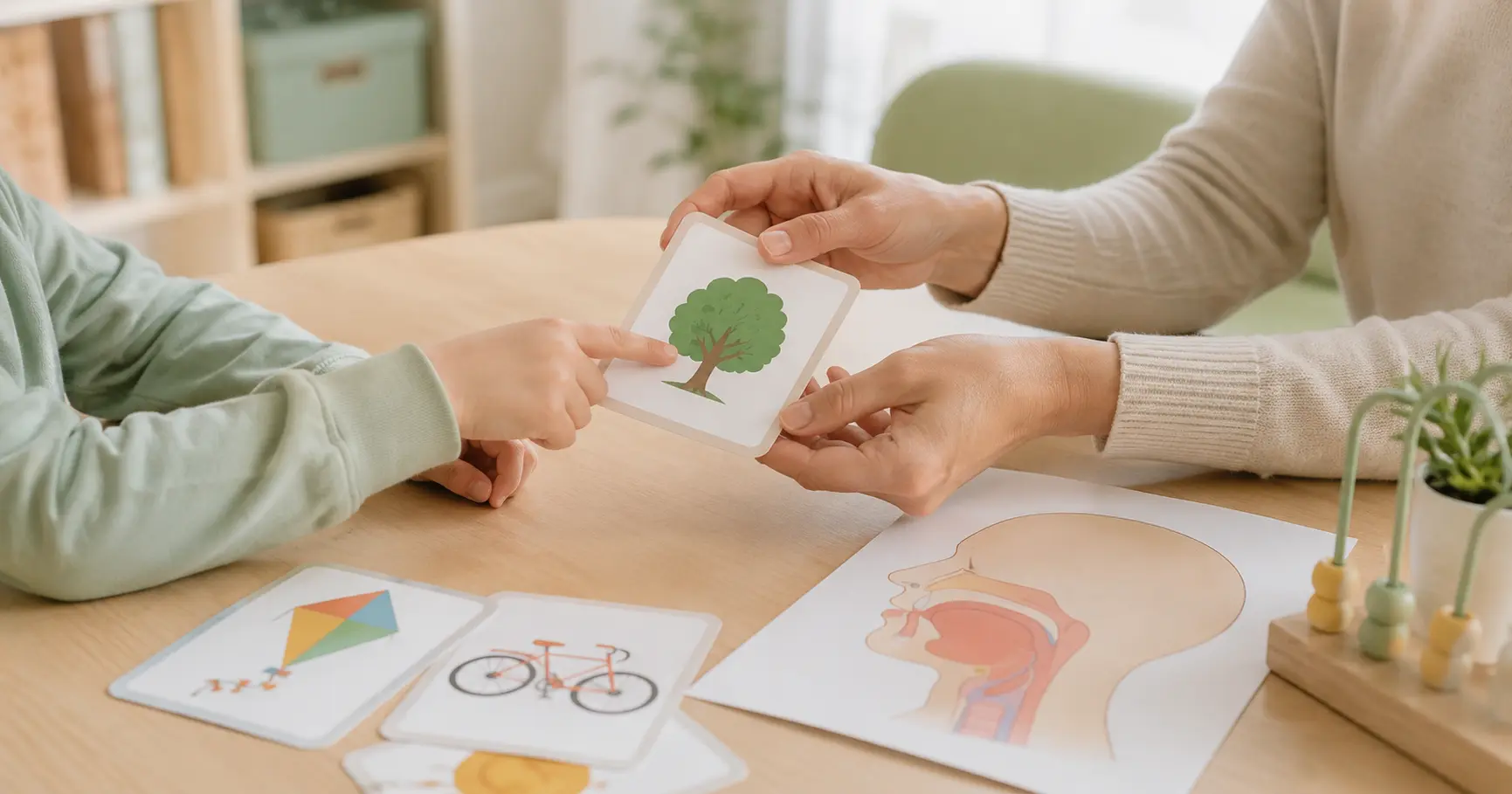
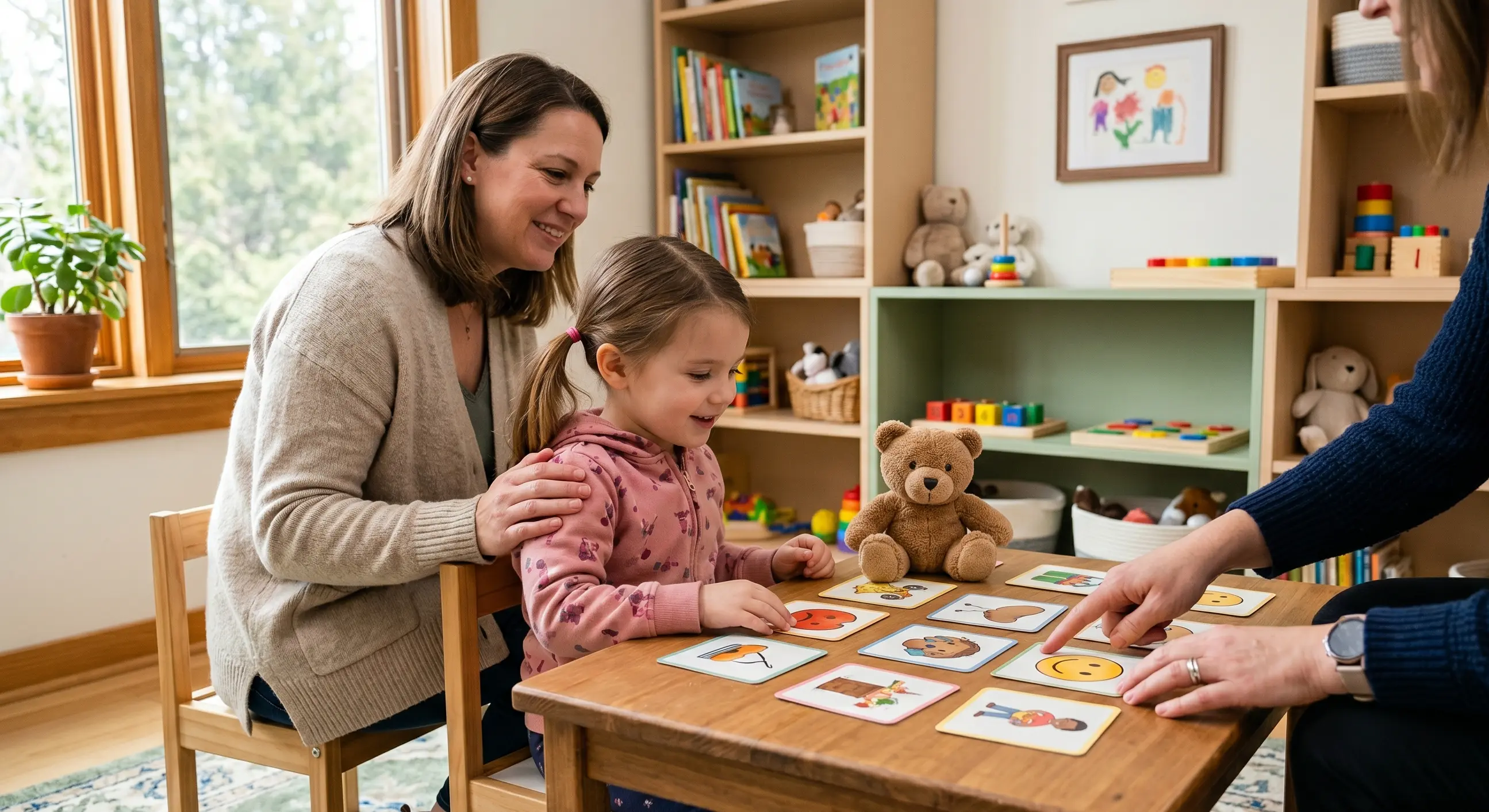
Next, the therapist works with your child: spontaneous play observation, age-appropriate tasks (naming pictures, simple commands, repeating syllables or short sentences), and review of articulation, fluency, rate, and comprehension. For younger children, feeding, chewing, swallowing, breathing, and habits such as pacifier use or thumb-sucking matter too. If needed, the therapist may suggest another diagnostic session or referral (e.g., ENT, psychologist, physiotherapist).
At the end, you discuss a preliminary plan: whether speech therapy or neurologopedic therapy is recommended, how often to meet, simple home strategies, and when to book a follow-up. At StacjaMowa, this plan is individualized-sometimes biweekly sessions with strong home practice are enough; sometimes a more frequent cadence is suggested. For preschool and school-age children, our article on preparing for reading and writing adds perspective on school readiness alongside speech assessment.
Important
Supporting your child after the assessment
Many parents feel relief after the visit, but also information overload. Ask the therapist for a short written summary or bullet points you can revisit at home. Agree how you will handle questions that appear later-often a follow-up visit is the right place to revisit details.
In daily life, small steps repeated often matter most: short language games, simple books, narrating what happens right now, giving your child time to respond, and reinforcing every communication attempt-including nonverbal ones. For more ideas, see our articles on delayed speech development and preparing for reading and writing. If anything is unclear, check our FAQ page or book a shorter consultation to clarify recommendations.
Key takeaways
Key takeaways
- A speech therapy assessment is about understanding your child, not grading them-the goal is practical support, not a school-style mark.
- Strong preparation includes medical documents, a calm conversation with your child, and realistic expectations.
- The words you choose ("someone who wants to play and get to know you") meaningfully reduce your child's stress.
- At StacjaMowa, the first visit combines parent interview, play observation, speech and orofacial review, and joint planning (up to 60 minutes).
- Regular, simple home practice aligned with your therapist beats rare, intense bursts of exercises.
Want to learn more about therapy options?
Learn more about this therapyFrequently asked questions
- From what age can a child have a speech therapy assessment?
- Assessments are possible for very young children-even before age two-if babbling, first words, or other worrying signs are missing. In practice, many families prefer to consult early and hear that development is on track rather than waiting months in uncertainty.
- Should I practice “clearer speech” with my child before the appointment?
- That is usually unnecessary and extra pressure rarely helps. The goal is to see everyday communication. Forcing “perfect speech” before the visit can increase tension and make observation less representative.
- What if my child refuses to cooperate during the session?
- It happens and it can be normal. Experienced therapists use gradual rapport-building strategies; sometimes the first visit mainly helps your child feel safe in a new space. If needed, assessment can be spread across shorter visits.
- Do I need to stay in the room during the assessment?
- For younger children, a parent is often present for safety and to observe natural interaction. For older children, a short one-to-one session may work better-this is always agreed individually.
- Will we receive a full diagnosis and therapy plan after a single visit?
- Sometimes yes, especially in simpler cases. In more complex situations, the therapist may recommend further diagnostic sessions or referrals before a complete formulation of difficulties is possible.
- How often will we attend speech therapy after diagnosis?
- Frequency depends on the child’s age, type of difficulty, and family routines. At StacjaMowa the plan is set individually-sometimes biweekly sessions with strong homework are enough; sometimes a more intensive schedule is recommended. See our speech therapy and neurologopedic service pages in Gdansk for scope.