First words rest on three core skills that develop in the first year of life: eye contact, joint attention, and the pointing gesture. Here is what to watch for, when not to delay a professional consultation, and why speech therapy often begins with shared attention rather than words.
Parents of a two-year-old who is not yet speaking usually ask about words: how many should there be, how to elicit them, or whether to repeat picture names. However, before the first spoken word emerges, a child needs to master several foundational communication skills. Without them, learning new vocabulary stalls because the child does not connect the spoken word with the object you are looking at together.
Three foundations of speech
Eye contact. From the earliest days, a newborn readily gazes at human faces, and by around 3 months of age, an infant smiles in response to speech and “answers” with cooing (Feldman, 2019).
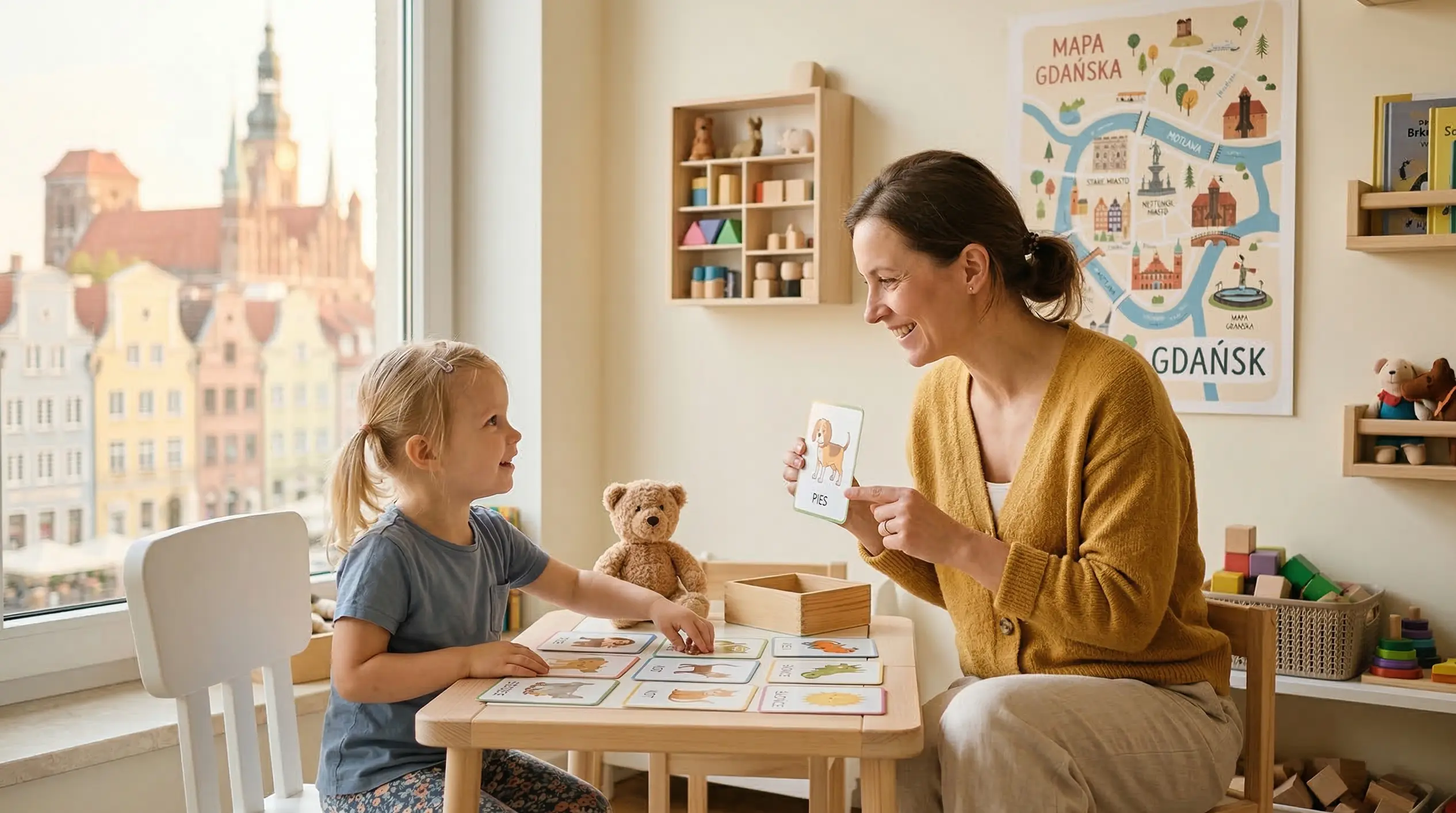
Joint attention, also known as a shared attentional frame, grows out of eye contact. Both child and adult look at the same object, and both are aware of looking together. A parent says: “Look, a doggy!”. The toddler looks at the dog, then glances back at the parent. Or the child points to the dog, calls out “oh!”, and checks whether the parent sees it too.
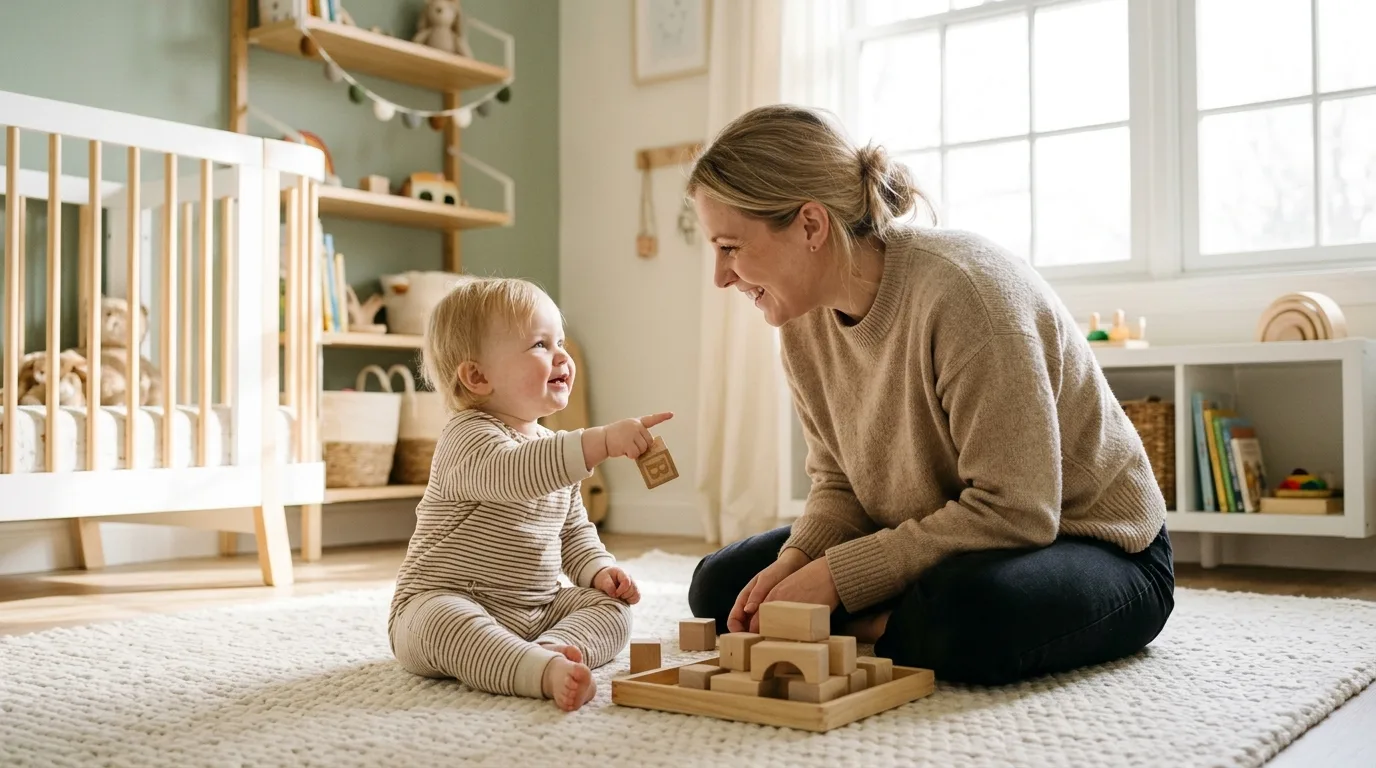
The pointing gesture. Around 9 months, an infant begins pointing to what they want and what catches their interest (Feldman, 2019). They also become much better at following an adult’s pointed finger with their eyes.
In a longitudinal study, infants who followed an adult’s gaze at 10–11 months and spent longer looking at the referenced object expanded their expressive vocabulary faster up to their second birthday. When pointing gestures were factored into the analysis, the relationship was even stronger (Brooks & Meltzoff, 2008). In a smaller study of 10 children, many words that children initially “expressed” through gesture later emerged in spoken language (Iverson & Goldin-Meadow, 2005). A meta-analysis of nearly 3,700 children confirmed the strong link between joint attention and language development, particularly pronounced in children on the autism spectrum and when the child responds to an adult’s gaze or point (Bottema-Beutel, 2016).
All three foundational abilities should be firmly established by the end of the first year of life.
Signs worth noticing
Around the first birthday, it is worth paying close attention if your child:
- does not look where you point (“look, an airplane!”);
- does not try to show or point out interesting objects to you;
- rarely establishes eye contact or holds it only for a fleeting second;
- does not imitate facial expressions, gestures, or sounds;
- does not bring toys to share them with you or show them off;
- remains passive during play or plays alongside you without back-and-forth engagement.
A single observation on this list is a reason to try the shared-attention play activities outlined below for a few weeks to monitor progress. Multiple signs appearing together, or any red flag from the list below, call for a consultation now rather than waiting months to see if speech picks up on its own.
When to schedule a consultation?
A pediatric clinical review highlights specific milestone indicators warranting formal speech and communication evaluation (Feldman, 2019):
- at any age – the child rarely and reluctantly engages in social interaction with others;
- around 9 months – does not respond to their name and does not babble (e.g. “baba”, “dada”);
- around 12 months – does not point, does not use gestures, or does not wave “bye-bye”;
- around 18 months – speaks fewer than 5 words besides “mama” and “dada”;
- around 24 months – speaks fewer than 50 words, does not yet combine two words, or an unfamiliar adult understands less than half of their speech;
- by 36 months – loses previously acquired speech or social interaction skills.
Any one of these signs is enough to arrange an evaluation. Your child does not need to show several of them first.
Crucial medical considerations
Attention first, words later
A systematic review of 77 scientific publications on the role of gaze in early language development demonstrated that infants map new words to objects much more readily when an adult directs gaze toward that object (Çetinçelik et al., 2021).
That is why speech therapy for delayed speech development rarely begins with drilled word repetition. A child needs to see and hear the adult, engage in reciprocal interaction, master give-and-take, and imitate. Only on this social foundation can syllables, words, and sentences be meaningfully built.
Attention difficulties present differently across children. Some maintain focus only fleetingly: they glance at a toy and immediately move away. Others experience sensory overload, distracted by every small stimulus: a noise from the kitchen, an extra toy on the shelf, or light through the window. In the first scenario, attentional span is gently and patiently extended; in the second, environmental clutter must first be reduced: one toy on the table at a time, the rest put away, and the television in the background switched off.
How to practice joint attention at home?
Shared attention can be nurtured during ordinary everyday activities:
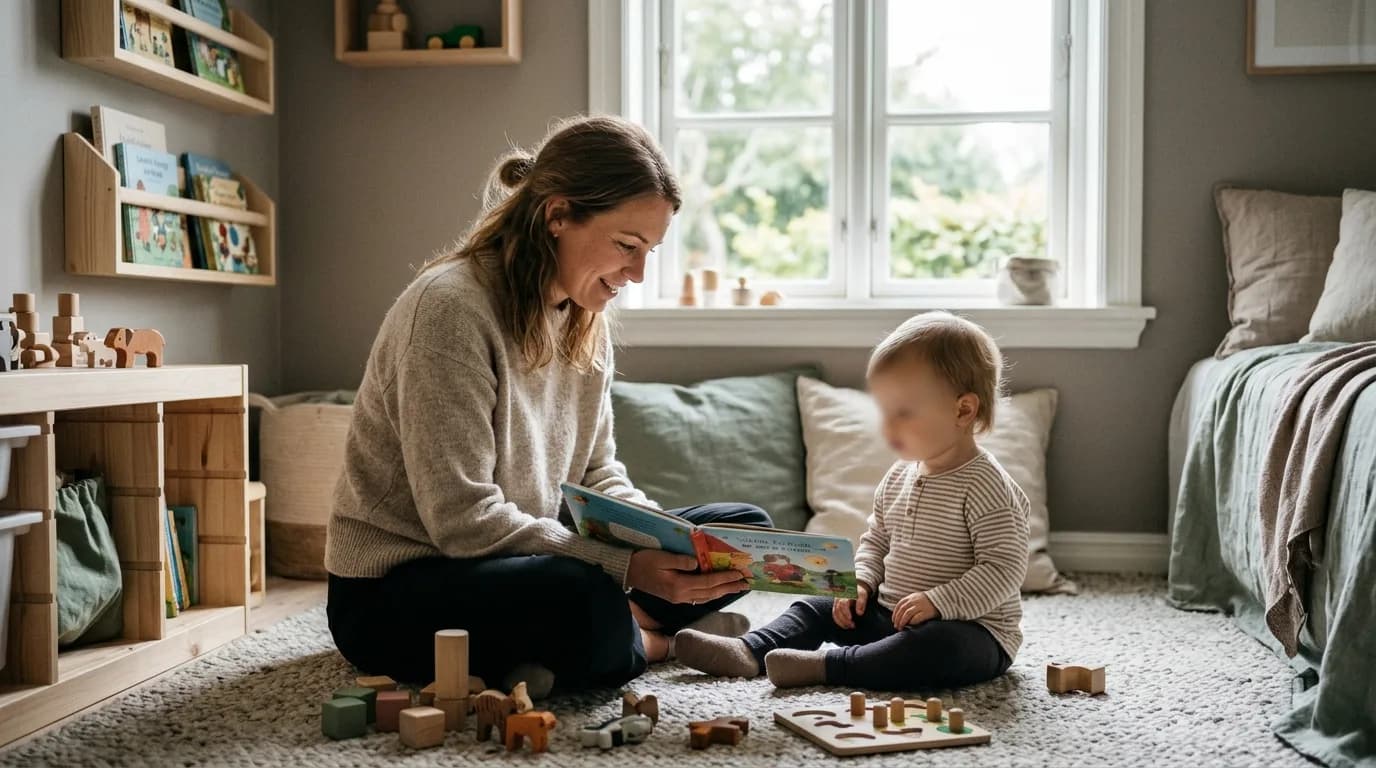
- Stay at the child’s eye level. Sit directly opposite on the floor or at a low table, so your child can see both your face and the play object at the same time.
- Follow their lead and interest. Briefly label what your child is currently gazing at: “Ball! It rolls!”.
- Use a consistent cue word. A single word right before an exciting moment, such as “Look!”, “Ready!”, or the child’s name, becomes a clear signal that something fun is about to happen.
- Build suspense before the climax. If your child is waiting for a balloon to release or a tower to tumble, stretch that pause by a second or two. The anticipation trains sustained focus.
- Leave space for a response. After speaking, wait a few seconds in silence. A non-speaking child responds with a glance, a gesture, or a vocalization.
- Wrap up before boredom sets in. Five brief, engaging interactions throughout the day are far more effective than one protracted session.
“They have time” is not a diagnosis
Parents frequently hear reassuring myths: that boys talk later, that older siblings speak for younger ones, or that every toddler “just has time”. However, gender, bilingualism, and birth order do not account for marked speech delays (Feldman, 2019). When eye contact, joint attention, or pointing gestures are absent, waiting means losing valuable months during which proactive support could already be helping. We explore this further in our article on delayed speech development.
What does a consultation look like at StacjaMowa Gdańsk?
An initial appointment with a toddler primarily involves a conversation with the parents and unobtrusive play observation. We do not begin with rigid testing and never force compliance. We observe how the child initiates contact, whether they follow a pointing cue, how they play, and how they express basic needs. Occasionally, we invite parents to bring short video clips of home play, where toddlers often demonstrate skills they may withhold in an unfamiliar setting.
Together, we agree on an individualized plan covering in-clinic sessions and home activities. Parents leave with a few targeted playful interactions for the week rather than an overwhelming homework checklist. When appropriate, we also coordinate referrals for audiological hearing assessments or complementary specialists. Learn more about our assessment approach on our page dedicated to delayed speech development in Gdańsk.
Key takeaways
- Eye contact, joint attention, and pointing are the essential foundations of speech that should emerge by the end of the first year.
- The absence of pointing gestures around 12 months is an indication for consultation, and any loss of previously acquired skills requires prompt pediatric assessment.
- In cases of delayed speech, hearing should always be formally checked, even following an unremarkable newborn screening.
- Joint attention can be fostered naturally at home: face-to-face, in short and frequent play moments.
Sources
- Brooks R., Meltzoff A.N. (2008). Infant gaze following and pointing predict accelerated vocabulary growth through two years of age: a longitudinal, growth curve modeling study. J Child Lang.
- Iverson J.M., Goldin-Meadow S. (2005). Gesture paves the way for language development. Psychol Sci.
- Çetinçelik M., Rowland C.F., Snijders T.M. (2021). Do the Eyes Have It? A Systematic Review on the Role of Eye Gaze in Infant Language Development. Front Psychol.
- Bottema-Beutel K. (2016). Associations between joint attention and language in autism spectrum disorder and typical development: A systematic review and meta-regression analysis. Autism Res.
- Feldman H.M. (2019). How Young Children Learn Language and Speech. Pediatr Rev.
Want to learn more about therapy options?
Learn more about this therapyFrequently asked questions
- My child is 15 months old and does not point. Should I be concerned?
- Yes, this is one of the milestone indicators where developmental evaluation is recommended (Feldman, 2019). Schedule a speech therapy assessment and a hearing check rather than waiting for the two-year check-up.
- Should I practice flashcard words with my child?
- If your child does not yet demonstrate steady eye contact and joint attention, it is much better to begin with face-to-face interactive play. Picture naming and vocabulary flashcards will follow much more smoothly once that foundation is in place.
- Will talking constantly to my child speed up their speech?
- The amount of infant-directed speech is important, but language primarily develops through responsive back-and-forth interactions (Feldman, 2019). Short phrases commenting on what the child is currently looking at, paired with a pause for their response, are far more effective than continuous monologue.
- At what age can we book an initial consultation?
- You do not need to wait until the second birthday. A communication assessment can be conducted even with an infant if you notice concerns regarding eye contact, responsiveness to sounds, or lack of babbling.
- How does pointing differ from leading a parent by the hand?
- Leading an adult by the hand without looking at them treats the hand as an instrumental tool to obtain an object. Pointing combined with alternating eye contact is a true communicative gesture used to share attention and excitement.
- What should I do if my child avoids eye contact during play?
- Never force eye contact or physically hold the child’s face. Instead, position yourself at their eye level, hold engaging toys near your mouth or eyes, and join in their chosen activity, giving them space and time to engage at their own pace.