Thumb sucking is a self-soothing strategy for many children rather than a bad habit done out of defiance. I explain what the thumb provides, why simple bans rarely work, and where to start making positive changes.
A three-year-old with a thumb in their mouth during cartoons, a four-year-old sucking their finger to fall asleep, a preschooler who puts their thumb in their mouth the moment they sit in the car. Parents often hear two contradictory pieces of advice: “they will grow out of it” or “you must stop it immediately.” Neither addresses the fundamental question: what purpose does the thumb serve for the child?
As a speech therapist and myofunctional specialist, I always start with this question. When we understand what thumb sucking provides for a specific child, we can help fulfill that need differently.
Key Takeaways
- Thumb sucking provides soothing, sensory input, or postural stability; identifying the function reveals what to replace it with.
- A plain ban strips away the child's coping strategy and leaves underlying tension. Rewarding time without sucking works better than criticism.
- For bite alignment, the duration of pressure matters more than the force, especially during sleep.
- Oral sucking habits are best discontinued by age three; if they persist, have a pediatric dentist evaluate the bite.
Thumb sucking is self-soothing, not defiance
Non-nutritive sucking is one of the primary ways young children calm and regulate themselves (Staufert Gutierrez et al., StatPearls). Tension, sucking, relief: with every repetition this shortcut strengthens until reaching for the thumb becomes completely automatic.
Most often, a child seeks one of three functions through the thumb:
- Sensory input need – the child feels understimulated or bored, and sucking delivers strong, familiar oral sensations.
- Soothing need – stress, separation, fatigue, or falling asleep.
- Stabilization need – sitting still for prolonged periods, such as during screen time, where the thumb helps the child maintain physical stillness.
While this division comes from clinical observation rather than formal taxonomies, it directly guides what alternative to offer.
Why bans and scolding rarely work
Prohibiting the habit without offering an alternative deprives the child of their only known coping strategy. The underlying tension remains, now amplified by adult pressure. The outcome often backfires: the child sucks in secret or develops secondary habits such as nail biting or clothing chewing.
Remarks such as “you are doing it again” add stress, which paradoxically increases the urge to suck. Clinical guidelines recommend the opposite approach: praise and reward periods without sucking rather than criticizing and punishing, because criticism heightens anxiety and can reinforce the habit (Staufert Gutierrez et al., StatPearls). Praise is most effective when it acknowledges what the child was doing instead: “you held your sensory ball throughout the entire cartoon.”
When does a child reach for the thumb? Triggers and early cues
Common triggers include:
- Transitions between activities: ending playtime, leaving the house, getting into the car.
- Boredom.
- Emotional tension – unfamiliar environments, separations, conflicts, fatigue.
- Sensory overload – excessive noise, crowded spaces, a long day at kindergarten.
Right before sucking begins, subtle warning signs typically appear: yawning, stretching, furrowing the brow, hands wandering toward the face, or settling into a favorite curled position on the couch. This is the ideal moment to intervene: the need is present, but the automatic habit has not yet engaged.
Keeping a one-week log with three columns (time, situation, and what occurred immediately prior) often uncovers clear patterns, such as “always in the car and during post-kindergarten cartoons.” Also check on your child one or two hours after they fall asleep: is the thumb still resting inside the mouth? For dental development, the duration of force matters more than its magnitude (American Academy of Pediatric Dentistry, AAPD, 2024b), so several hours of nighttime sucking may carry greater dental consequences than brief moments during the day.
Pacifier instead of a thumb?
According to the AAPD, pacifier use during the first months of life may reduce the likelihood of prolonged thumb sucking, and unlike a thumb, a pacifier can eventually be removed. The American Academy of Pediatrics also recommends offering a pacifier at infant sleep onset because it reduces the risk of Sudden Infant Death Syndrome (AAPD, 2024a).
After 12 months, pacifier use increases the risk of middle ear infections (otitis media), and beyond 18 months, it can alter dental arch development. Conversely, forced and overly abrupt weaning before approximately 14 months has been associated with longer-lasting digit sucking (AAPD, 2024a). For this reason, pacifier use is best reduced gradually throughout the second year of life, and preschool-age children should not be switched from thumb to dummy.
Should you wait for the child to grow out of it?
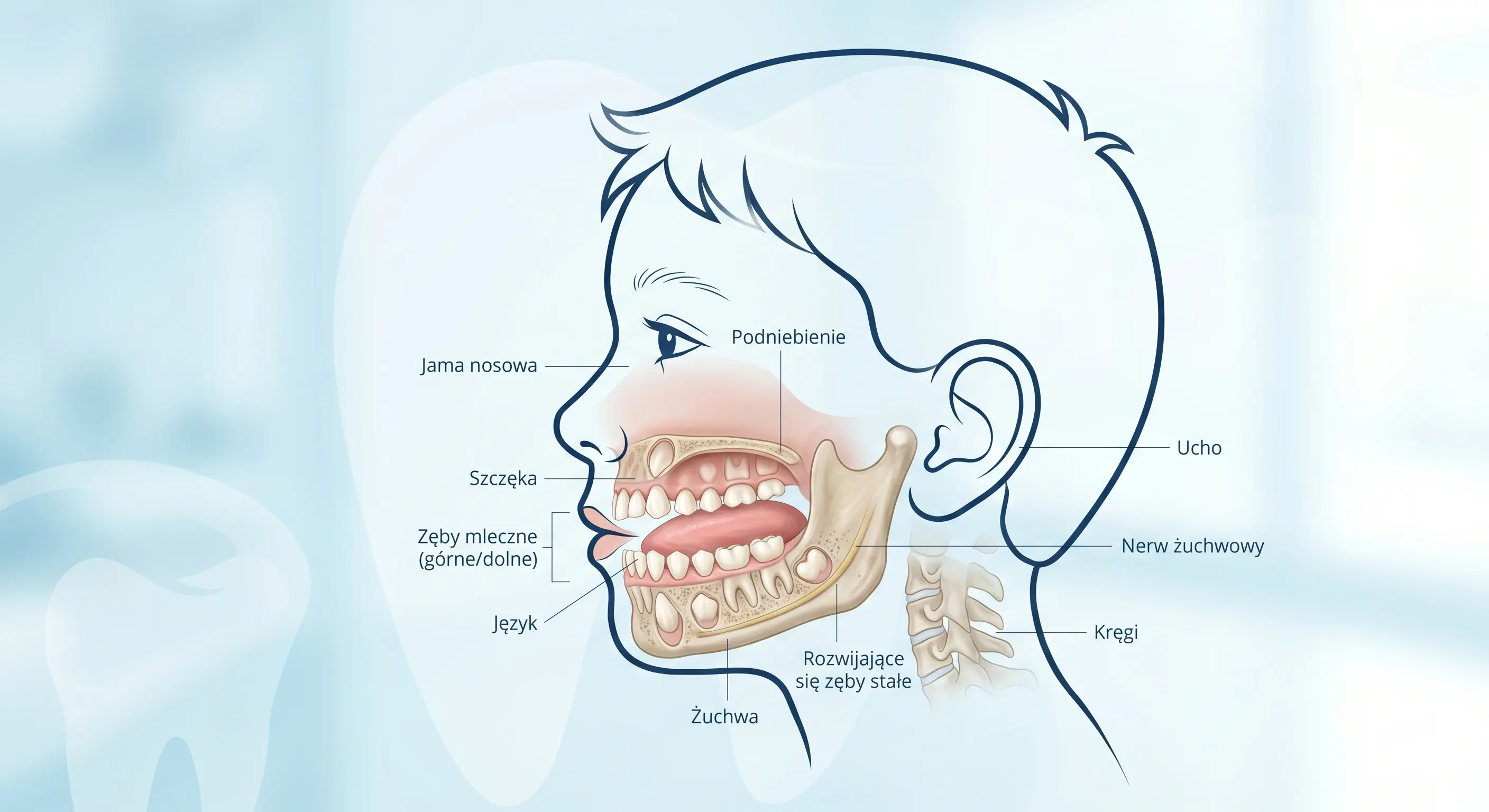
In most children, non-nutritive sucking naturally resolves between the ages of two and four. When the habit persists longer, especially as permanent dentition emerges, it can cause malocclusions, with risks escalating for every additional year the habit continues (Staufert Gutierrez et al., StatPearls; Sadoun et al., 2024). The AAPD advises that sucking habits be discontinued by 36 months of age (AAPD, 2024a). Read more about changes in dental arches in our article on the impact of oral habits on bite and speech.
The bite can improve, though: following habit cessation, anterior open bites in children aged 4 to 12 frequently diminish or resolve spontaneously, although this observation rests on only five studies with very low certainty of evidence (Adriano et al., 2023).
What helps? Practical strategies for starting out
- Respond to the need, not just the thumb. Instead of commanding “take your finger out,” identify the emotion and provide an alternative: offer a warm hug when fatigued, a textured fidget when bored, or ergonomic seating with engaged hands during screen time.
- Intervene at the very first cue. When you spot yawning or restless hands moving toward the face, propose a shared hands-on game or a mystery tactile guessing activity.
- Consistent situations require consistent responses. If the child receives a soft squishy ball during cartoons, ensure it is consistently that specific object. Predictability builds a new shortcut in place of the old one.
A Cochrane systematic review concluded that positive reinforcement and motivational counseling for children and parents (including dental model demonstrations) were more successful in stopping oral habits than no intervention. Some programs trained children to clench their fist or grasp an object when feeling the urge to suck. However, available studies remain limited in size and methodological quality across children aged 2.5 to 18 years (Borrie et al., 2015).
When to consult a specialist?
- Pediatric dentist or orthodontist: if thumb sucking continues past the third birthday, even if limited to nighttime (Staufert Gutierrez et al., StatPearls), or earlier if you observe an open vertical gap between front teeth or flared upper incisors.
- Speech therapist or myofunctional specialist: when digit sucking occupies a significant part of the day despite weeks of supportive home adjustments, or if the resting tongue posture lies between dental arches.
- Pediatrician: if the finger shows chafing, redness around the nail, or a change in nail shape.
- Pediatrician or ENT: if the child chronically breathes through an open mouth, snores, or suffers persistent nasal congestion. Learn more about when mouth breathing requires consultation.
How we approach this at StacjaMowa in Gdańsk
We begin with a detailed parent consultation: exploring when thumb sucking occurs, what precedes it, daily activity rhythms, and bedtime routines. We evaluate airway competence, resting tongue posture on the palate, swallowing mechanics, and potential dental impacts; if structural shifts are present, we coordinate with a dentist or orthodontist. Learn how speech therapists and orthodontists collaborate. Together, we establish a practical, low-stress plan for the upcoming weeks.
Read more about comprehensive oral habit therapy on our page for myofunctional therapy in Gdańsk.
Support without pressure
Weaning a child from thumb sucking is a gentle habit replacement journey, not an endurance test of a child's willpower. Providing security, calm attention, and pleasant sensory substitutes allows your child to regulate without added emotional friction.
Sources
The following scientific publications and clinical guidelines informed this article:
- Borrie F.R., Bearn D.R., Innes N.P. et al. (2015). Interventions for the cessation of non-nutritive sucking habits in children. Cochrane Database of Systematic Reviews.
- Sadoun C., Templier L., Alloul L. et al. (2024). Effects of non-nutritive sucking habits on malocclusions: a systematic review. Journal of Clinical Pediatric Dentistry.
- Adriano L.Z., Derech C.D., Massignan C. et al. (2023). Anterior open bite self-correction after cessation of non-nutritive sucking habits: a systematic review. European Journal of Orthodontics.
- Staufert Gutierrez D., Daley S.F., Carugno P. (2026). Thumb Sucking and Other Nonnutritive Sucking Habits in Children. StatPearls (NCBI Bookshelf).
- American Academy of Pediatric Dentistry (2024a). Policy on pacifiers. The Reference Manual of Pediatric Dentistry.
- American Academy of Pediatric Dentistry (2024b). Management of the developing dentition and occlusion in pediatric dentistry. The Reference Manual of Pediatric Dentistry.
Want to learn more about therapy options?
Learn more about this therapyFrequently asked questions
- Is thumb sucking in a two-year-old a cause for concern?
- Usually not. Habit treatment is not recommended before two years of age (Staufert Gutierrez et al., StatPearls). It is best to observe how many hours each day the sucking occurs and whether it naturally diminishes over time.
- Do thumb guards or bitter nail polishes help?
- They can occasionally help, but for deeply ingrained habits they are rarely effective on their own (Staufert Gutierrez et al., StatPearls). They only make sense when the child wants to stop and receives positive sensory alternatives, as a guard removes the thumb without addressing the underlying emotional need.
- A six-year-old is still sucking their thumb. What should we do?
- This is the time to visit a pediatric dentist or orthodontist, as permanent teeth are emerging. For persistent habits, the clinician may consider an orthodontic appliance to discourage sucking, typically in children around age six or with visible malocclusion (Staufert Gutierrez et al., StatPearls; Borrie et al., 2015).
- My child only sucks their thumb when falling asleep. What then?
- Check whether the thumb drops out of the mouth shortly after sleep onset or remains inside for hours during the night. If it remains inside, it exerts sustained pressure on teeth and palate. A predictable calming bedtime routine with deep hugs and quiet reading can provide soothing before the thumb enters the mouth.
- Can stopping thumb sucking spontaneously correct bite alignment?
- After discontinuing sucking habits in children aged 4 to 12, anterior open bite frequently reduces or self-corrects, although evidence certainty remains low (Adriano et al., 2023). The earlier the habit ceases, the greater the likelihood of spontaneous tissue adaptation.
- When should parents consult a myofunctional therapist rather than waiting?
- A consultation is recommended if thumb sucking persists across much of the day despite several weeks of supportive home strategies, continues past the third birthday, or if you notice the tongue resting between the teeth and open-mouth posture. The therapist assesses resting tongue posture, swallowing, and breathing.