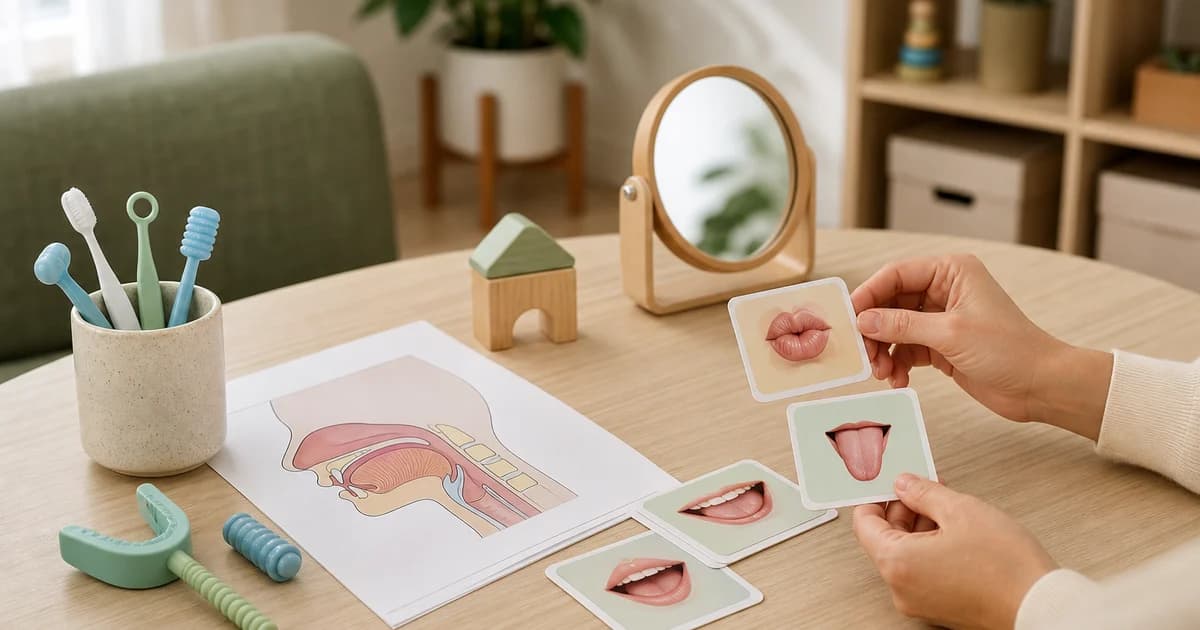
If a child often breathes through the mouth, sleeps with an open mouth, or keeps the lips apart at rest, it is worth checking both nasal airway comfort and the function of the tongue, lips, and bite. A speech therapist does not replace an ENT specialist or orthodontist, but can assess whether the breathing pattern is affecting swallowing, speech, and orofacial muscle tone.
When should mouth breathing raise concern?
One day of open-mouth breathing during a cold does not automatically mean a myofunctional problem. Assessment becomes relevant when a child regularly mouth breathes outside infections, snores, struggles to keep the lips closed, drools after age 4, or often rests the tongue low in the mouth.
A speech therapy consultation is also useful when mouth breathing comes with a lisp, tongue thrust swallowing, difficulty chewing firmer foods, or malocclusion. We explain the link between speech and tongue function in the article on causes of lisping in children.
Airway safety comes first
What does a speech therapist check with open-mouth posture?
During assessment, the clinician observes the breathing route at rest, lip seal, tongue posture, swallowing, chewing, facial muscle tone, and articulation. The history covers sleep, infections, allergies, pacifier or finger sucking, orthodontic care, and daily habits.
This assessment does not diagnose nasal disease, tonsil problems, or malocclusion. Its role is to describe function and decide whether care should be coordinated with an ENT specialist, orthodontist, dentist, or physiotherapist. This team model matters when mouth breathing and bite concerns appear together. A related article explains how a speech therapist and orthodontist can work with a child.
Why does breathing pattern connect with the tongue and bite?
With persistent mouth breathing, the tongue often rests low, the lips remain apart, and the jaw may settle differently than during stable nasal breathing. In some children, this pattern can coexist with speech sound difficulties, atypical swallowing, and changes in developing occlusion.
This does not mean every symptom has one cause. Mouth breathing may have ENT, allergy, orthodontic, myofunctional, or mixed contributors. That is why therapy should not begin with generic "close your mouth" exercises, but with checking whether the child can comfortably breathe through the nose.
What can a support plan look like step by step?
- Observe the pattern. The parent notes when the child mouth breathes: during the day, at night, during activity, while eating, or only during infections.
- Check nasal airway and sleep. Snoring, chronic nasal discharge, allergies, or suspected pauses in breathing require medical assessment.
- Assess orofacial function. A speech therapist checks tongue, lip and jaw posture, swallowing, chewing, and articulation.
- Consult an orthodontist. If an open bite, overjet, narrow dental arch, or another bite concern is visible, the orthodontist assesses occlusion and treatment timing.
- Plan myofunctional therapy. Exercises are matched to the child's age, readiness, and the likely cause of difficulty. The goal is functional support, not a quick promise of appearance change.
Where may MFS stimulators fit into the plan?
MFS stimulators may support work on tongue posture, lip seal, and consolidation of function when they are part of an individual myofunctional therapy plan. They are considered when the child has functional indications and can cooperate with the appliance.
MFS is not a guarantee that a child will switch to nasal breathing, and it does not replace ENT care, orthodontic treatment, or regular exercises. When qualification is appropriate, the parent receives usage instructions, follow-up timing, and clear observation criteria. You can read more in our guide to MFS stimulators and on the nose stimulator product page.
A cautious therapy goal
What can parents observe at home?
It is useful to note whether the child breathes through the mouth during sleep, play, screen time, and meals. Also track snoring, drool on the pillow, frequent drinking at night, dry mouth in the morning, chewing difficulty, and whether the tongue appears between the teeth during speech or swallowing.
Parents should not tape a child's mouth or force exercises without specialist assessment. If the nose is blocked or sleep is disrupted, such actions may be inappropriate. It is safer to gather observations and discuss them during consultation.
When to visit StacjaMowa in Gdansk?
At StacjaMowa, consultation is a good step when mouth breathing comes with a lisp, malocclusion, swallowing difficulty, atypical tongue posture, or the question of whether myofunctional therapy and MFS make sense for this child. During the visit, we describe function, set priorities, and indicate which specialists should coordinate next decisions.
You can start with myofunctional therapy consultation or use the contact form if you are unsure which visit should come first.
Key takeaways
- Persistent mouth breathing needs cause-based assessment, not only reminders to close the mouth.
- A speech therapist checks tongue, lip, swallowing, and speech function, but does not replace an ENT specialist or orthodontist.
- MFS may support myofunctional therapy after qualification, but it does not guarantee a specific outcome.
- The safest plan combines parent observations, nasal airway assessment, and work on orofacial function.
Sources
The sources below provide educational context. They do not replace a child's diagnosis or an individual treatment plan.
- ASHA: Orofacial Myofunctional Disorders
- Alhazmi 2022: Mouth Breathing and Speech Disorders
- Warnier 2023: Assessment of mouth breathing by SLPs
- AAPD: Management of the Developing Dentition and Occlusion
- The impact of mouth breathing on dentofacial development
Want to learn more about therapy options?
Learn more about this therapyFrequently asked questions
- Does every mouth-breathing child need a speech therapist?
- Not always, but assessment is useful when open-mouth posture persists outside infection and the child also has speech, swallowing, chewing, or bite concerns. A speech therapist evaluates orofacial function and helps decide whether ENT or orthodontic collaboration is needed.
- Should we see an ENT specialist, orthodontist, or speech therapist first?
- If the child snores, has chronic nasal discharge, suspected allergies, or pauses in breathing, medical assessment should come first. If a bite problem is visible, orthodontic consultation is needed. A speech therapist can assess breathing route, tongue posture, swallowing, and speech in parallel.
- Will myofunctional therapy restore nasal breathing?
- That cannot be promised. Myofunctional therapy may support lip seal, tongue posture, and more favorable functional patterns, but nasal airway comfort and an appropriately coordinated treatment plan are essential.
- When are MFS stimulators considered?
- MFS may be considered after qualification when the child has functional indications and is ready to cooperate. The stimulator is a therapy support tool, not a standalone solution for mouth breathing.
- Can I tape my child’s mouth at night?
- Do not do this without specialist assessment. If a child has nasal obstruction, snoring, or sleep problems, mouth taping may be inappropriate. It is safer to identify the reason for mouth breathing first.
- How should we prepare for consultation?
- Write down when the child mouth breathes, whether they snore, how they sleep, whether allergies or frequent infections are present, and whether ENT or orthodontic consultations have already happened. Bring bite photos, medical recommendations, or orthodontic documentation if you have them.