To avoid losing speech therapy gains over the summer, you do not need daily “lessons” at the table. A few minutes of regular practice a few times a week, woven into everyday summer life, plus one simple rule, are enough: at home you only reinforce what your child can already say correctly from therapy. That way the new sound carries over into everyday speech instead of fading during a two-month break.
Does the summer break really undo therapy progress?
Holidays are an important and needed rest - including from the therapy room. At the same time, for some children a long, multi-week break with no contact at all with previously practised skills can lead to partial regression. In education this is described as the “summer slide”: a summer dip in some school skills. A similar mechanism can appear in speech: a newly elicited sound or a new sentence pattern is still fragile and easily slips back into old, established habits.
This is not a reason to worry, but a reason to act deliberately. This is well illustrated by the summer skill-maintenance services (known in English-speaking systems as Extended School Year), granted precisely to children who would otherwise lose hard-won gains over a longer break. The key word, however, is “maintenance”, not “catching up”: the goal of the summer is not to speed up therapy, but to hold on to what the child can already do.
It is also worth remembering that not every child regresses in the same way. Children who are at the stage of consolidating a new sound in everyday speech, and children with delayed speech development, usually benefit most from regular, light contact with practice over the summer. For advice tailored to your child, ask your speech therapist before the break.
How much practice over the summer? Short but regular is better
For reinforcing speech, several short repetitions across the week work far better than one long, tiring session. This is consistent with the principles of motor learning: distributed, frequent repetitions help consolidate a new movement pattern more effectively than rare, intense “marathons”. In practice, a model like five minutes, a few times a week, is realistic and effective for many families.
Research on speech-therapy dosage shows that frequency matters: each additional day of practice per week can be linked to greater improvement than practising only once a week. So the point is not to practise for a long time, but to practise consistently - even briefly. Five minutes a day is better than no practice at all.
A simple summer rule
What to practise? Only what your child already masters from therapy
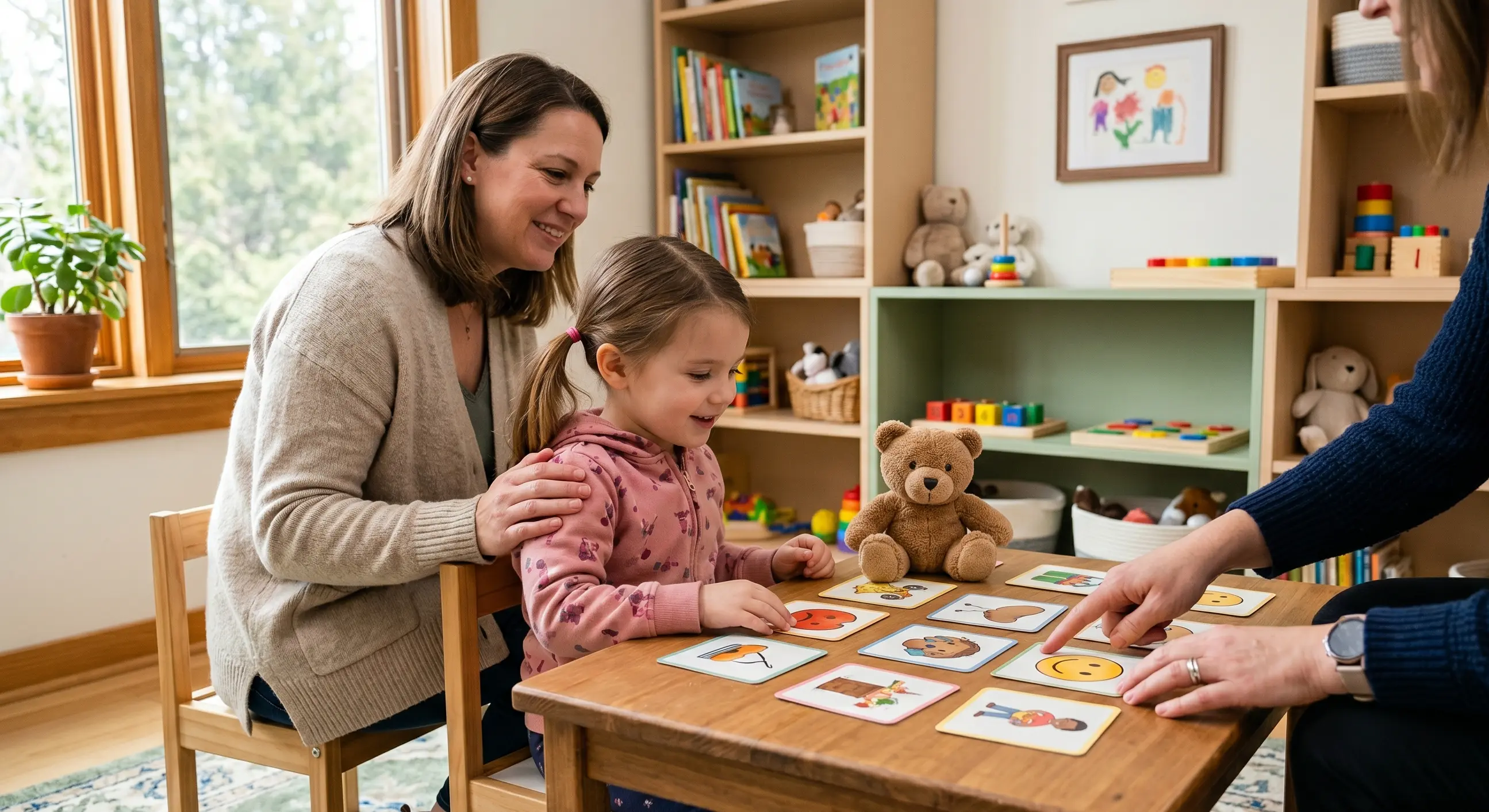
The most important rule of safe home practice is this: over the summer you reinforce material the child has already mastered in the therapy room, rather than introducing new sounds that are still hard for them. If a child can correctly produce a sound in syllables and simple words, the summer is the time to help them use it in longer words, sentences and free conversation. This stage - transferring a skill into everyday speech, called generalization - is the real goal of therapy.
A simple, evidence-based parent routine works well here: acknowledge, repeat, model. When your child says something, acknowledge the message by repeating it back in the correct form - without forcing them to fix it. Correct sparingly, and only the words the child has already practised successfully with the therapist. Do not force corrections of new, not-yet-practised words, because that easily leads to so-called negative practice, that is, reinforcing the wrong version.
Quality over quantity
This is why it helps to ask the therapist, before the holidays, for a short list: which sounds, words or structures are ready to reinforce at home. You will find more on how to read recommendations after a visit in our article on how to prepare for a speech therapy appointment.
What to avoid: do-it-yourself “mouth exercises”
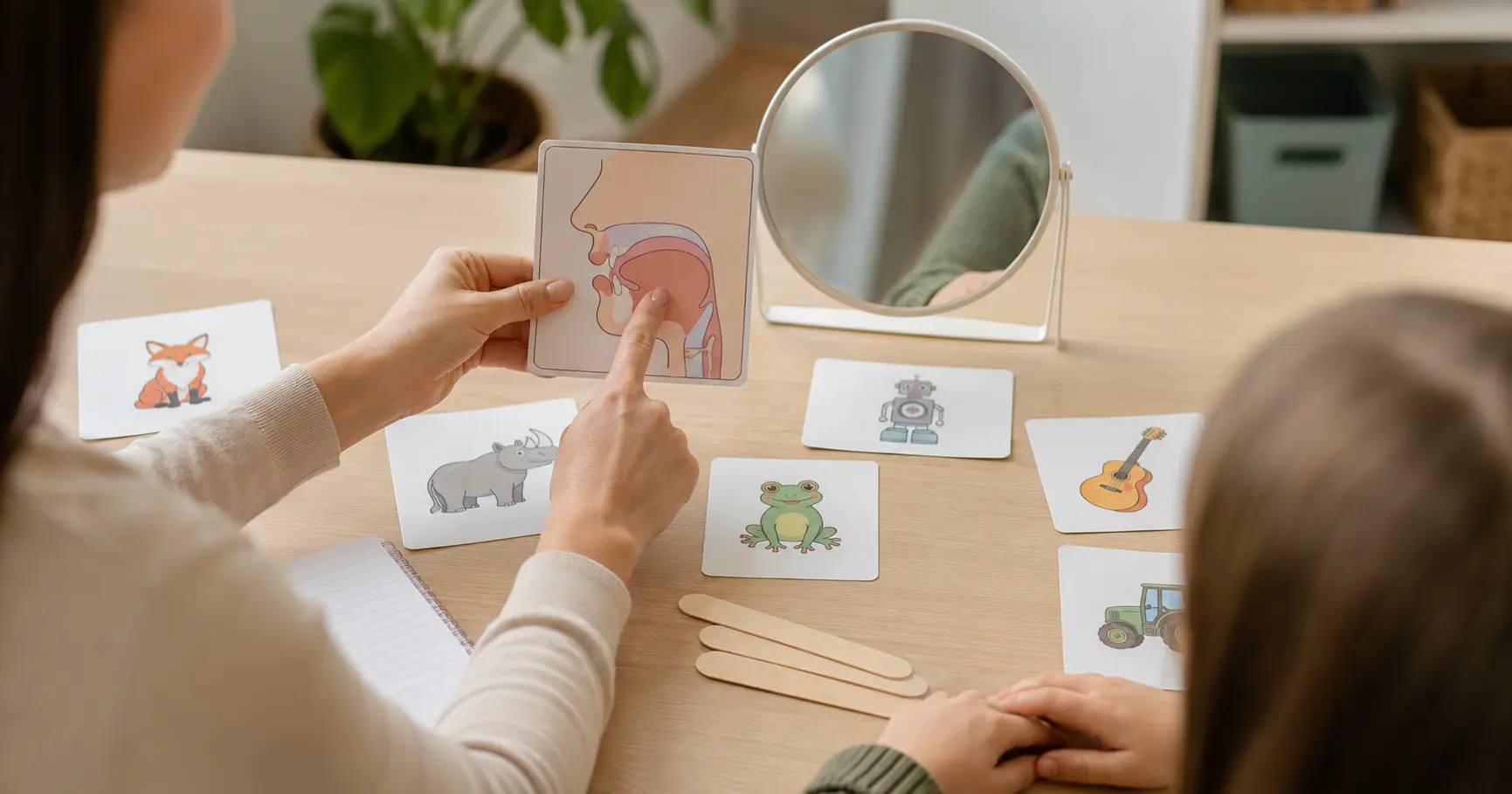
Many “speech exercises” circulate online - blowing through a straw, licking the lips, tongue clicking or “making faces”. These are so-called non-speech oral motor exercises. Systematic reviews, including a Cochrane review and ASHA resources, do not confirm that such exercises on their own improve a child’s speech. The reason is simple: to change speech, you have to practise speech, not movements that only superficially resemble it - no Polish speech sound is produced by wagging the tongue or whistling.
This does not mean that work on the functions of the mouth is worthless. But it is important to tell two things apart. Generic “mouth exercises” done on your own to “fix the r” usually do not help. It is a different matter with myofunctional therapy planned by a specialist for diagnosed functional disorders (for example incorrect swallowing or mouth breathing) - here specific exercises do have their place, but the therapist selects and supervises them.
Do not elicit new sounds on your own
Summer practice woven into everyday life
The most effective summer practice is the kind a child barely notices, because it happens along the way. Instead of setting a rigid “lesson” time, weave speech practice into the natural moments of the day. Below are a few ideas - match them to the sounds and words your child is practising.
- Travelling and in the car: word games such as “name the things you can see”, looking for words with the target sound on signs, telling what you passed by the window.
- At mealtimes: naming foods, describing taste and colour, short sentences about what the child is eating - a natural place for words with the target sound.
- At the beach and on walks: finding and naming shells or pebbles, counting out loud, telling a little story about what is happening around you.
- At bedtime reading: naming pictures together, finishing familiar sentences, asking the child questions about the illustrations. Reading also supports learning to read and write.
- Word of the week: choose one everyday word with the target sound (for example “rower”, “woda”) and remind the child of its correct pronunciation at every natural opportunity.
In all of these situations a cheerful tone matters most. Praise effort rather than perfection (“I love how hard you are trying”), avoid competition, and do not practise when the child is tired or irritable. Work on speech should feel like shared play, not an obligation.
A simple summer plan: one goal per week
Parents find it easiest to act with one specific goal rather than a long list. Before the holidays, ask the therapist for one small weekly task - for example “this week we reinforce the ‘sz’ sound at the start of words” or “we practise 3-4-word sentences”. Such a plan is realistic, does not overwhelm and gives a sense of progress.
- Ask before the break. Agree with the therapist what exactly is ready to reinforce and how to help the child when something is difficult.
- Choose an anchor time. Tie practice to a fixed point in the day: the walk to the beach, bath time, bedtime reading.
- Keep repetitions short. A few minutes, a few times a week, always ending on success.
- Observe and take notes. Write down what goes well and what is hard - valuable information for the first visit after the holidays.
Summer support at StacjaMowa in Gdansk
At the StacjaMowa speech therapy practice we help parents, before the summer break, work out what their child can safely reinforce at home, and we suggest simple ways to weave practice into the holiday rhythm. If a child is at a stage where a longer break could undo their gains, we plan a form of summer support together. We work in Gdansk at ul. Limbowa 5 and ul. Stanislawa Lema 4/9U. A short phone consultation can be arranged to clear up any doubts before you leave.
Key takeaways
- A long break with no contact with practice can, for some children, undo freshly built gains - especially new sounds at the consolidation stage.
- Short but regular is better: a few minutes a few times a week works better than one long session.
- At home we reinforce only what the child can already do from therapy; we do not elicit new sounds on our own.
- Generic “mouth exercises” (blowing, making faces) have no evidence of improving speech - we practise speech, not movements that merely resemble it.
- The best practice is woven into everyday life and done cheerfully: praise effort, end on success, and ask the therapist for one goal per week.
Sources and further reading
The materials below are educational. They do not replace a speech therapy assessment or an individual selection of exercises for a particular child.
- Lee A.S.-Y., Gibbon F.E. (2015), Non-speech oral motor treatment for children with developmental speech sound disorders, Cochrane Database of Systematic Reviews.
- American Speech-Language-Hearing Association (ASHA), evidence map: Non-Speech Oral Motor Treatment for Children With Developmental Speech Sound Disorders.
- Lof G.L., What Does the Research Say Regarding Oral Motor Exercises and the Treatment of Speech Sound Disorders, Apraxia Kids.
- Apraxia Kids / Child Apraxia Treatment, Home Practice.
- Brady M.C. et al. (RELEASE Collaboration, 2022), Dosage, Intensity, and Frequency of Language Therapy for Aphasia, Stroke (American Heart Association).
- FPG Child Development Institute, University of North Carolina, Parent-Implemented Intervention for Toddlers in the Home Setting.
- Understood.org, Extended School Year services: what you need to know.
- NWEA, Summer learning loss: what we know and what we’re learning.
- Polish Speech Therapy Society (Polskie Towarzystwo Logopedyczne, PTL) - recommendations on assessment, therapy of speech disorders, and the parent’s role in therapy; training materials.
Want to learn more about therapy options?
Learn more about this therapyFrequently asked questions
- Can my child take a break from speech therapy over the summer?
- Yes, rest is needed and a break from visits alone is not a mistake. It is worth keeping a short, regular contact with previously practised skills, however, because for some children a long break with no practice can undo freshly built gains. Agree with the therapist before the holidays what your child can reinforce at home.
- How long should home speech practice last each day?
- Short, frequent repetitions are better than long sessions. For many children, a few minutes a few times a week works well, ideally woven into everyday situations. Five minutes regularly is more effective than one long, tiring session every now and then.
- Can I elicit the Polish “r” sound in my child over the summer?
- We do not recommend eliciting new sounds on your own without guidance from a therapist. A poorly chosen exercise risks fixing an incorrect pattern (for example a guttural rhotacism), which is then harder to correct. At home, safely reinforce only the sounds and words the child has already mastered in therapy.
- Do “mouth exercises”, blowing and making faces improve speech?
- Research reviews, including a Cochrane review and ASHA resources, do not confirm that non-speech oral motor exercises (blowing, lip licking, making faces) improve speech on their own. To change speech, you have to practise speech. Myofunctional therapy for diagnosed functional disorders is a different matter and is planned and supervised by a therapist.
- How do I practise without discouraging my child?
- End practice on success, praise effort rather than pointing out mistakes, and do not practise when the child is tired or irritable. The rule of “quality over quantity” works well - three correct repetitions are better than ten attempts with errors. Weaving practice into play and everyday situations lowers the pressure.
- How can I tell whether my child regressed over the summer?
- A sign may be a return to old habits, for example replacing a previously mastered sound or simplifying sentences the child could already build. Short, regular reinforcement reduces this risk. If you notice a clear regression, write down your observations and discuss them with the therapist at the first visit after the break.
- Does regular home practice really speed up progress?
- Parent involvement and regular home work are recognised elements of effective speech therapy, and research on therapy dosage suggests that higher practice frequency is linked to greater improvement. Home practice does not replace therapy led by a specialist, however - it works best as a complement, following the therapist’s recommendations.