MFS equipment
Lip stimulator
A device used to support work on lip closure, individually fitted at the clinic
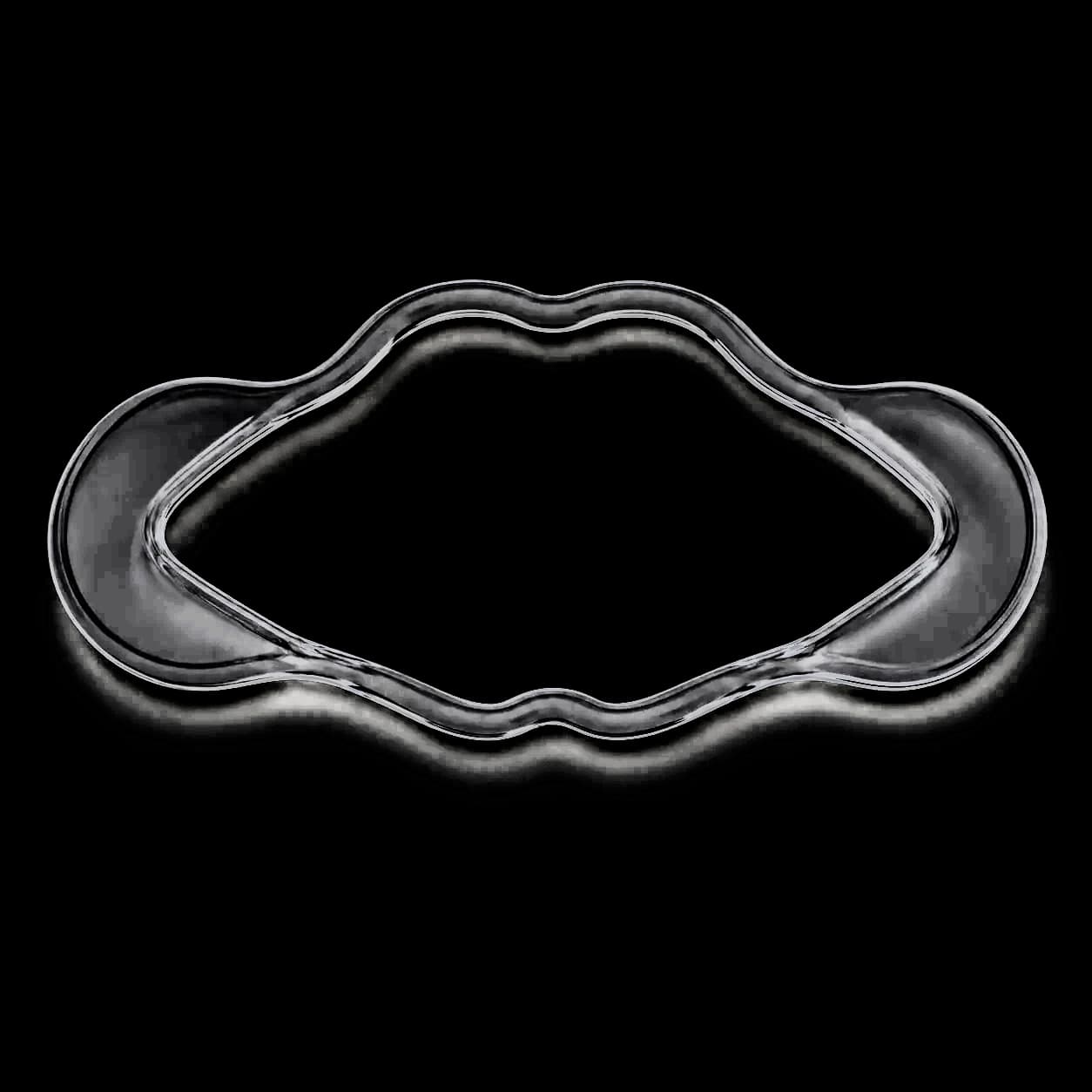
What is the lip stimulator?
It is an oval device with upper and lower front bands. It sits in the oral vestibule in front of the dental arches and acts on the orbicularis oris and the muscles that work with it.
How it may support therapy
The device may support lip closure and work on orbicularis oris tone. It may also form part of therapy for atypical swallowing and tongue posture. A physician or a therapist trained in function regulators assesses any change at follow-up.
Who it is for
- Lips that remain parted at rest
- Short upper lip or a gummy smile pattern
- Atypical swallowing with tongue thrust and pressure on the incisors
- Support within myofunctional therapy after a functional assessment
Sizes and fitting
The device comes in six sizes (1–6). Fitting is based on the dental arch circumference between the first permanent molars, measured in the mouth or on a model. The smaller size is used when unsure. A physician or a therapist trained in function regulators selects the final size.
How the device is placed
Step order is in the text; numbers on the images are visual only
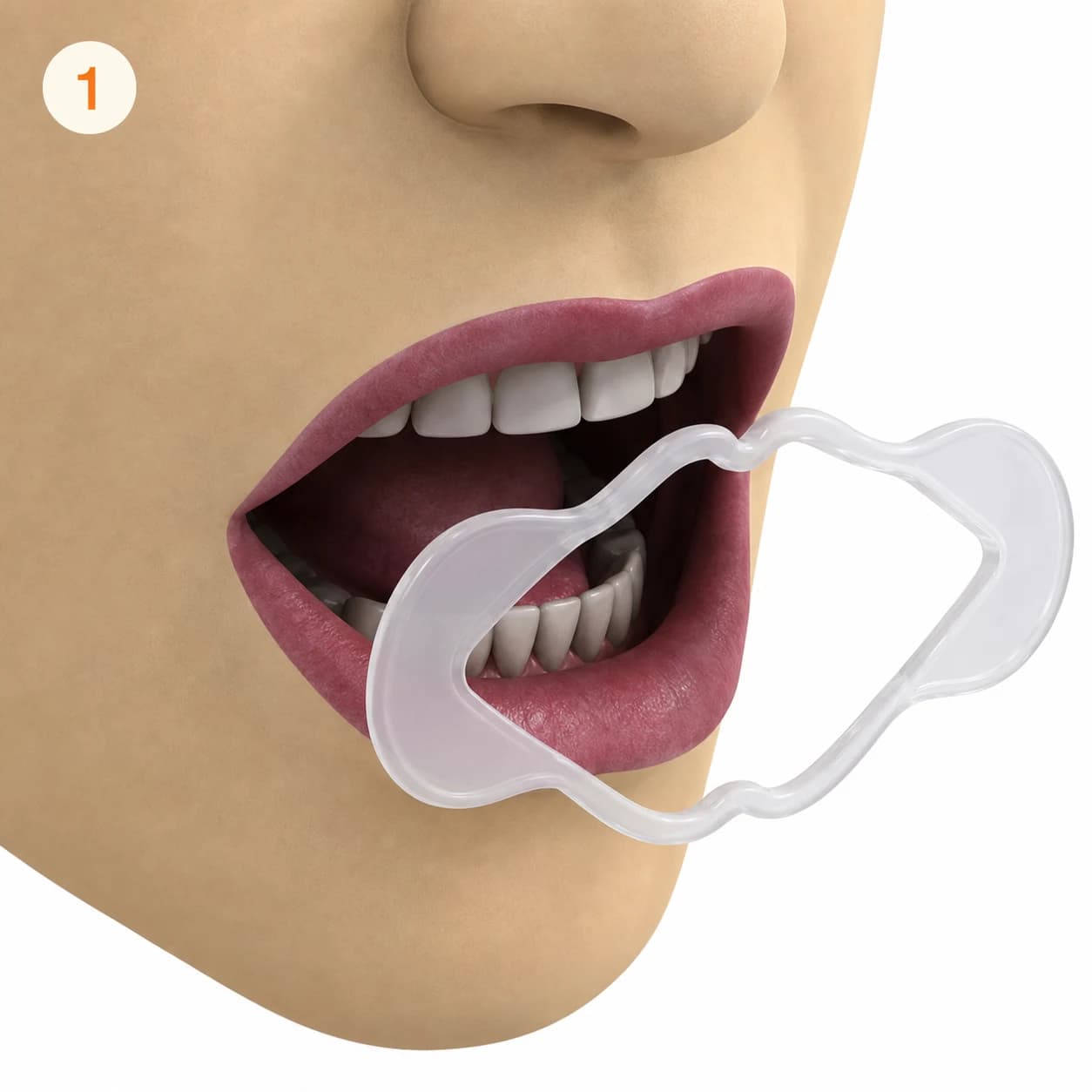
1
Prepare
Wash your hands. Check that the device is clean and undamaged. Sit comfortably in front of a mirror.
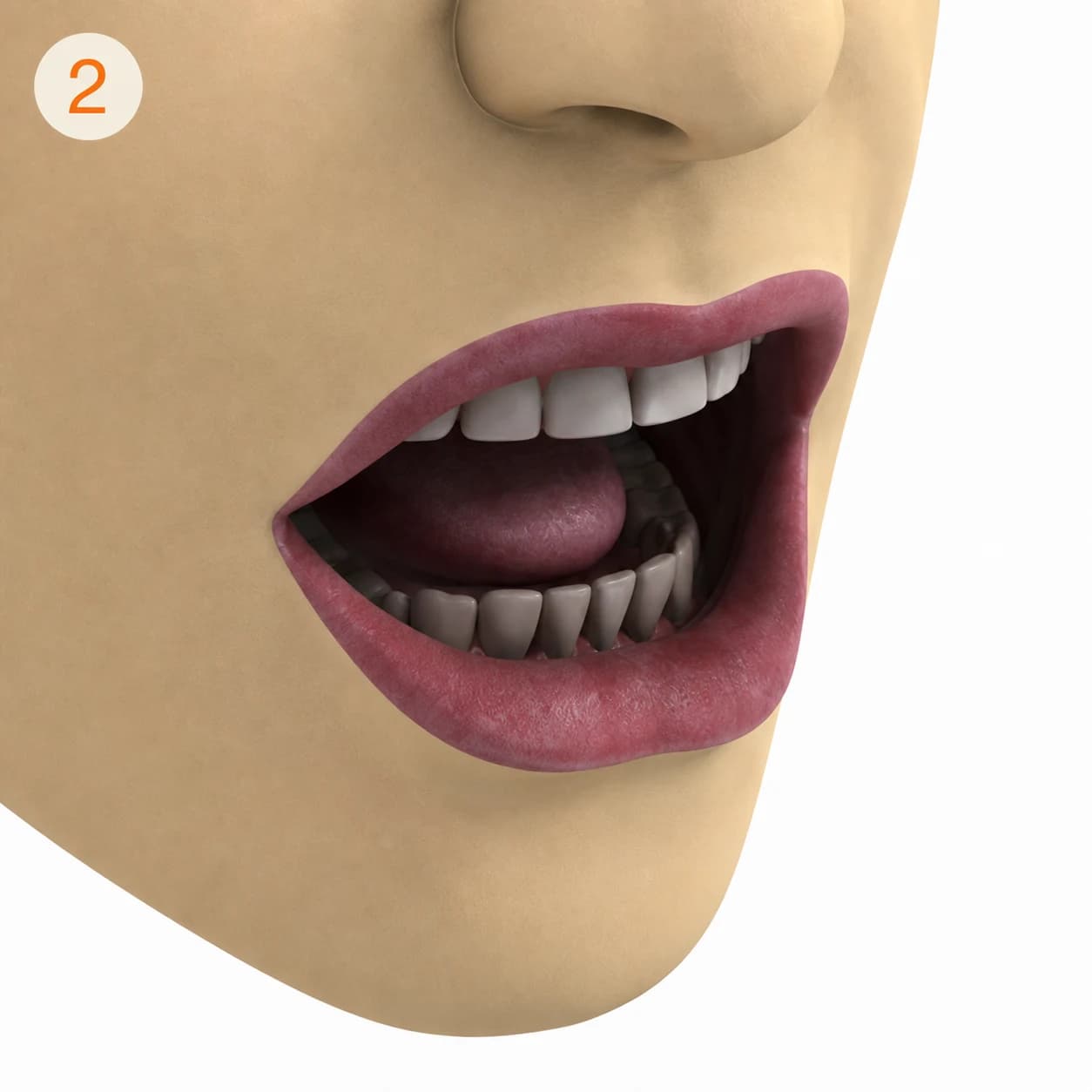
2
Place in the vestibule
Gently seat the rim in the oral vestibule so the upper and lower segments rest in front of the dental arches. Do not force the device. A correctly fitted size should not cause pain.
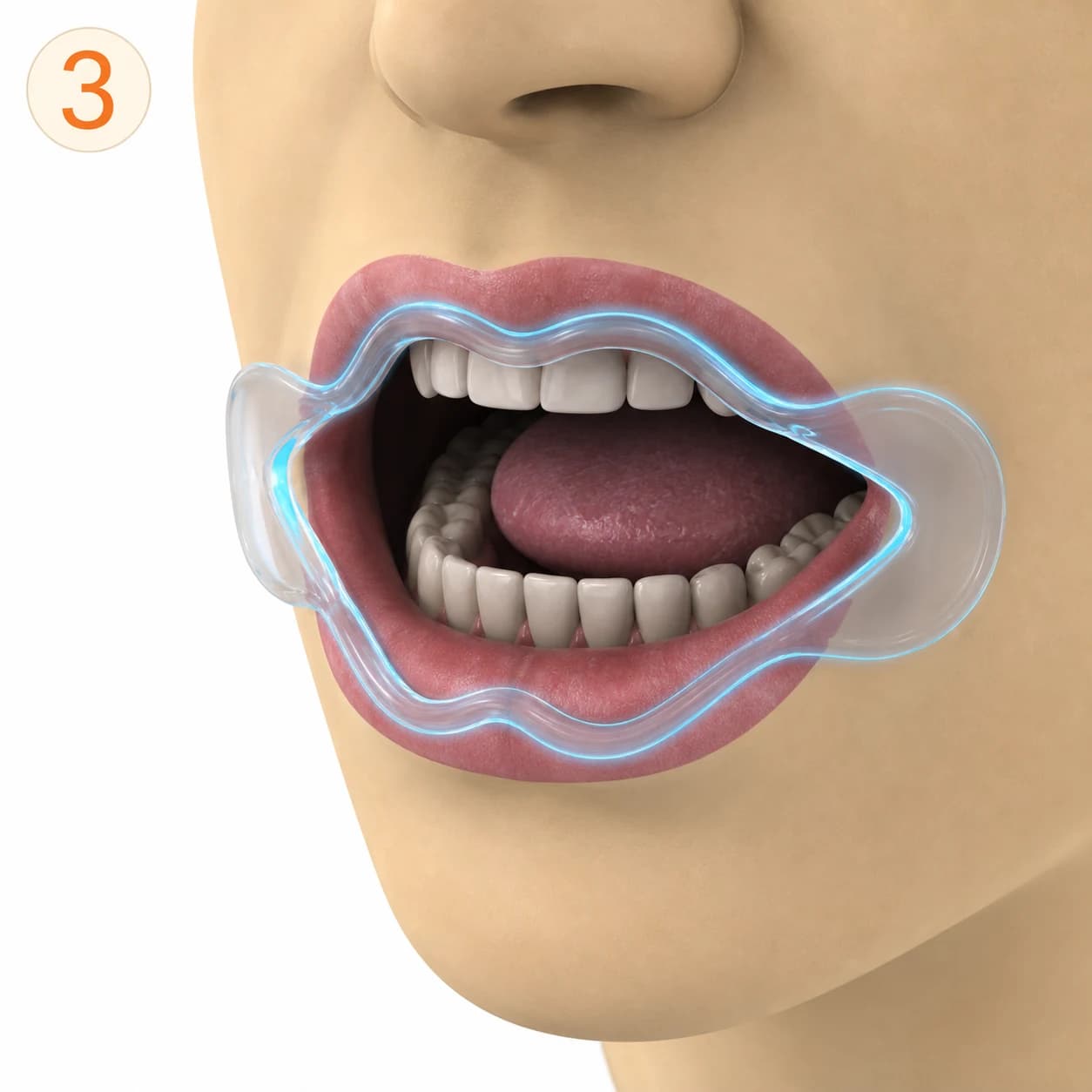
3
Check comfort
Close the lips around the device and check that it sits stably without discomfort. Use it as directed by a physician or therapist trained in function regulators.
Contraindications and precautions
- Do not use in children under 5.
- Warning: keep the device away from heat sources and do not boil or scald it.
- Do not use a damaged device or a size that causes pain or abrasion.
Similar products
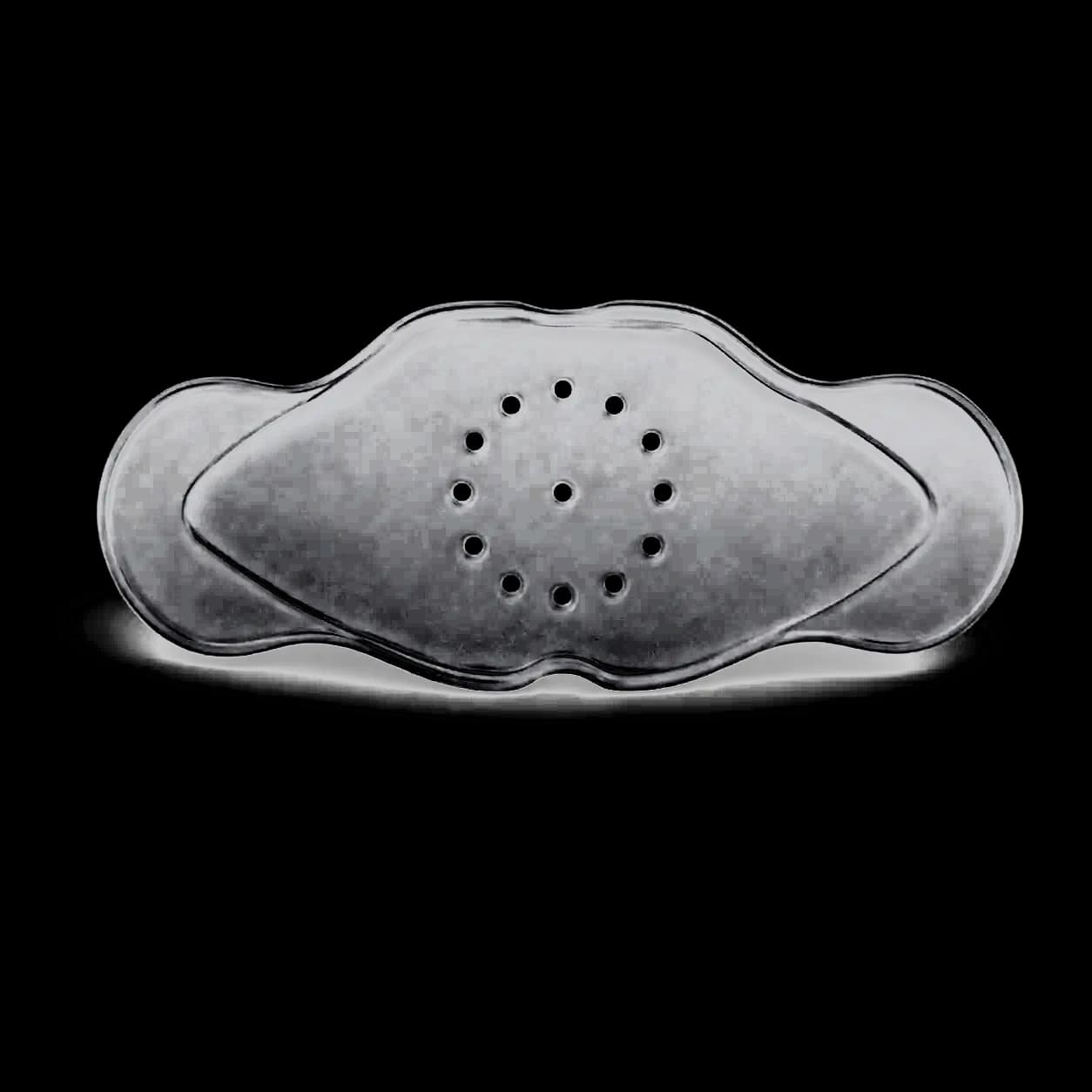
MFS oral obturator
A shield in the oral vestibule. Three types differ only by breathing-hole size and share the same shape.
- Three permeability types in progression
- Gradual reduction of mouth breathing
- Lip muscle work on the rim
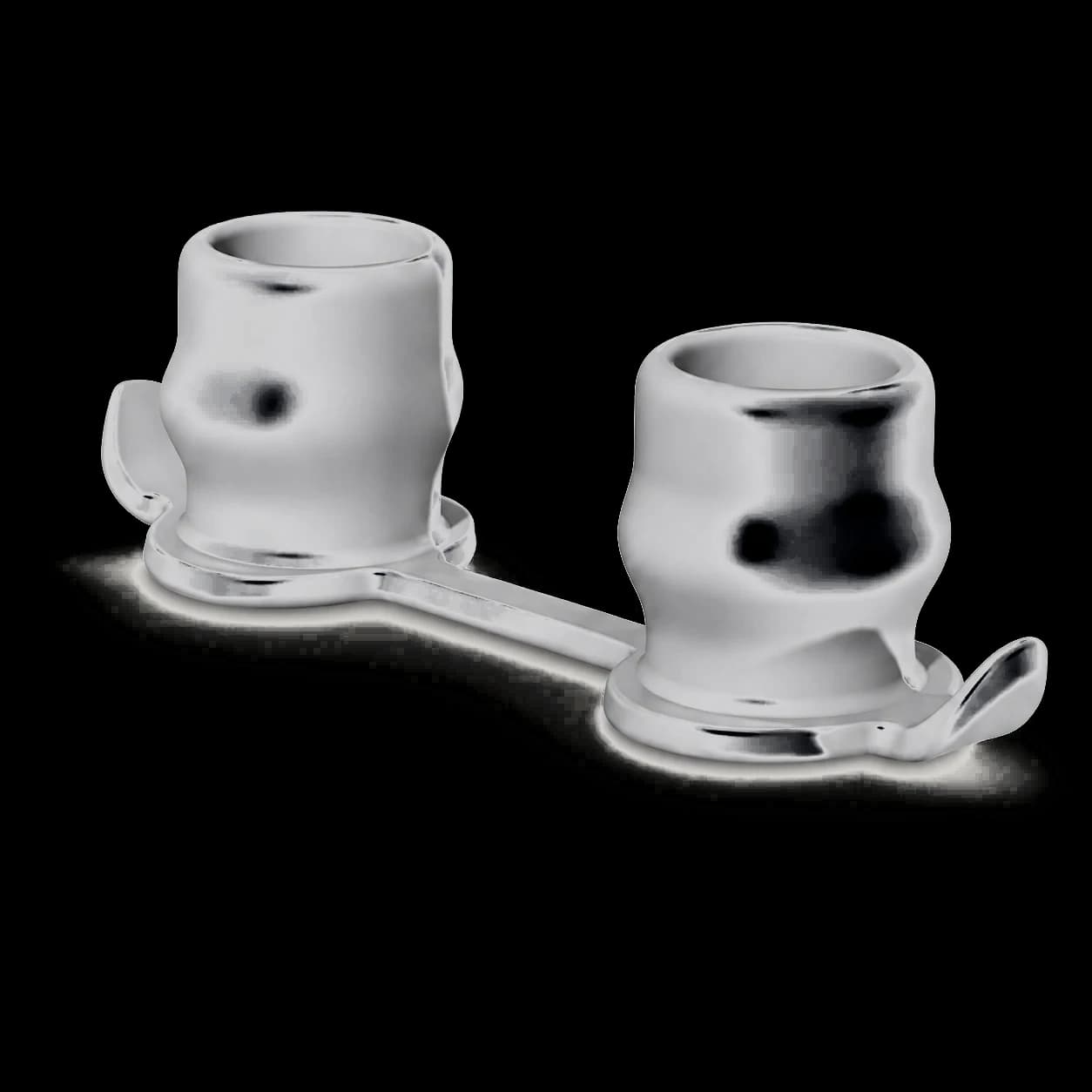
MFS nose stimulator
Silicone tubes joined by a stabilising band. The flat side rests on the septum; the convex part acts around the nasal alae.
- Mouth breathing at rest or at night
- Nasal alae collapsing on inhalation
- Size fitted after nostril measurement in clinic
Discuss device fitting
A physician or a therapist trained in function regulators selects the device and size after a functional assessment