MFS equipment
Anti-bruxism device
A muscle relaxant combined with a bite plate, individually fitted at the clinic
What is the anti-bruxism device?
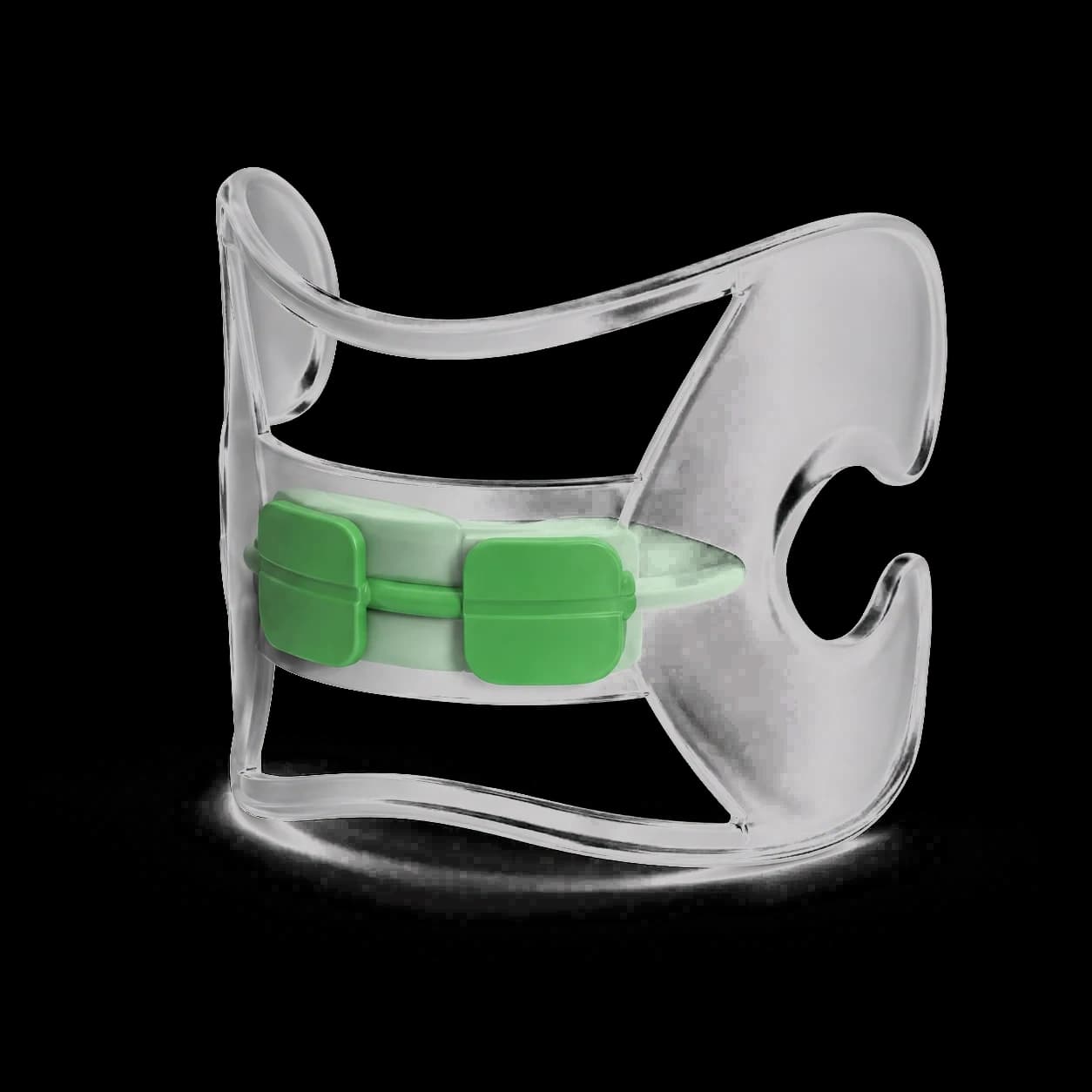
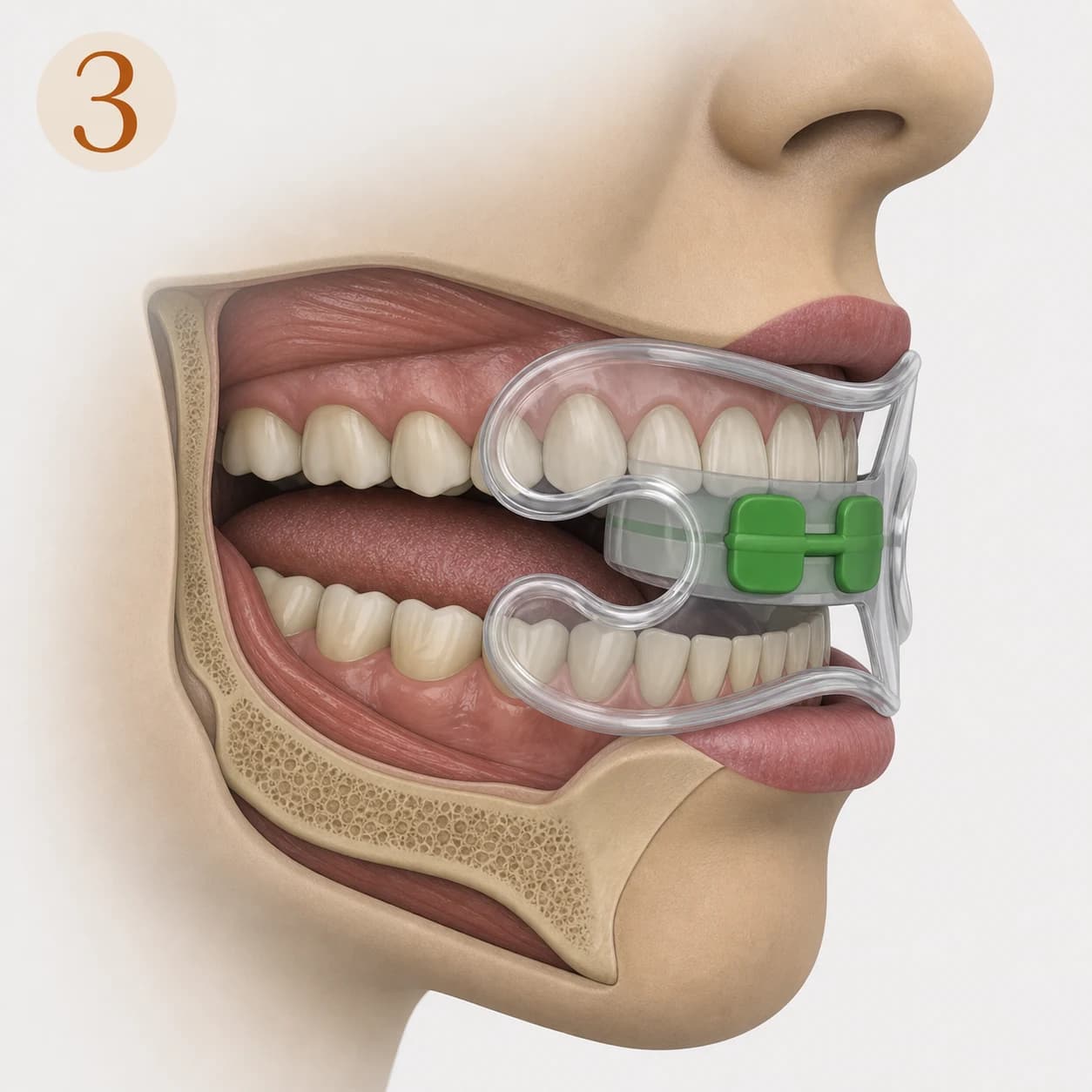
The MFS anti-bruxism device joins a muscle relaxant with a bite plate using supports fixed to the front groove of the relaxant. In the mouth the relaxant sits in the oral vestibule outside the dental arches, and the plate rests between the upper and lower incisors. It is one assembly, not two separately selected products.
How it may support therapy
The relaxant part may support work on tension in the masticatory, buccinator and orbicularis oris muscles. The bite plate rests passively between the incisors and may support work on a deep overbite within a plan set at the clinic. We do not promise changes to facial structure. A physician or a therapist trained in function regulators decides how it is used.
Who it is for
- Bruxism, meaning grinding or strong clenching of the teeth, after a functional assessment
- Strong masticatory muscle activity, including in patients with a brachycephalic facial growth pattern
- Deep anterior overbite within a myofunctional therapy plan
- May be used with a fixed orthodontic appliance when the treating clinician decides so
Sizes and fitting
The set comes in six sizes (1–6), with smaller sizes for children and larger sizes for adults. Size follows the muscle relaxant size. The bite plate is matched to the same size, preferably on a model of the lower dental arch. The smaller size is used when unsure. A physician or a therapist trained in function regulators selects the final fit.
Bite plate as a component
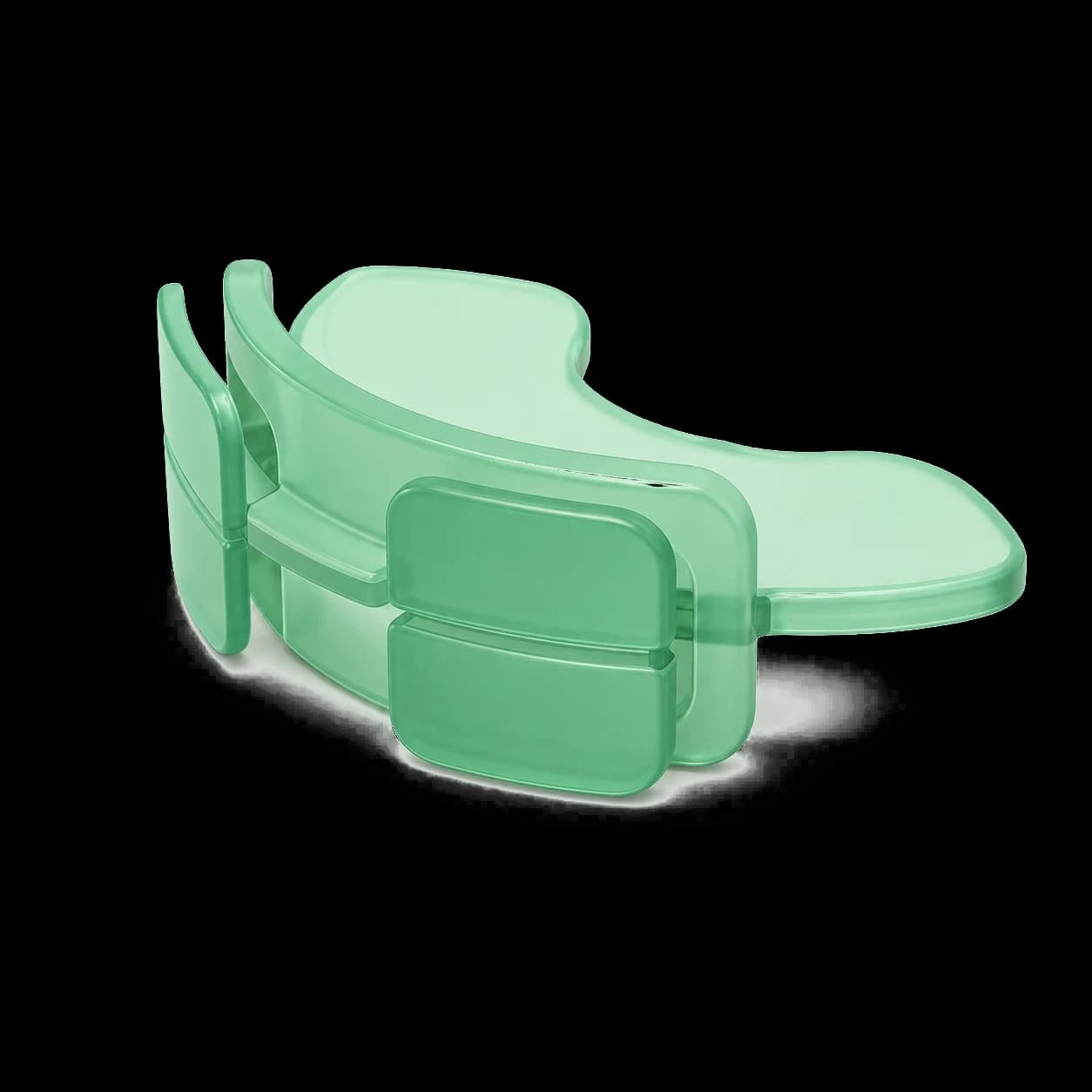
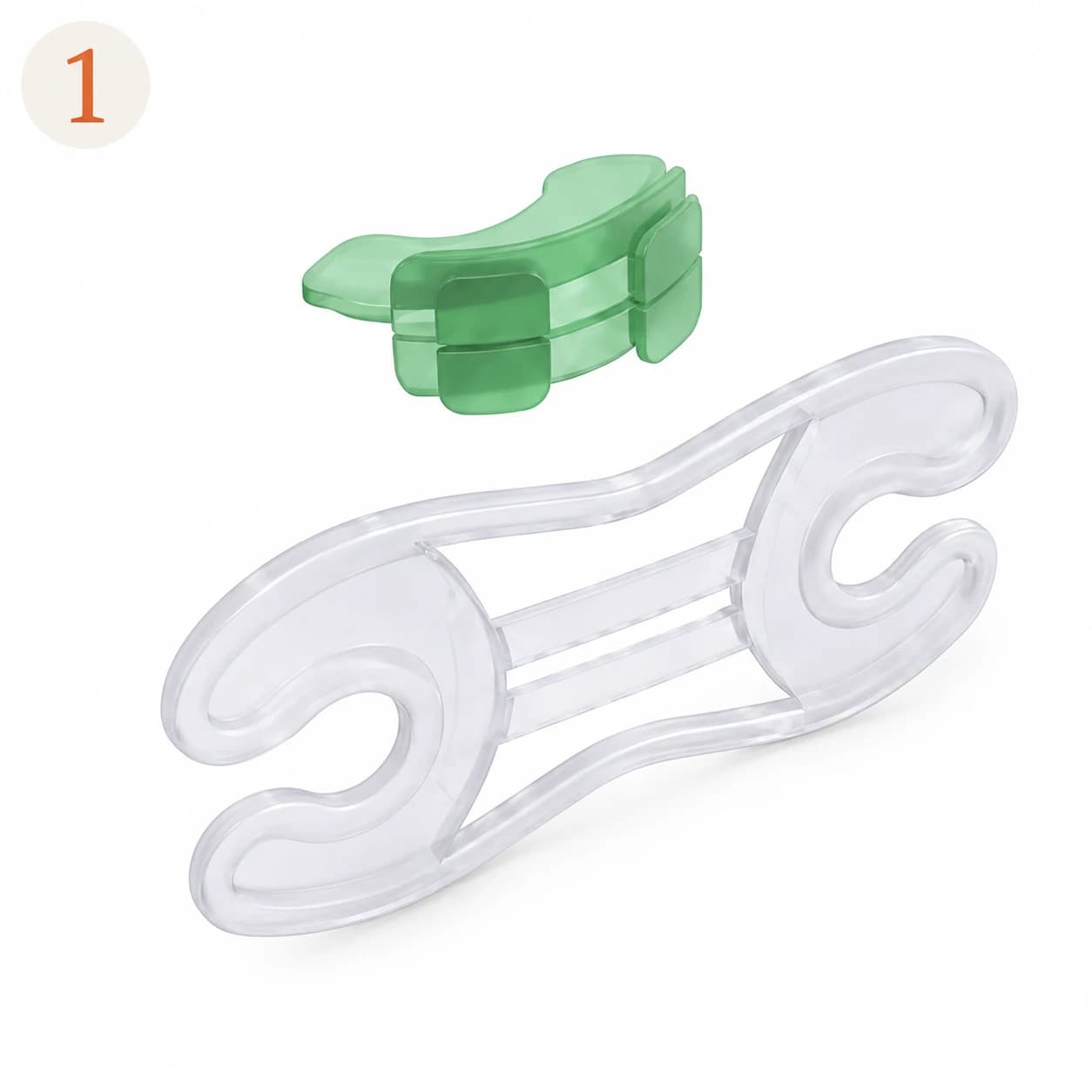
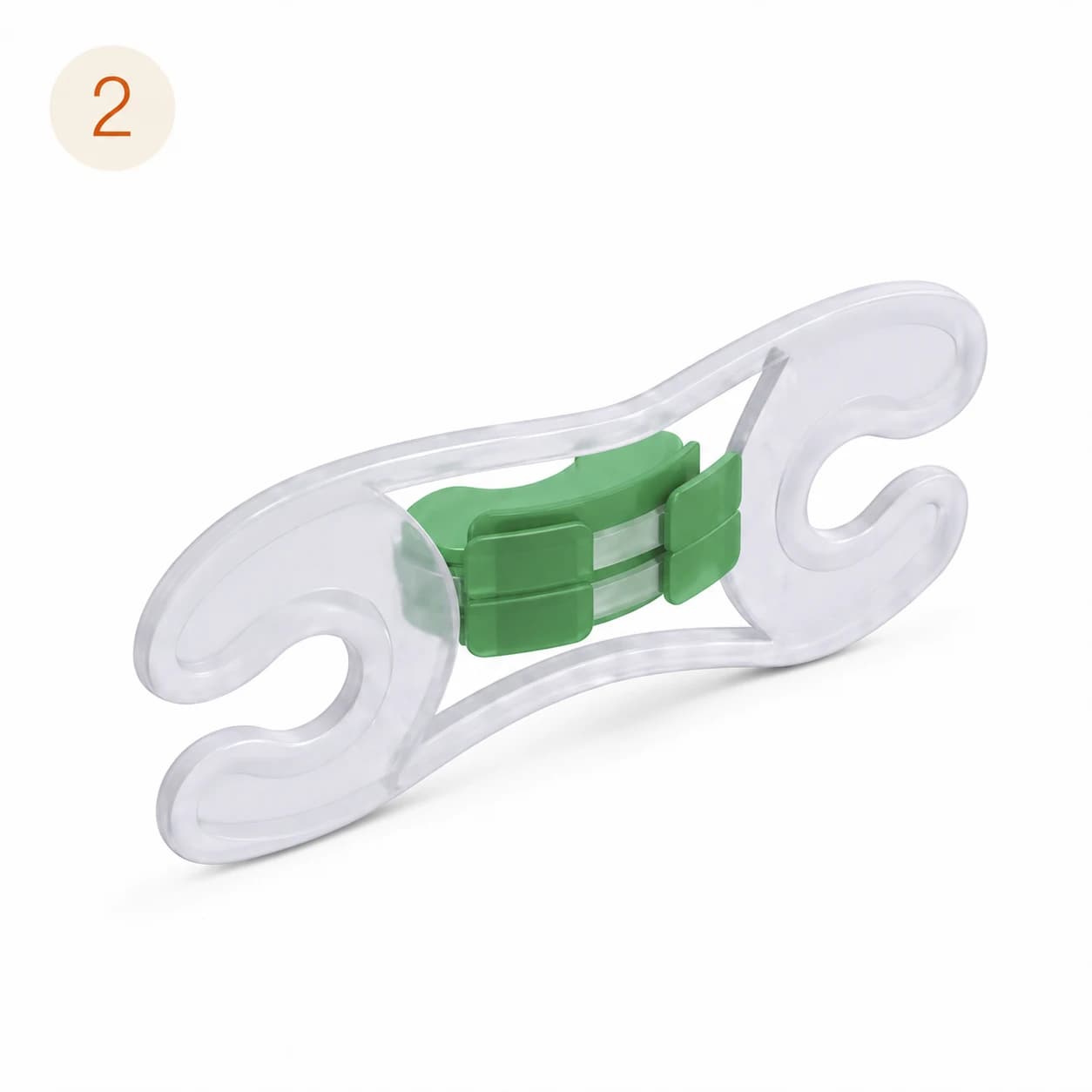
The bite plate has no product page of its own because it is not a stand-alone device. It is used only with the muscle relaxant and is an integral part of the anti-bruxism device. The images below show the component alone; assembly and wear are set by a physician or a therapist trained in function regulators.
How the anti-bruxism device is placed
Step order is in the text; numbers on the images are visual only
1
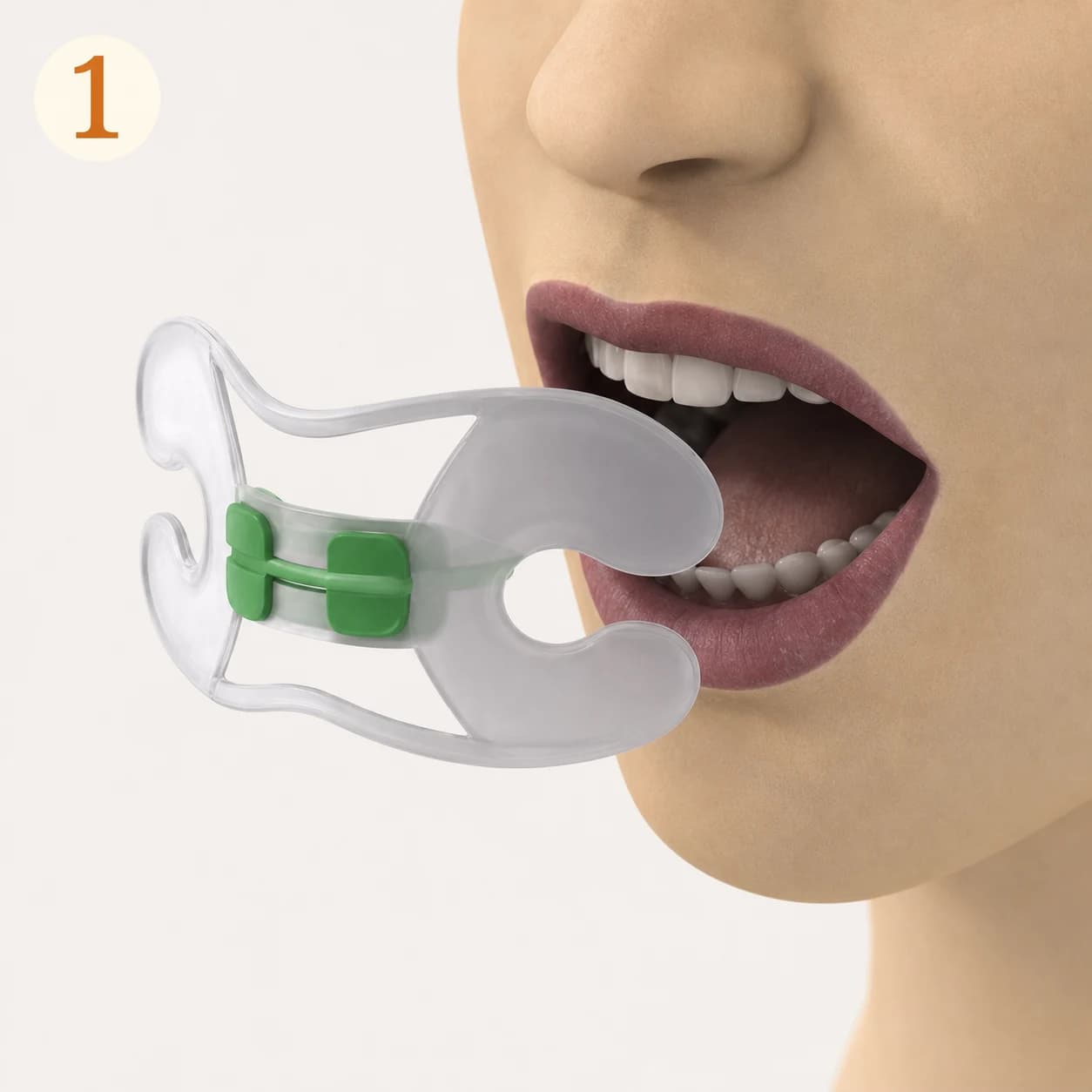
Prepare
Wash your hands. Check that the relaxant and bite plate are clean, undamaged and fully assembled. Sit comfortably in front of a mirror.
2
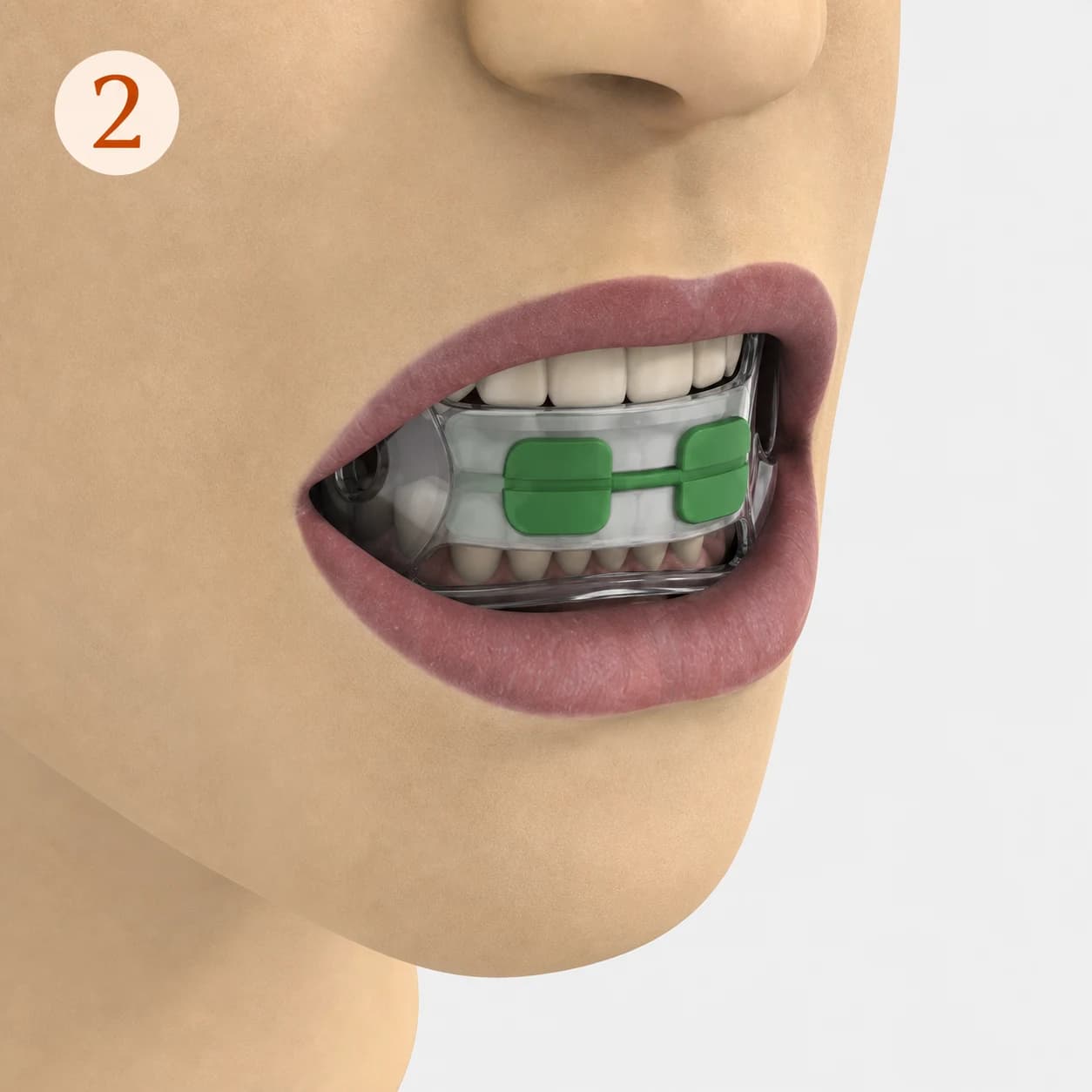
Place in the mouth
Gently seat the relaxant in the oral vestibule outside the dental arches, and the plate between the upper and lower incisors. Do not force the device. A correctly fitted size should not cause pain.
3
Check comfort
Check that the set sits stably without discomfort in the lips, cheeks or teeth. Use it as directed by a physician or therapist trained in function regulators.
Contraindications and precautions
- Do not use in children under 5.
- Warning: keep the device away from heat sources and do not boil or scald it.
- Do not use in dolichocephalic patients, who have a long, narrow facial pattern.
- Do not use a damaged device or a size that causes pain or abrasion.
Similar products
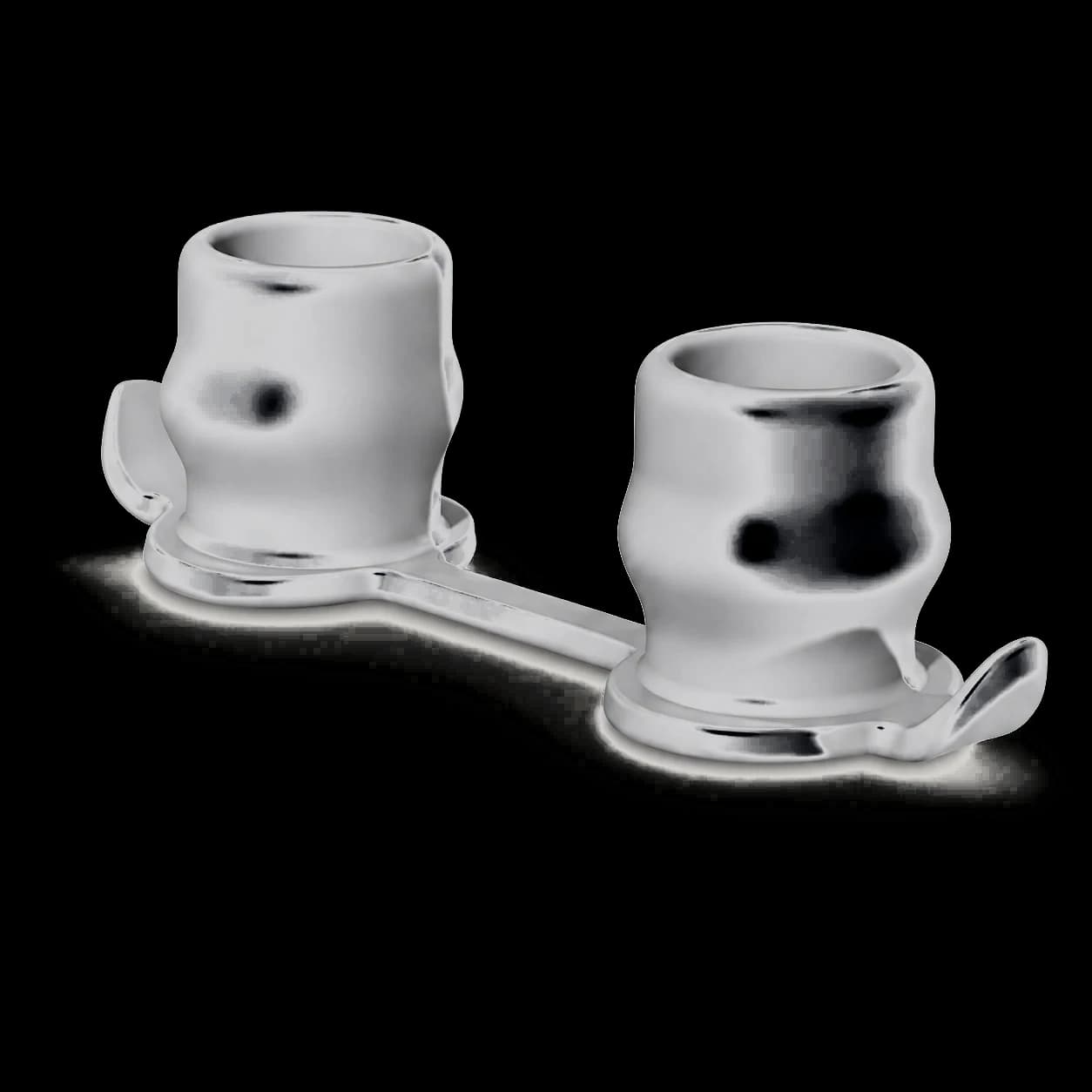
MFS nose stimulator
Silicone tubes joined by a stabilising band. The flat side rests on the septum; the convex part acts around the nasal alae.
- Mouth breathing at rest or at night
- Nasal alae collapsing on inhalation
- Size fitted after nostril measurement in clinic
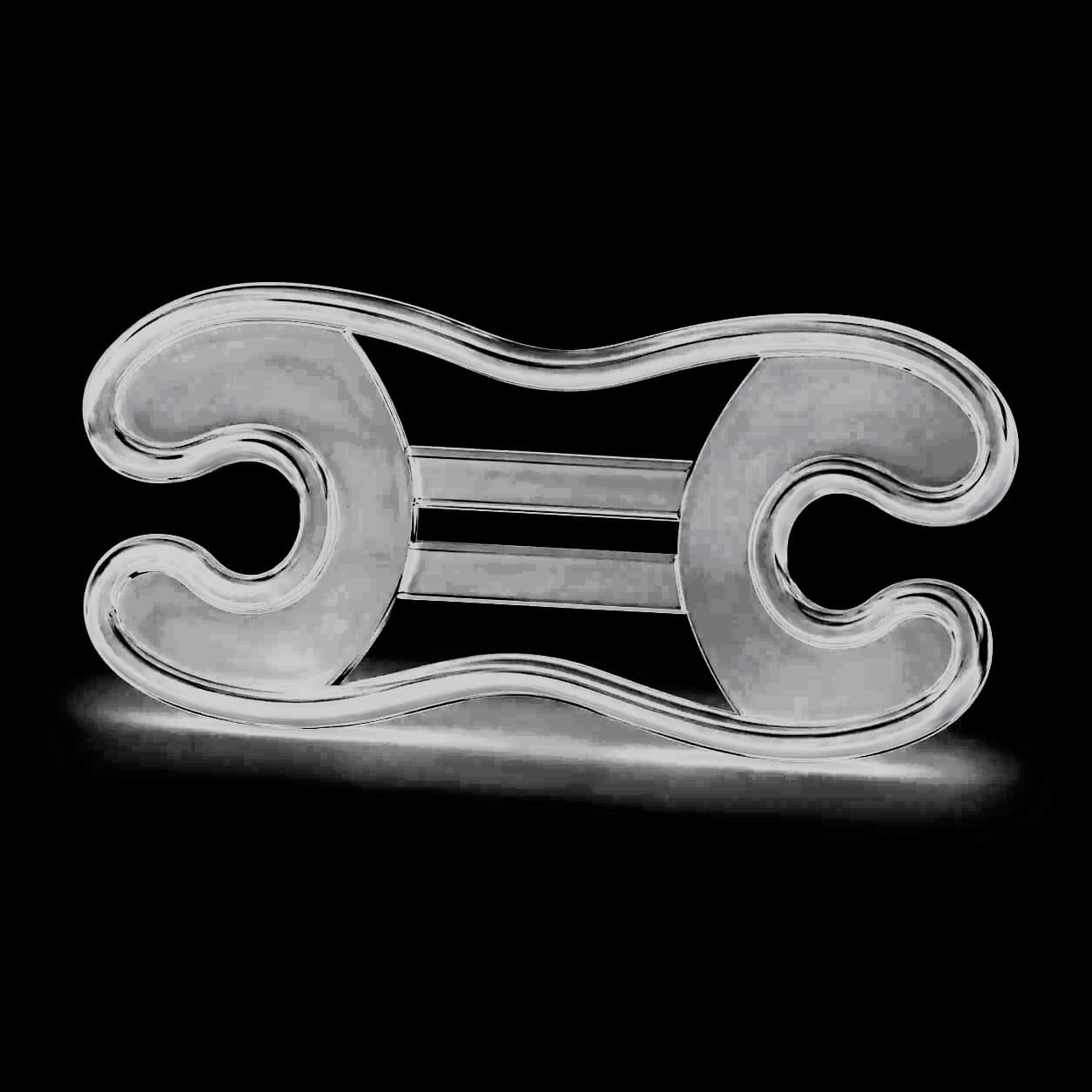
MFS muscle relaxant
A device with lateral discs worn in the oral vestibule outside the dental arches.
- Increased masticatory muscle tension
- Cheek and perioral muscle tension
- Alone or with a bite plate
Discuss device fitting
A physician or a therapist trained in function regulators selects the device and size after a functional assessment