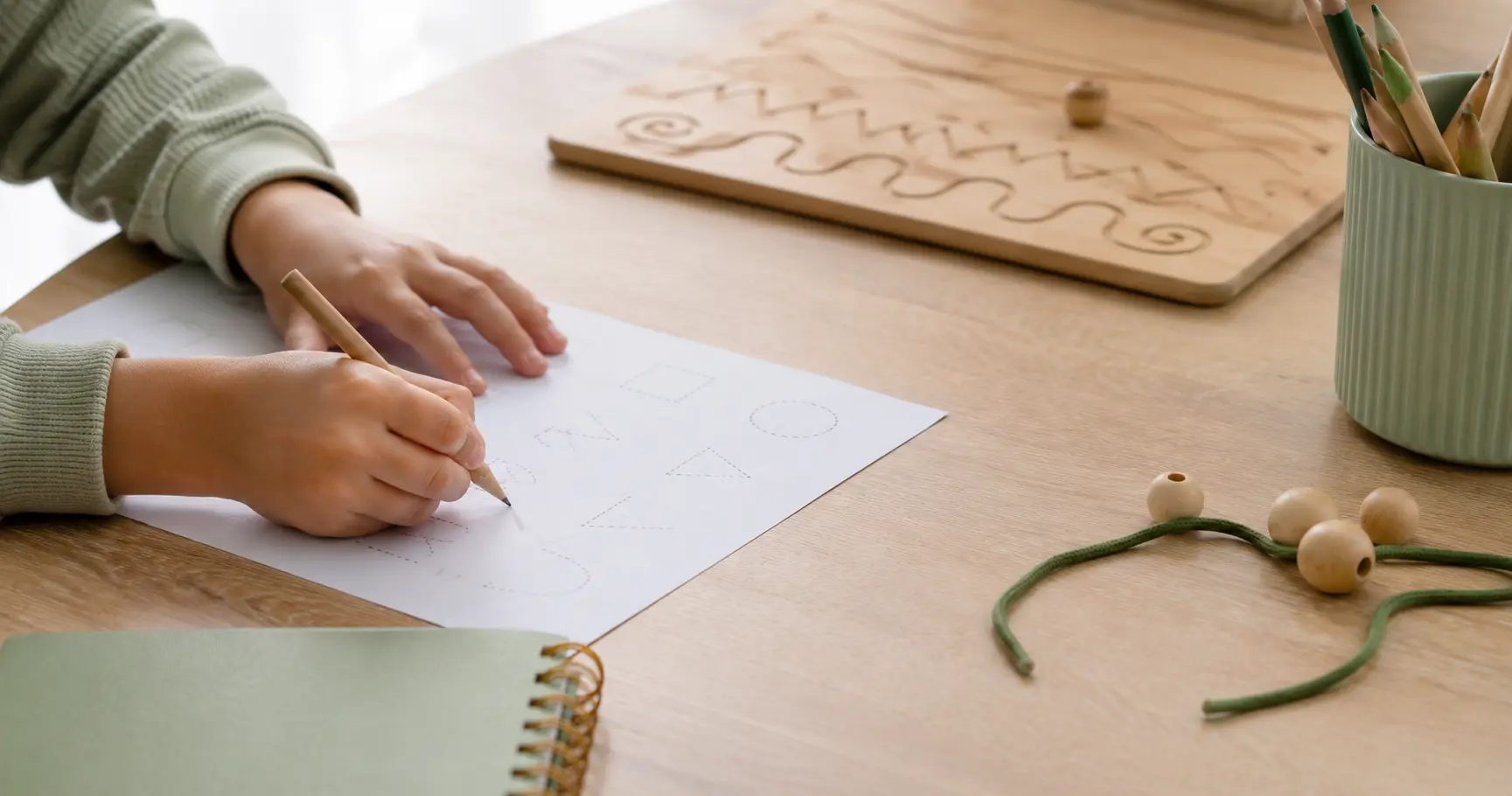
Pedagogical therapy is specialist support for children whose learning difficulties - with reading, writing, mathematics, or concentration - do not stem from low intelligence but from differences in how the brain processes information. The earlier a parent notices the warning signs and consults a specialist, the easier it is to give the child the conditions for full school development without unnecessary frustration.
What is pedagogical therapy?
Pedagogical therapy - formerly called re-education or corrective-compensatory classes - is therapeutic work aimed at removing the causes of learning difficulties. A pedagogical therapist does not teach school material or drill multiplication tables. They work on improving the cognitive and perceptual-motor functions that underlie all learning: visual and auditory memory, attention span, visual-motor coordination, laterality, and phonological processing.
Pedagogical therapy is most often recommended for children with a diagnosed or suspected:
- dyslexia (specific difficulties with the technique and comprehension of reading),
- dysgraphia (difficulties with handwriting and the graphic side of writing),
- dysorthographia (making spelling mistakes despite knowing the rules),
- dyscalculia (difficulties understanding mathematical concepts and operations),
- reduced manual or graphomotor skills, slow working pace.
Pedagogical therapy is not tutoring
The difference between pedagogical therapy and tutoring is fundamental. Tutoring catches a child up - it practises the same skills, just in a smaller group or at an individual pace. Pedagogical therapy goes deeper: it looks for the mechanism that is making learning difficult for the child and improves the disrupted cognitive functions.
A child who confuses the letters “b” and “d” may do so because they struggle with spatial orientation - not because they do not know the alphabet. A child who copies text with mistakes may have impaired visual memory or a slower pace of visual processing. The therapist diagnoses these mechanisms and builds an individual therapy programme.
Important for parents
Which signs should concern a parent?
Every child learns at their own pace. However, it is worth consulting a specialist if you notice any of the following signs in your child.
At pre-school age (3-6 years):
- noticeable speech delay or difficulty pronouncing sounds (more in our article on delayed speech development),
- reluctance to draw, cut with scissors, do jigsaw puzzles, or build with blocks,
- difficulty remembering rhymes, nursery rhymes, or simple songs,
- confusing left/right or up/down,
- poor balance and motor coordination, frequent falls.
At school age (7+ years):
- slow reading pace or reading letter by letter despite prolonged practice,
- numerous spelling mistakes when writing from dictation or from memory,
- untidy, illegible handwriting that does not improve despite practice,
- difficulty copying from the board or from a page,
- strong reluctance to go to school and outbursts of anger before homework,
- problems with multiplication tables or understanding mathematical operations despite regular practice.
Pre-school age - why earlier help matters
Many parents hear: “let's wait, they'll grow out of it.” In the case of specific learning difficulties, however, early intervention has real value - we are then working with a brain that is still being intensively shaped.
Signs of dyslexia risk can already be seen in a three-year-old: delayed or unclear speech development, difficulty building with blocks, reluctance towards manual activities. This does not automatically mean a diagnosis of dyslexia - it means it is worth talking to a specialist rather than waiting for problems to appear in the first year of school.
It is worth knowing that speech difficulties at pre-school age are often linked to later difficulties with reading and writing. That is why speech therapists and pedagogical therapists work together so closely. We write more about how to build reading and writing readiness in our article how to prepare a child for learning to read and write.
School age - when learning difficulties are a warning sign
The first three years of school are an intensive time for learning to read and write. If a child in the second year is still reading syllable by syllable, and their handwriting is illegible despite effort - it is worth seeking a specialist's opinion before growing school-related stress undermines the child's motivation and self-esteem.
In Poland, a diagnosis of dyslexia is most often issued by a psychological-pedagogical counselling centre. However, pedagogical therapy does not require a ready-made diagnosis - you can start with a consultation and assessment by a therapist, who will assess whether and what support is needed.
What does pedagogical therapy look like, step by step?
Pedagogical therapy is not a single, uniform scheme - every programme is built individually. A typical course, however, looks like this:
- Functional diagnosis: the therapist assesses the child's cognitive functions - checking visual and auditory memory, spatial orientation, visual-motor coordination, phonological skills, and reading and writing technique.
- Individual therapy plan: based on the diagnosis, the therapist develops a programme of exercises targeted at specific deficits, while also building on the child's strengths.
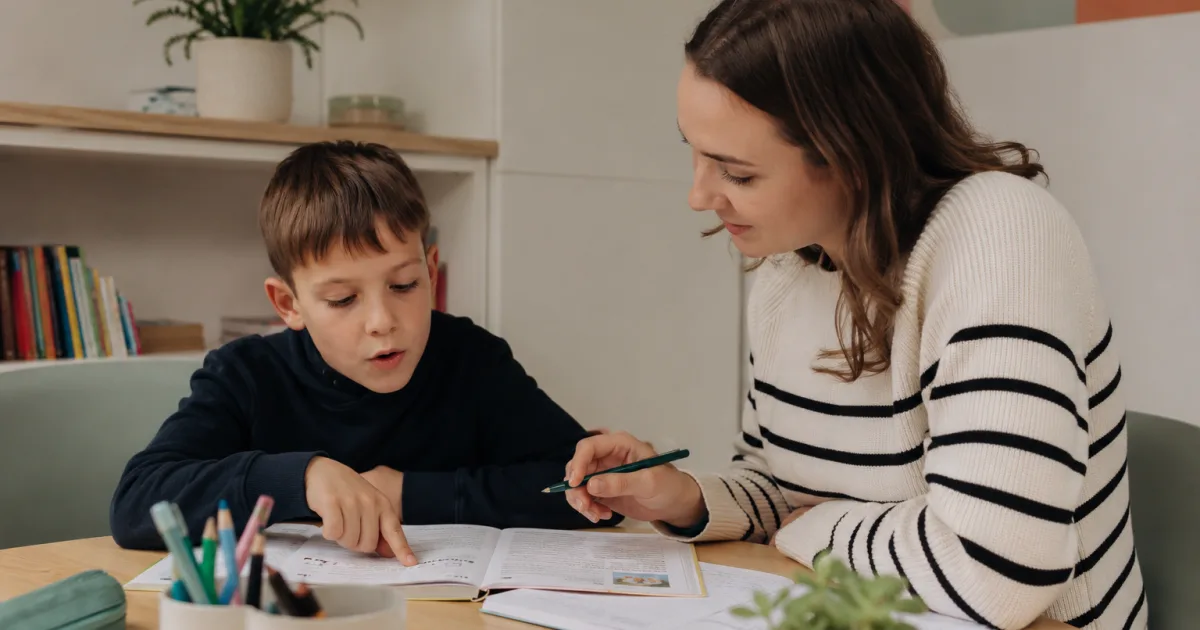
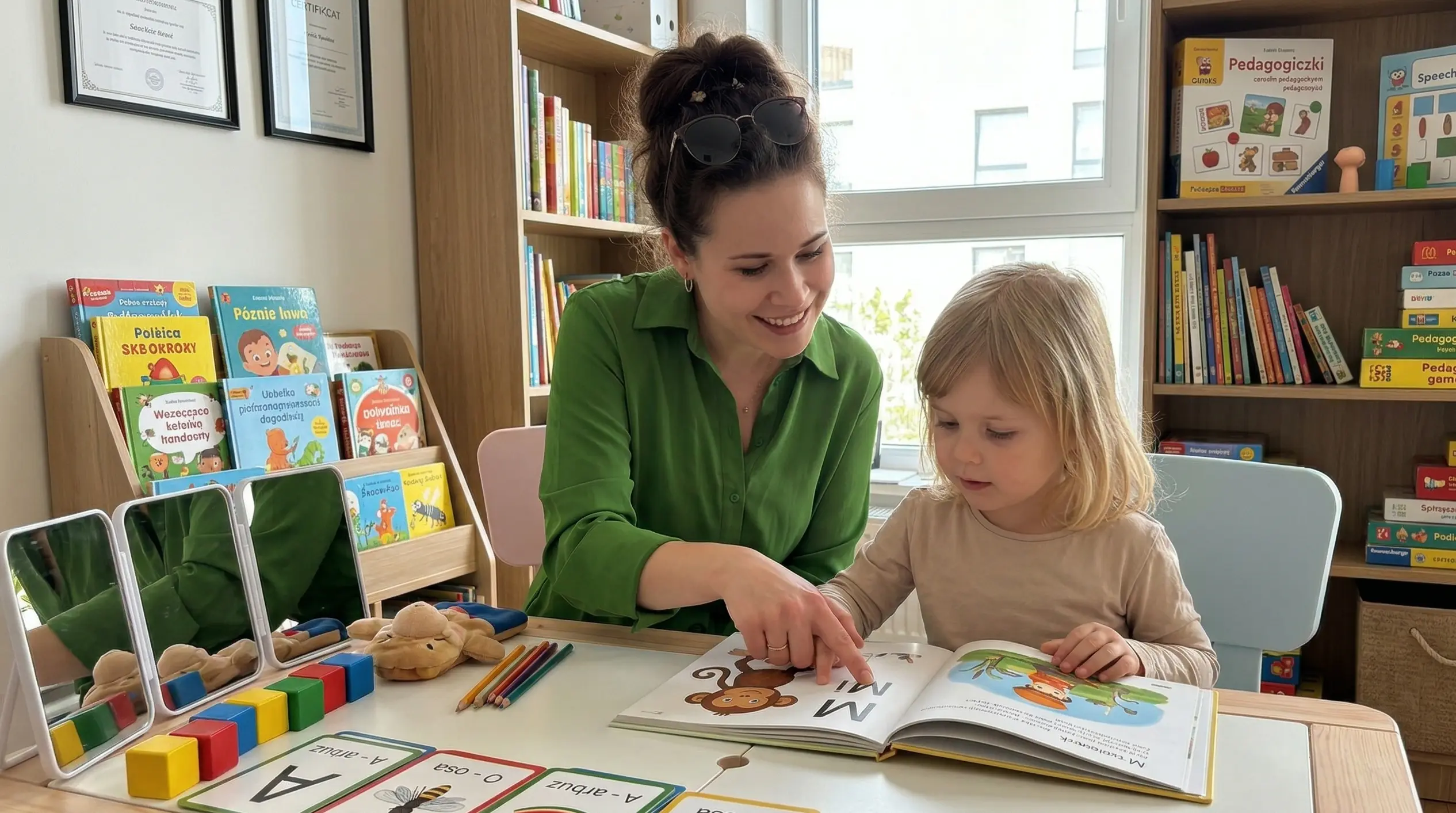
- Regular sessions: usually once or twice a week, around 45-60 minutes. A session combines desk-based exercises with movement or perceptual tasks. A good therapist makes sure the child leaves the session with a sense of success, not tiredness and failure.
- Work at home: the therapist gives parents specific tasks to carry out between sessions. Regular, short “micro- sessions” at home matter a great deal for the pace of progress.
- Progress review: every few weeks the therapist and parent discuss changes together and adjust the therapy programme.
A tip for parents
Why do pedagogical therapy and speech therapy often go hand in hand?
Speech and the ability to read and write are deeply connected. Learning to read is essentially learning to decode speech sounds into letters - and this requires phonological skills that develop precisely through speech.
Children with phonemic hearing disorders (difficulty distinguishing similar speech sounds) very often make mistakes in reading and writing. A speech therapist works on improving these mechanisms from the speech side - a pedagogical therapist carries that work over into reading and writing technique.
We particularly often combine both types of support for children with:
- delayed speech development, in whom a risk of dyslexia appears - more on how to prepare for a speech therapy diagnosis,
- speech disorders affecting phonemic processing (lisping, rhotacism),
- difficulties with concentration or auditory memory,
- autism or suspected autism spectrum.
At StacjaMowa, pedagogical therapy is delivered in close cooperation with speech and language therapists, allowing for a consistent plan that supports both speech and school skills.
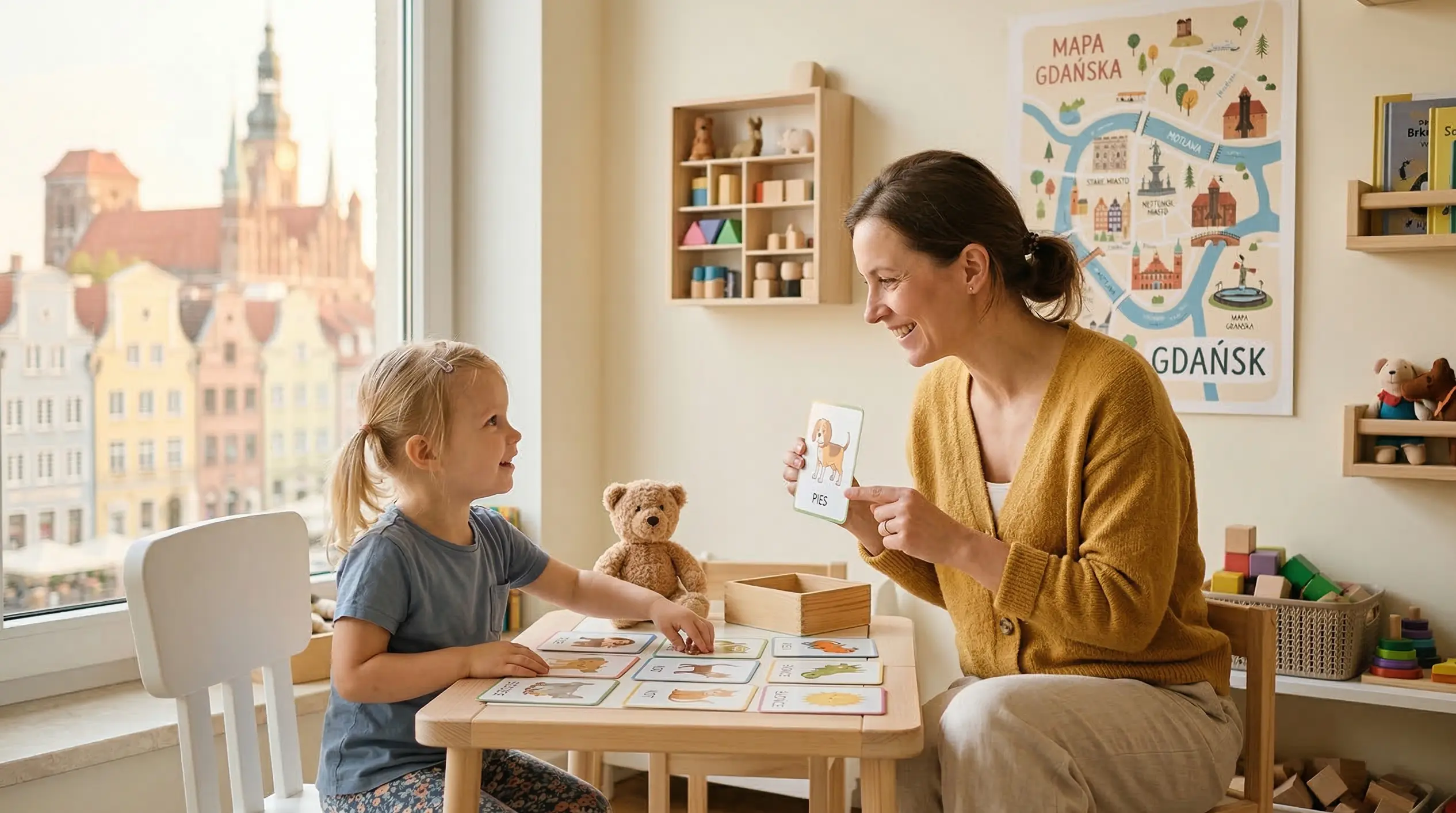
Pedagogical therapy in Gdańsk - when is it worth coming to StacjaMowa?
If you are unsure whether your child needs therapeutic support, the easiest way to start is with a consultation - a conversation with a specialist who will assess the situation and point out the next steps. A consultation does not require a referral or a prior diagnosis.
At StacjaMowa we provide assessment and pedagogical therapy in Gdańsk for children of various ages - from pre-schoolers showing the first signs of dyslexia risk to primary school pupils who, despite their effort, struggle with reading or writing. We care about the child working within a coherent, interdisciplinary team that has a full picture of their needs.
Key takeaways
- Pedagogical therapy improves disrupted cognitive functions (memory, phonological processing, spatial orientation) - it does not catch up on school material.
- Signs of dyslexia risk can already be noticed at pre-school age - an early consultation has real value.
- A diagnosis from a psychological-pedagogical counselling centre is not required to start private therapy.
- Speech and learning to read are closely linked - speech therapy and pedagogical therapy often go hand in hand, especially in children with delayed speech development.
- Regular home “micro-sessions” - even 10-15 minutes a day - speed up progress in therapy.
Sources and literature
- Bogdanowicz M., “Ryzyko dysleksji. Problem i diagnozowanie” [Dyslexia Risk. Problem and Diagnosis], Wydawnictwo Harmonia.
- Krasowicz-Kupis G., “Psychologia dysleksji” [Psychology of Dyslexia], Wydawnictwo Naukowe PWN.
- Polish Dyslexia Association - guidelines on dyslexia risk in children of pre-school age.
Want to learn more about therapy options?
Learn more about this therapyFrequently asked questions
- How does pedagogical therapy differ from tutoring?
- Tutoring catches a child up on school material. Pedagogical therapy goes deeper - it improves disrupted cognitive functions, such as visual memory, phonological processing, or spatial orientation, which make learning difficult for the child regardless of how much time they spend on their books.
- At what age can pedagogical therapy start?
- Signs of dyslexia risk can already be seen in three-year-olds - as delayed speech development, poor manual skills, or difficulty with rhyming. An early consultation is possible and advisable. Pedagogical therapy is most often provided for pre-school and early-school-age children, though we also support older pupils.
- Do I need a diagnosis from a counselling centre to enrol my child in therapy?
- This is not required. Therapy can begin based on an assessment carried out by the pedagogical therapist themselves. An opinion from a psychological-pedagogical counselling centre is needed to obtain accommodations at school (such as extra time in exams), but it is not a condition for starting private therapy.
- Can pedagogical therapy and speech therapy be delivered at the same time?
- Yes - and this is very often advisable. Speech and reading ability are closely linked. Children with speech disorders or phonemic hearing difficulties often struggle with reading and writing. Combining speech therapy and pedagogical therapy within a coherent plan usually gives the best results, rather than isolated support in only one area.
- How often should therapy sessions take place?
- We usually recommend one or two sessions a week. Each lasts around 45-60 minutes. Work at home is equally important - the therapist gives parents short exercises to carry out between sessions, which can be woven into everyday play.
- Can a child with dyslexia manage at school without therapy?
- Some children develop their own compensatory strategies, but without therapeutic support difficulties can grow - especially in higher years, as school demands increase. Early intervention reduces the risk of secondary emotional problems (frustration, low self-esteem, reluctance towards school).
- How do I know my child needs pedagogical therapy rather than just more practice at home?
- If, despite regular practice and effort, the child keeps making the same mistakes, reads very slowly, or has illegible handwriting - it is worth consulting a specialist. A pedagogical therapist will assess whether the difficulties are of a specific nature (requiring therapy) or stem from another cause.