Adult snoring does not always mean disease, but loudness alone is not enough to judge it. If it comes with pauses in breathing, daytime sleepiness, choking at night, or waking unrefreshed, medical assessment for sleep-disordered breathing is needed. Myofunctional therapy may support selected adults, but it does not replace medical evaluation or sleep testing.
Does every case of snoring mean a health problem?
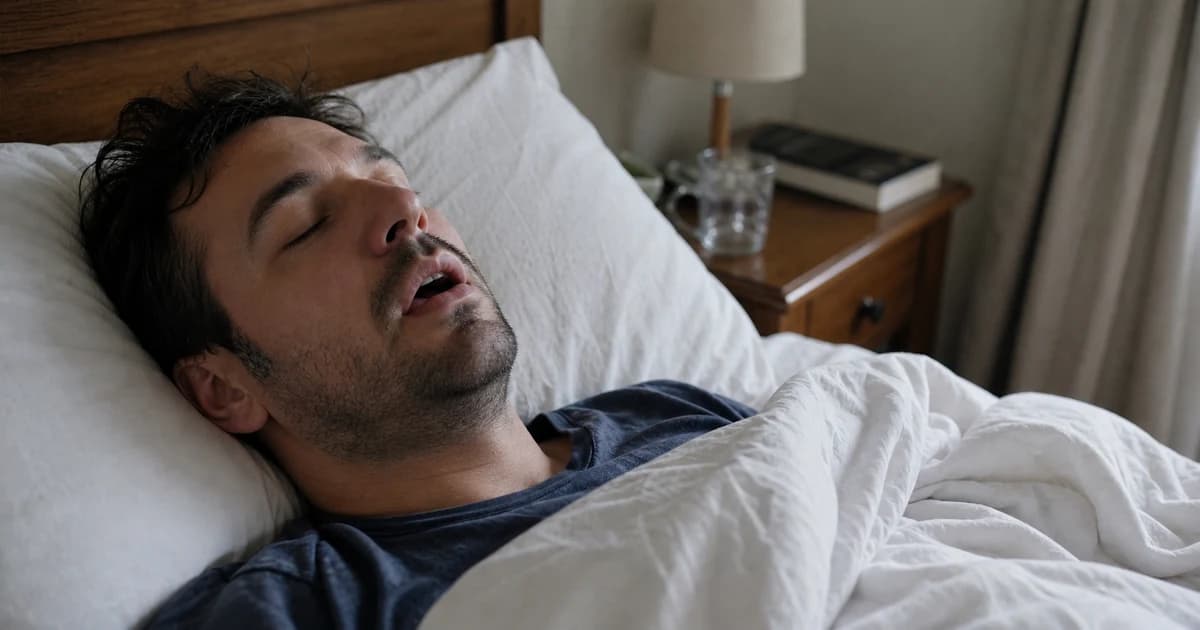
No. Snoring may occur as an isolated symptom and is not the same as obstructive sleep apnea. It becomes more concerning when the sound is accompanied by signs that the airway is narrowing or repeatedly closing during sleep.
In practice, the useful questions are not only “Do I snore?”, but also: do I wake unrefreshed, has anyone seen pauses in my breathing, do I fall asleep during the day, and do I have conditions such as hypertension? As with mouth breathing in children, the visible symptom starts the assessment rather than completing the diagnosis. We discuss that wider functional context in the article on when mouth breathing needs consultation.
Rule out sleep apnea first
What are the red flags?
The most important warning signs are witnessed apneas, abrupt awakenings with choking or breathlessness, excessive daytime sleepiness, morning headaches, reduced concentration, and snoring combined with hypertension or other cardiovascular disease. Context also matters: excess weight, a large neck circumference, alcohol before sleep, sedating medication, and chronic nasal obstruction can all increase the risk of sleep-disordered breathing.
This list is not for self-diagnosing sleep apnea. It helps distinguish a nuisance symptom from a situation worth discussing with a primary care doctor, ENT specialist, or sleep physician. If further testing is needed, the medical team decides what form it should take.
What does the first assessment usually cover?
A good first assessment reviews sleep history, daytime symptoms, coexisting conditions, medication, body weight, alcohol and smoking, and nasal airflow. A clinician may ask about daytime sleepiness, examine the upper airway, or recommend an objective sleep study when the picture suggests sleep-disordered breathing.
That matters because snoring is a sound, not a diagnosis. Only after clarifying whether sleep apnea is present does it make sense to discuss next steps such as lifestyle changes, treatment of anatomical causes, a mandibular advancement device, CPAP, or supportive work on oral and pharyngeal function.
Where does myofunctional therapy fit?
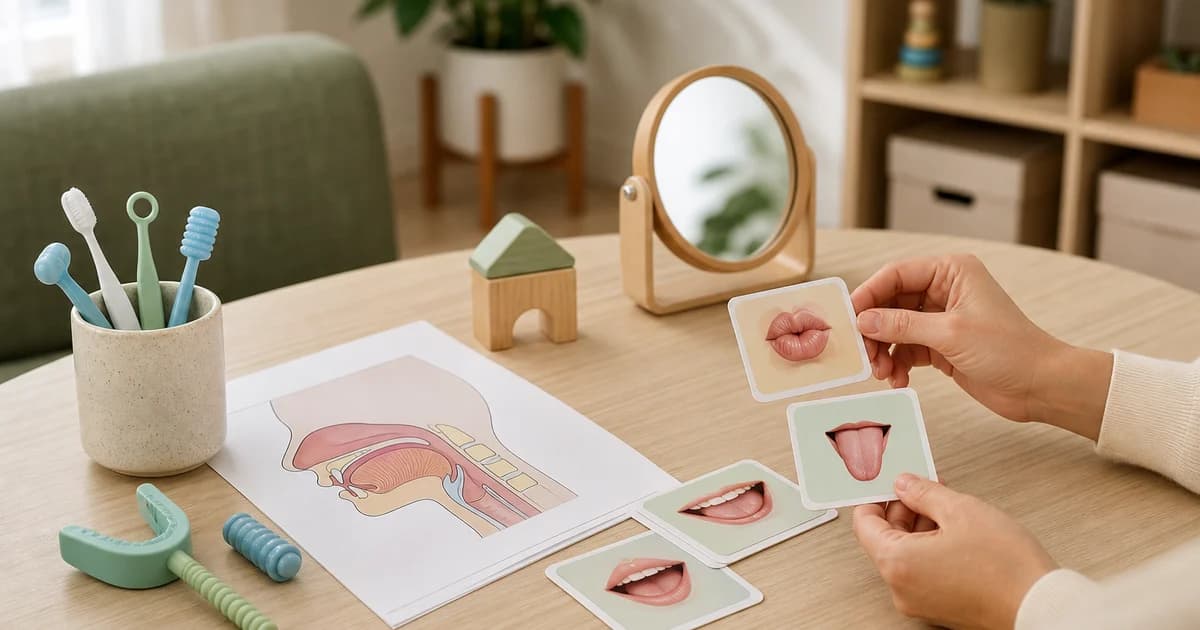
Myofunctional therapy works with the function of the tongue, lips, cheeks, jaw, and pharyngeal muscles. In some adults with obstructive sleep apnea, it may support a broader treatment plan, especially when the goal is to improve oral and oropharyngeal muscle function. Studies in adults with sleep apnea show improvement in selected sleep outcomes and snoring measures, but that does not mean exercises are a standalone treatment for every case of snoring.
That is why a generic exercise list from the internet is not a good starting point. Assessment should come first, followed by work matched to actual function: tongue rest posture, lip seal, breathing pattern, swallowing, and muscle tone. We describe tools sometimes used within myofunctional therapy in the guide to MFS stimulators.
What does myofunctional therapy not replace?
It does not replace sleep assessment, ENT assessment, or physician-led treatment of sleep apnea. It also does not remove a structural blockage in the nose or throat when that is the cause of symptoms. Its role is most honest when described as support for function, not as a promise of quickly silencing snoring.
Caution is especially important in isolated snoring without confirmed sleep apnea. Evidence for isolated snoring is still limited, so routine promises that orofacial exercises will solve the problem are not justified. If an adult patient wants to work on tongue posture, breathing, or swallowing, the plan should be built after assessment rather than around a single advertisement or instructional video.
A practical order of steps
What can you do before the consultation?
Note whether snoring happens every night, whether it worsens after alcohol, when sleeping on the back, or during infection. Ask a partner whether they notice breathing pauses or choking awakenings. Pay attention to morning dry mouth, headaches, daytime sleepiness, and reduced concentration. These details are more useful to a clinician than the general statement “I snore loudly.”
It is also worth reviewing the basics: body weight, smoking, alcohol before sleep, sedating medication, and chronic nasal blockage. Changing those factors may matter, but it should not become a reason to postpone assessment when warning signs are present.
How do we work with adults at StacjaMowa?
At StacjaMowa, we assess adult orofacial function: tongue posture, lip seal, breathing route, swallowing, and muscle tone. This consultation does not replace sleep medicine, but it can help clarify whether there is a functional area worth addressing therapeutically.
We describe this scope on the myofunctional therapy page. If the topic also concerns breathing, swallowing, and tongue position, the article on GOPEX therapy and orofacial function may be helpful. The key is still to set the goal honestly: not to promise a quick end to snoring, but to work on function when there is a real indication.
Key takeaways
- Snoring is not a diagnosis; its meaning depends on the accompanying symptoms and history.
- Witnessed apneas, choking at night, and excessive daytime sleepiness need medical assessment.
- Myofunctional therapy may support selected adults, but it does not replace sleep assessment or treatment for sleep apnea.
- In isolated snoring, avoid promises that are not supported by current evidence.
Sources and further reading
The materials below are educational. They do not replace medical consultation, sleep assessment, or individual qualification for therapy.
- AASM: Clinical guideline for evaluation and management of OSA in adults
- Camacho et al. 2015: Myofunctional therapy to treat obstructive sleep apnea
- Borrie et al. 2023: Myofunctional therapy for snoring
- ASHA Evidence Maps: Adult snoring
- Mayo Clinic: Snoring - symptoms and causes
Want to learn more about therapy options?
Learn more about this therapyFrequently asked questions
- Does all snoring mean sleep apnea?
- No. Snoring may occur as an isolated symptom, but if it comes with pauses in breathing, daytime sleepiness, choking at night, or waking unrefreshed, medical assessment for sleep-disordered breathing is needed.
- When should an adult with snoring see a doctor?
- It is worth doing so when a partner notices apneas, there is excessive daytime sleepiness, waking with breathlessness, drowsiness while driving, or coexisting hypertension and other cardiovascular disease. These symptoms call for assessment, not only home remedies.
- Can a speech therapist treat snoring?
- A speech therapist with relevant specialization may assess orofacial function and provide myofunctional therapy when indicated. They do not replace a physician or sleep assessment, and exercises should not be presented as standalone treatment for every case of snoring.
- Can myofunctional therapy help adults?
- In some adults with obstructive sleep apnea, it may support a broader treatment plan and improve selected sleep-related outcomes and snoring measures. Qualification should depend on symptoms, functional assessment, and medical recommendations rather than on snoring alone.
- Is sleeping on the side enough to stop snoring?
- Position can matter for some people, but it does not solve every problem. If red flags are present, changing sleep position does not replace consultation or possible sleep testing.
- How should I prepare for a consultation about snoring?
- Note how often you snore, whether a partner sees breathing pauses, whether you wake unrefreshed, and whether you fall asleep during the day. It is also useful to list medication, coexisting conditions, nasal blockage, body weight, and whether symptoms worsen after alcohol or when sleeping on your back.